
At dawn on the 27th of May, 1644, a Ming general named Wu Sangui gave the order to open the gates of the Shanhai Pass.
Beyond the wall waited the Manchu cavalry he had spent years keeping out. He let them through anyway.

Wu Sangui
What Wu Sangui was supposed to manage was the most ambitious defensive structure in human history.
Generations of treasure, labour and lives, faced in Ming brick and studded with watchtowers. Yet it fell in an afternoon. Not to a battering ram, but to a man with a key and a grievance.
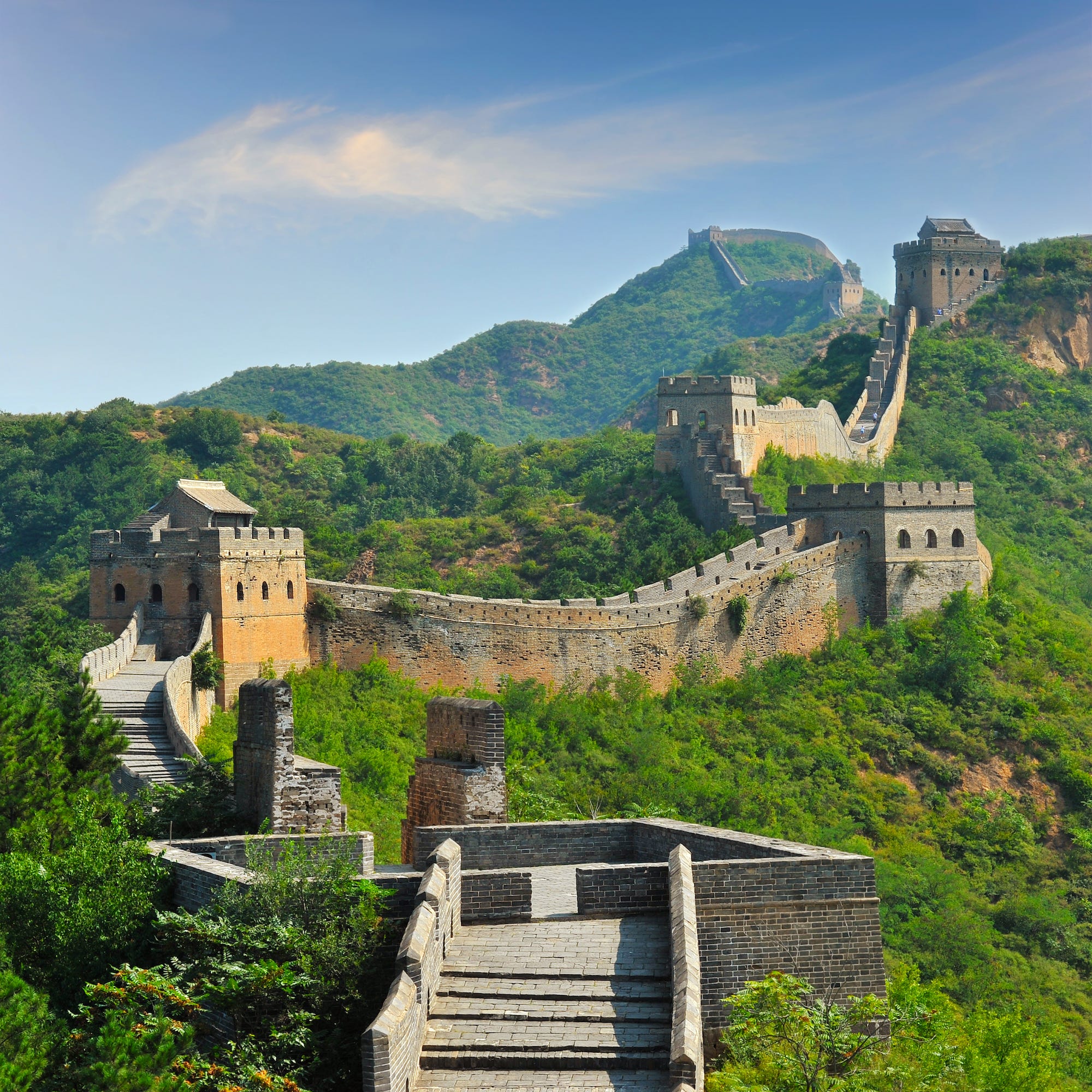
That is the shocking truth beneath the majestic masonry. The Great Wall of China is usually read as a symbol of strength. It is better read as a magnificent misstep.
The Manchus had already raided across it in 1629, and several times after. The wall did not stop them. It slowed them, and then Wu Sangui opened a door.
Believing that a static barrier could solve a dynamic, strategic problem was a fundamental mistake.
A wall does not think. It cannot be persuaded, but the men on it can be. Invaders bribed guards, exploited weak points, or bypassed the stones entirely.
The deeper cost was hidden. Every ounce of silver poured into masonry was silver not spent on a flexible army, grain, and the cohesion of the state.
By 1644 the treasury was hollow, the north was starving, and the empire had built itself a monument instead of a defence.
Wu Sangui proved the timeless point. No wall is stronger than the will behind it. When that collapses, it becomes a very expensive fence with an unlocked gate.
It is a warning, repeated by leaders who kept substituting concrete for critical thinking.
THE SAME MISTAKE, WEARING DIFFERENT CLOTHES
The most striking twentieth-century echo is France’s Maginot Line, built through the 1930s.
Hyper-advanced concrete and steel, retractable turrets, hailed as an impregnable shield. Yet, like the Chinese emperors, French planners answered a dynamic threat with a static solution.
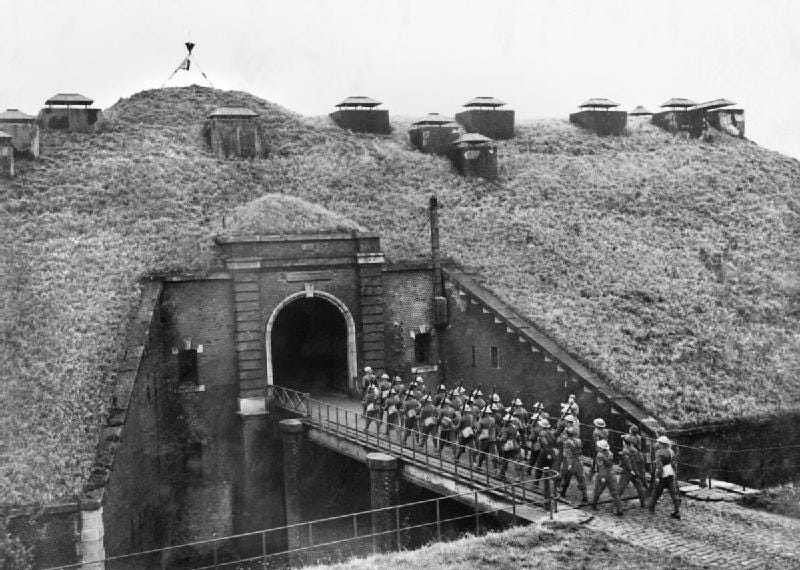
Troops entering the Maginot Line 1940
When the blow came in 1940, the German army did not try to smash through.
Using rapid, mechanised Blitzkrieg, they drove around the line’s northern end, pouring through the heavily wooded Ardennes that French planners had blithely deemed impassable.
For all its billions, the Maginot Line became a bystander to France’s swift defeat.
The pattern is older than either wall. The Theodosian Walls guarded Constantinople for a thousand years and were, for their age, close to perfect.
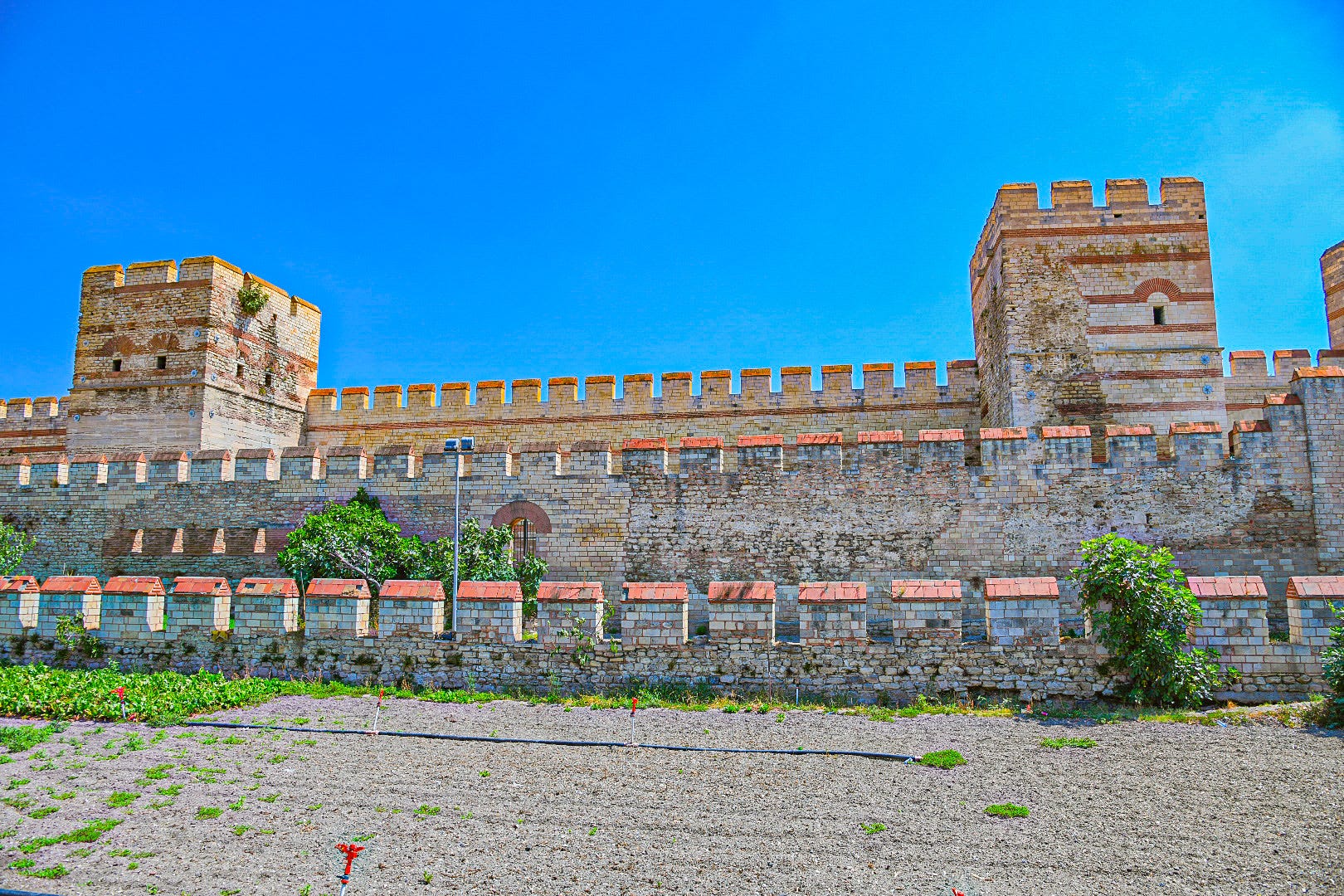
The Theodosian Walls once guarded Constantinople
Yet in 1453 they fell, and the decisive factor was not a flaw in the masonry. It was gunpowder artillery, a technology the walls had never been designed to face.
The wall had not changed. The world outside it had.
Even the Trojans, even if we treat the story as a fable, did not lose their walls to a siege. They lost them to a gift they wheeled inside themselves.
It seems that every great wall has a gate, and every gate has a human standing beside it.
A WALL PULLED DOWN FROM THE OTHER SIDE
No wall makes the point of vulnerability better than the Berlin Wall, a barrier that pointed inward.
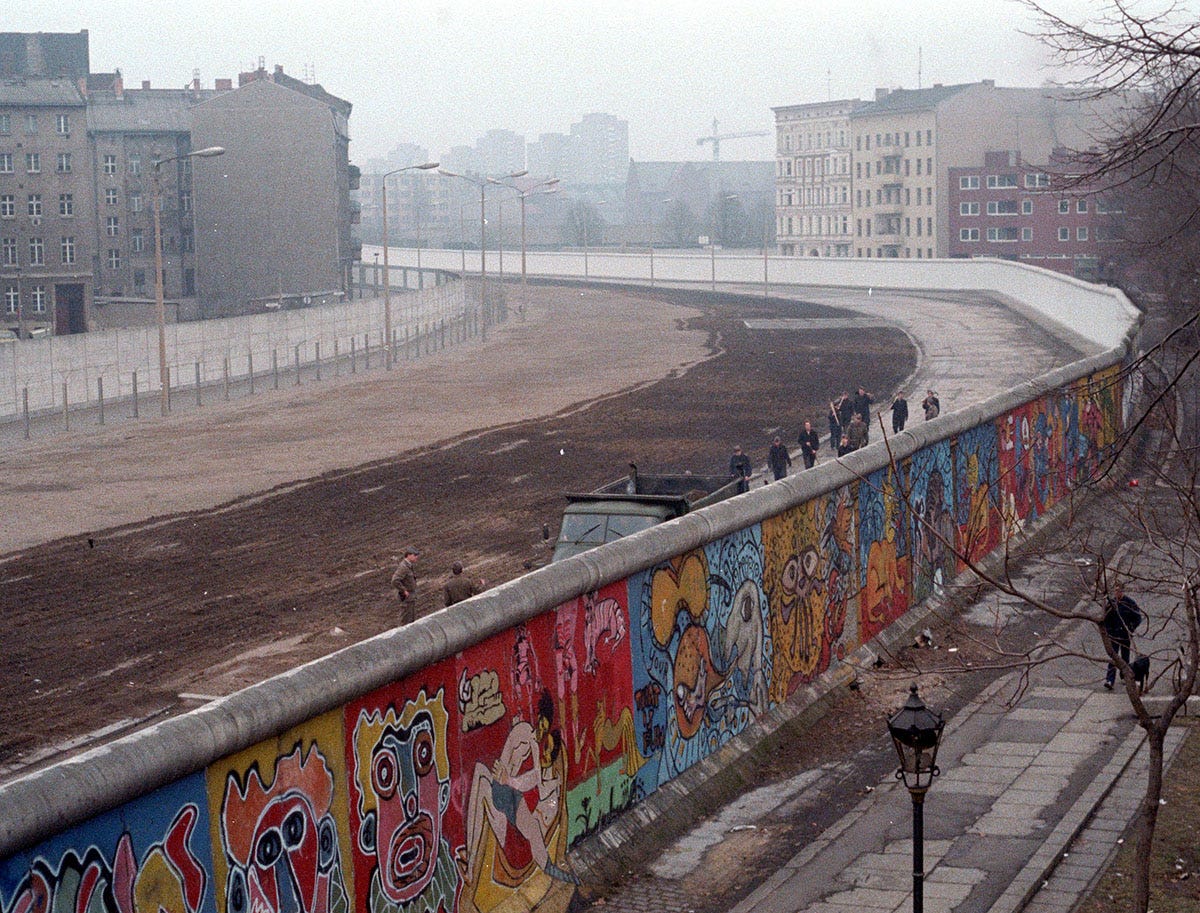
It was built in 1961 not to keep enemies out, but to keep a population in. Concrete, watchtowers, searchlights, a death strip raked smooth so footprints would show, and guards with orders to shoot.
For twenty-eight years it was held by force. Yet the rot that undid it was internal. The economy behind the wall was failing.
The political rule that raised it was faltering, its promises threadbare, its people quietly fed up with believing.
The more the state leaned on the wall, the more it advertised the thing the wall could not fix.
By the autumn of 1989 the guns and searchlights were still there, but the will behind them had drained away. People climbed the wall in front of the guards, and the guards did not fire.
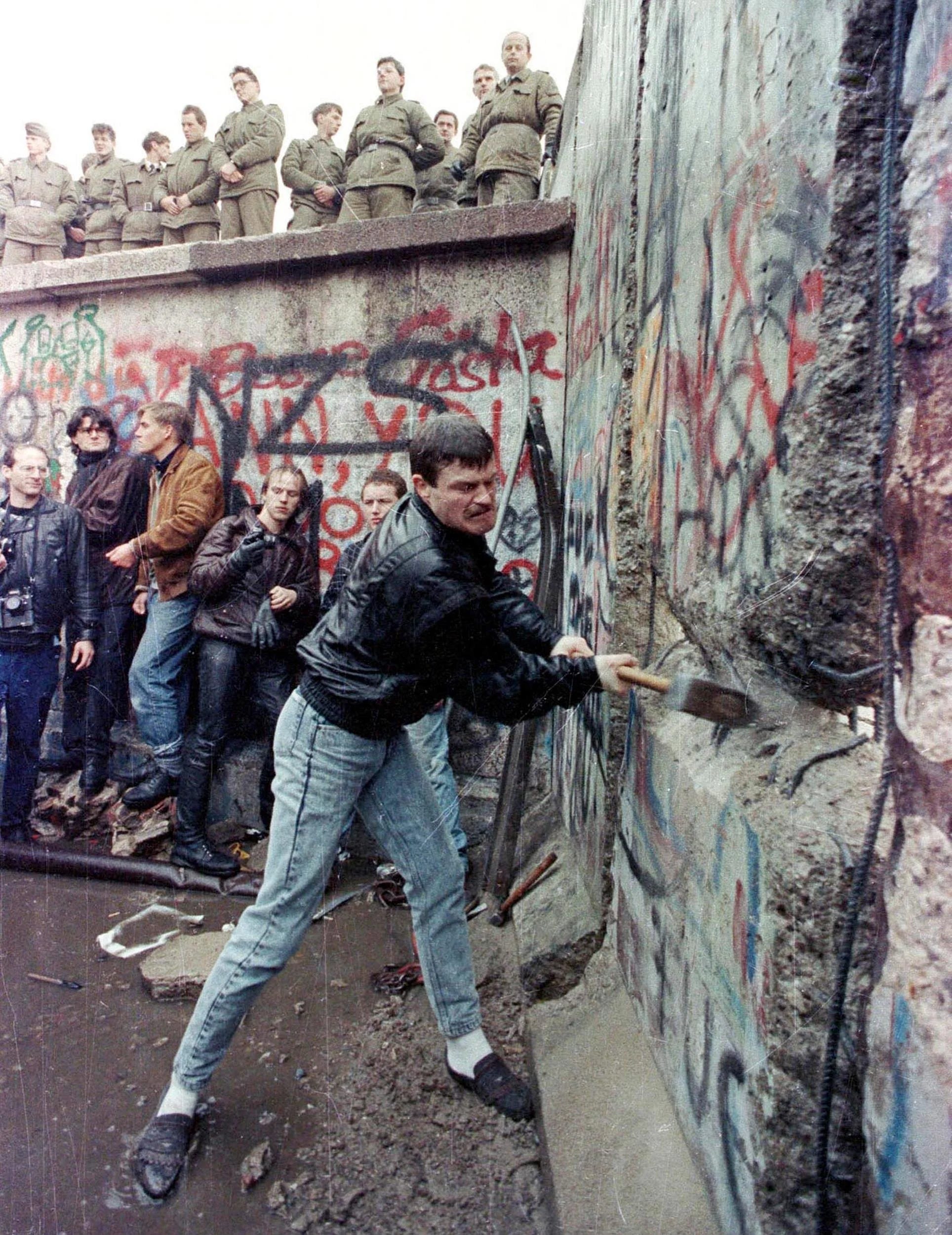
Then, on the night of the 9th of November that year, ordinary Berliners took hammers and picks to it and pulled it down from the other side.
WHEN THE WALL IS A BUSINESS
A stubborn faith in fixed defences is not unique to warfare. It topples business empires with grim regularity.
You may not remember Blockbuster Video, but it built a kingdom on physical real estate. Thousands of stores, prime locations, late fees engineered into the model.
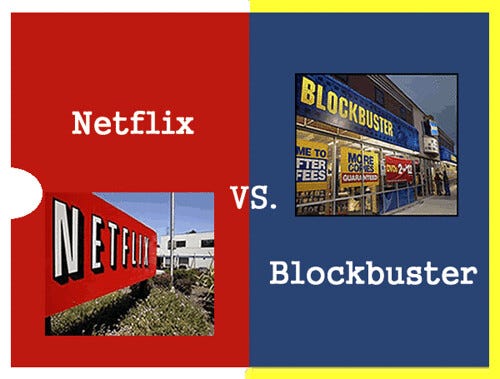
When a small mail-order upstart called Netflix arrived, Blockbuster reportedly had the chance to buy it for a modest sum, and laughed.
It doubled down on defending the stores, and never noticed the landscape had shifted to the cloud.
Kodak did something, stranger. It invented the digital camera in 1975, in its own lab. Because it threatened its film business, its walls were built to protect.
Kodak was not beaten to the technology by some new competitor. It was defeated by its own reluctance to abandon a fortress that was already obsolete.
Nokia and BlackBerry ruled the mobile phone in the 2000s, then watched the smartphone rewrite the rules while they defended the handset and the keyboard they knew.
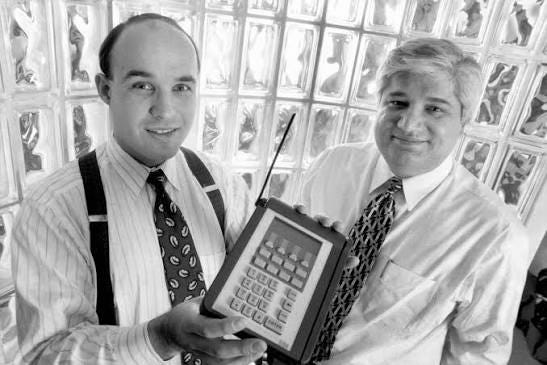
BlackBerry’s bid to one-up the iPhone failed
Each guarded its wall while a nimbler rival went around the flank, through the Ardennes of touchscreens and app stores.
The lesson repeats because the temptation repeats. A wall is comforting. It is visible, expensive, and looks like strength.
The threat that kills you is rarely the one your wall was built to stop.
THE WALL BEING BUILT RIGHT NOW
Which brings us to a wall still under construction.
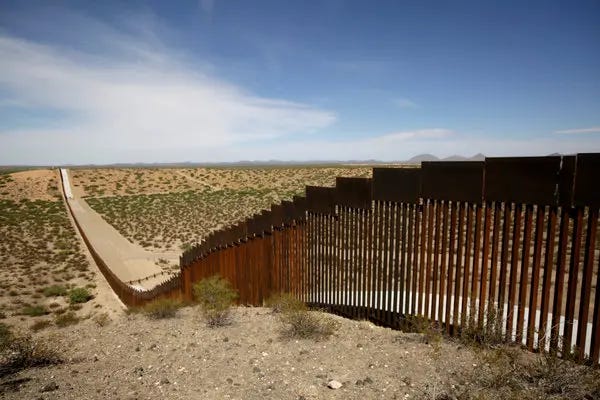
US border wall under construction
The barrier along the southern border of the United States repeats every old assumption in fresh steel. As of 2026, the project is racing ahead, flush with tens of billions of dollars, promising to run from the Pacific to the Gulf.
Set aside the politics and look at the logic. Even if it is ever finished, a wall answers a dynamic problem with a static one.
People who want to cross will find the gaps, tunnel beneath, climb over, or route around, as they have tackled every barrier before it.
The planners half-know this, which is why the concrete now comes wrapped in sensors, cameras, and autonomous towers.
England offers the warning in advance. The English Channel is a wall no dynasty had to build.
Twenty-one miles of cold, dangerous water, a moat that has turned back armies for a thousand years. And still the small boats come.
If the finest natural wall on earth cannot hold the line, a wall of steel across a desert is unlikely to fare better. A barrier can raise the cost of crossing. It cannot remove the reason for it.
WHEN THE QUALIFICATION WAS THE WALL
The wall concept extends all the way to the individual, and here it has turned sharp. For generations, a professional qualification was both a wall and a meal ticket.

Law Society admission ceremony
Pass the exams, earn the letters after your name, and you were inside the fortress for life. Lawyers, accountants, architects and others were the classic cases.
The qualification was a moat that kept competition out and fees high, making a whole class of skilled professionals nearly immune to market pressure. The wall did the defending.
Artificial intelligence has changed all that. Software now drafts contracts, reviews disclosures, reconciles ledgers and models accounts in minutes, and it does not sit exams or bill by the hour.
The moat has been drained, and the tasks that lived safely behind it are being done outside the walls, faster and cheaper.
The professional who thrives now is not the one with the highest wall. It is the one who can do what the machine cannot.
Judgement, relationship, the awkward human problem that resists a template. The letters were never the true asset. They were only the wall, and walls are the first thing to fall.
EVEN THE NEW FORTRESSES ARE WALLS
There is a final irony, being poured in concrete as you read this.
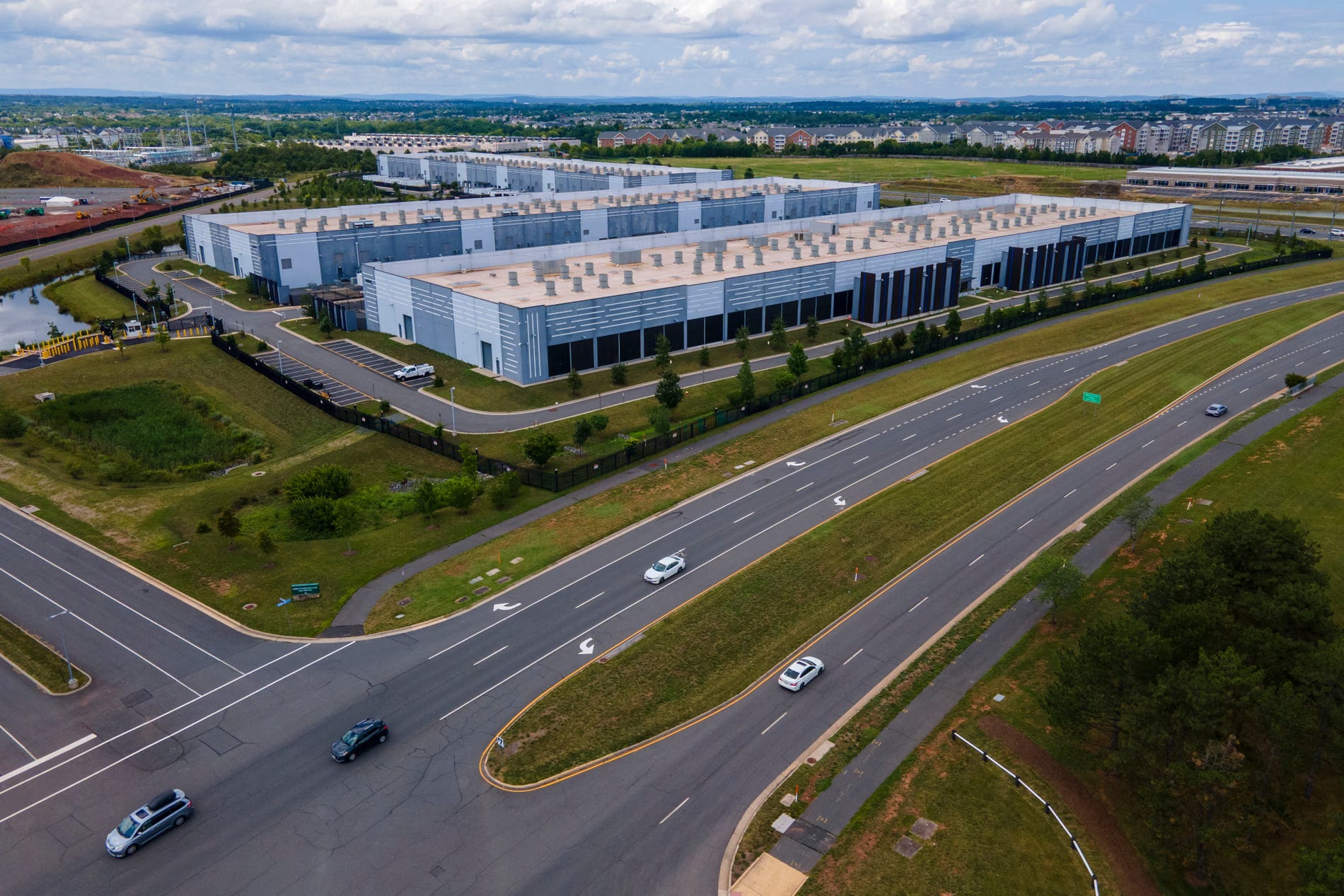
A datacenter in Ashburn, Virginia, in 2023.
The vast data centres now rising across the world, the cathedrals of the AI age, are themselves a kind of wall.
Cavernous halls packed with thousands upon thousands of processors, guzzling power and water, built on the assumption that intelligence scales with sheer physical mass.
The strategy is brute size, the same instinct that raised the Great Wall. And the same vulnerability may be waiting.
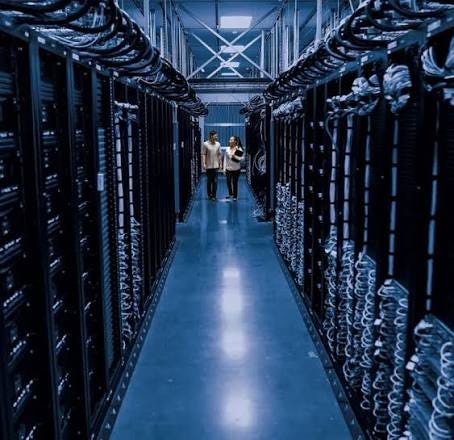
Quantum computing, if it matures, threatens to do to these warehouses what the smartphone did to Nokia.
A machine of a fundamentally different kind, solving in moments what thousands of processors labour over, could render the sprawling halls as quaint as a stone rampart facing a cannon.
The fortress that looks most impregnable today may be the next magnificent misstep. The people building the biggest walls rarely see the change coming for them.
WHAT THE WHOLE LONG STORY TEACHES
The common thread across the expanse of history remains simple: true security is never static.
Whether you are defending a nation, a market, a career, or a warehouse full of processors, the biggest mistake is the stubborn refusal to adapt.
Strength lies not in building a bigger wall, but in fostering agility, innovation and cohesion. The wall is only as good as the will behind it, and the will is only as good as its willingness to change.
This is what makes these blind spots so gripping. Unlocking the mindset behind a colossal misstep is more revealing than admiring the misstep itself.
It is why an imagined conversation with an emperor who chose stones over a mobile army can tell us so much. Or with the generals who stared blankly at their useless forts, still certain the Ardennes could not be crossed.
These pivotal moments let us look into the minds that shaped our world. And, if we pay attention, they help ensure we do not spend our lives, our fortunes or our companies building walls of our own.