

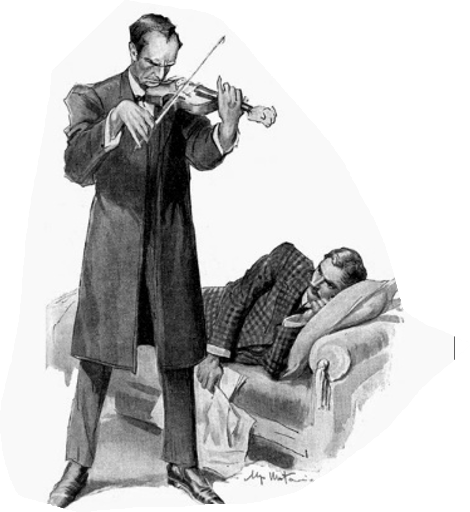
Sherlock Holmes enjoyed music and was a talented violinist. In The Adventure of the Red-Headed League, the famed detective tells Dr Watson:
“Sarasate plays at St. James’s Hall this afternoon.”
They both make their way to the concert, where Holmes clearly enjoyed himself, “wrapped in the most perfect happiness, gently waving his long, thin fingers in time to the music.”
Both Holmes and his author had good taste. No mention that Sarasate was a violinist, or even his first name. By then he had won megastar name recognition. Most people had heard of this truly extraordinary artist.
I am in Paris, in the late afternoon of 1879, for a planned conversation with Pablo de Sarasate. We are meeting at the Conservatoire, where music students receive professional training, and it remains unusually quiet, its corridors emptied after a rehearsal.
Resin floats faintly in the air. Somewhere, a caretaker closes a distant door. The violinist-composer stands alone in a small practice room, almost in silhouette, his violin case open on a chair, the window catching the last light of the day.
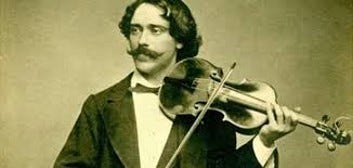
He does not announce himself. Instead, he inclines his head in a gesture that feels like an invitation to step inside something private.
Pablo de Sarate, I am most honoured that you have agreed to talk to me about your life.
“Welcome. Call me Pablo, please.”
Thanks for that, Pablo. Let me first ask about one small but, to my ears, terribly mysterious thing. Just before you play, how does that moment make you feel?
“Ah, it’s a conversation between terror and pleasure. I never quite know which it will be tonight.
The audience believes I’m calm. But inside, I feel an electric current, like a horse prepared to run.
I listen for the silence, for it must yield before the music can rise. Only then does the tension flow from my body.
The violin has its own breath, you know. When I draw the violin bow, I try first to hear how she would speak if I were not here at all.”
That feels to me like a window into your childhood, Pablo. Was that sensitivity present even then, or did Paris teach it to you?
“As a child, I did not name that sensitivity you mention. I only felt myself to be fully alive when the violin touched my shoulder. My mother used to say, ‘The boy exists only when he plays.’
To me, in Pamplona, the Northern City of Spain, those little halls felt like cathedrals. I remember the trembling lamps, the scent of warm wood when I played. At that moment, the world became larger, and I became more real.
Only later did I begin to understand that I was listening as much as speaking.”
You were a boy with a gift you could feel but not fully name. Paris must have been thrilling yet brutal.
How did a twelve-year-old navigate the weight of that greatly respected Conservatoire?
“With trembling knees and stubborn pride. Paris dazzled me, but also mocked me. My accent, my too-new suit, my violin that had travelled farther than I had in years.
And then Alard…”
Do you mean Jean Delphin Alard, violoniste professeur au Conservatoire, the leading violinist of that generation?
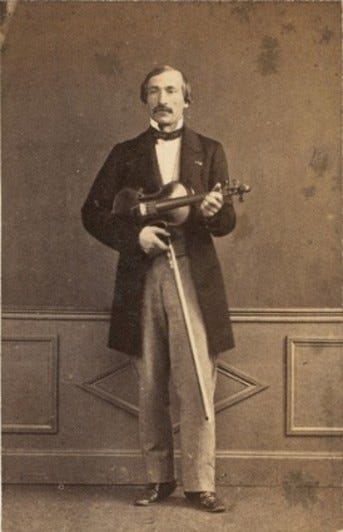
Jean Delphin Alard
“Yes, he generously agreed to listen to me playing. That experience was transforming. Let me tell you, he really did listen, treating me not as a child, but as a young colleague.
That moment straightened my spine. He told me that the violin and its bow are breath turned visible. And no, elegance isn’t vanity but rather respect.
Respect for the word, the listener, and the surrounding silence. Most importantly, this great master taught me discipline.
Pablo, I can’t help but ask about Zigeunerweisen, your increasingly famous Romani piece, the Gypsy music.
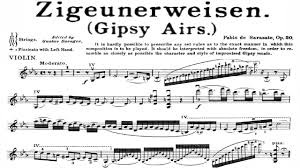
When you wrote it, what were you reaching for?
“Longing. Longing wearing two faces. The music of Romani musicians could be heard, full of sorrow and laughter in equal measure. That contradiction fascinated me.
It also taught me that sadness and joy can nest within the same note. I tried to honour, not imitate, that duality. Imitation is death.
What was the catalyst for this piece? Someone you heard? Some chance meeting on the road?
There are stories of me writing it to the sound of a street fiddler in Budapest. Well, I can neither confirm nor deny.
Some evenings belong to the twilight between reality and dream. But yes, I met musicians whose violin bows were like walking books, telling stories older than their own names.
Maybe the experience turned into a self-portrait without me realising it. I shaped the piece like a night around a campfire.
First, the story, then the confession, finally the dance. Many listeners never notice, yet somehow the violin does.
And the ending? Ah! The ending is a dare, a laughing one. A moment when the violin shakes her hair into the wind, saying: ‘Catch me if you can.’”
Pablo, listening to that piece, that is exactly how it feels. A kind of wild, joyful challenge. Also, as a composer, you seem to avoid symphonies or grand concertos. Why?
“Because they are not my language. Other men dream on those vast canvases; I prefer the miniature. The violin is my kingdom, and I write only what allows it to shine without compromise.
A symphony demands architecture, pacing, and long stretches, where the violin must sit politely in the shadows. Why would I imprison my instrument like that?
I write pieces I can play, ones that speak directly, leaving no doubt about where the fire is coming from. Some composers build cathedrals; I prefer to cut diamonds.”
Does playing music written specifically for you reveal different aspects of yourself?
“When others write for me, they hold up a mirror to my nature. Their music shows parts of myself I have not yet admitted. Their confidence in me makes me braver than if I had been alone.”
Your near contemporaries, Joachim and Wieniawski, must have prodded you as well?
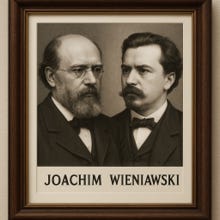
“Not rivalry or even hostility, but a mutual admiration. Joachim once accused me of playing in a ‘too beautiful’ kind of way.
I told him that beauty isn’t a form of weakness; it’s clarity.
And you’re often described by audiences as ‘the sound of Spain.’ Do you see yourself in that description?
“Spain is my blood, yes. But I never carry it as a banner. I am Spanish, but I am also a child of Paris, a traveller of Russia, a guest of England. A musician is many countries speaking through the same strings.”
And all those countries, rooms, faces, and departures. They must shape a man as much as they shape his art. May I ask something more personal…
Something softens in him, not fragility. More a kind of openness that comes when a man realises he is having a conversation and not being interrogated.
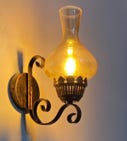
The lamps in the corridor flicker; the room grows dimmer. His violin lies in its case as if listening too.
…those landscapes you carry, Pablo, Spain, Paris, Russia. They make me wonder how a life of such movement shapes the private man.
“Travel gives a man many faces, but it steals some roots. I grew used to hotel rooms, to greetings and farewells in equal measure.
There were nights when the applause felt like company, and others when it felt like a reminder that I was alone once the doors closed.
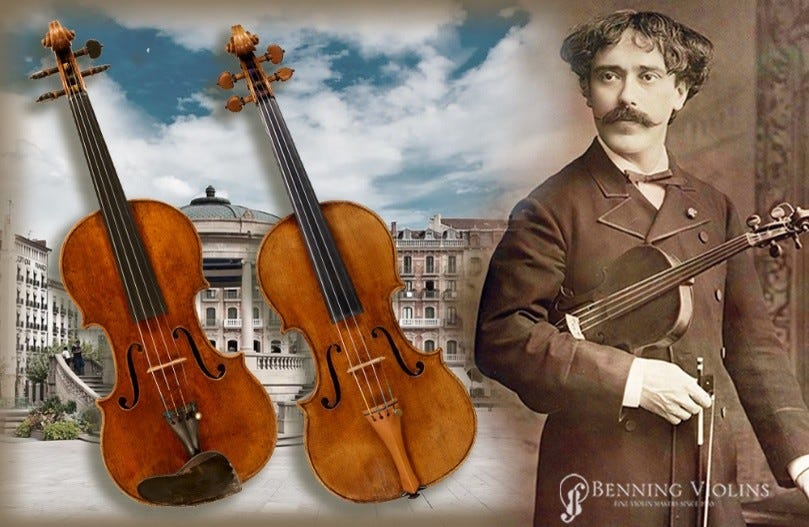
You don’t have just one great companion but two. Your two Stradivarius violins. What do they mean to you beyond their fame?
“The beautiful Strads, yes! I must make it clear that they are not possessions. They are confidantes.
One has a voice of silver, bright as morning air. The other carries gold in its fibres, warmer, more secretive.
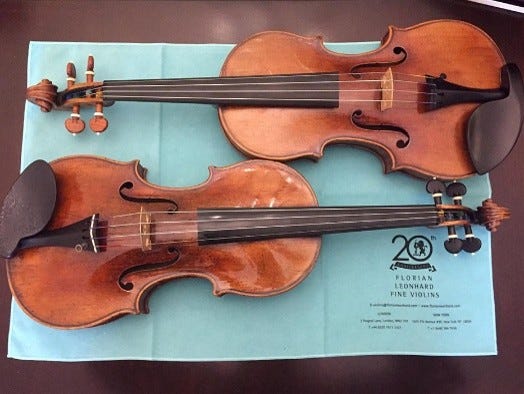
Each night I choose between them not by the music I will perform. My companions respond to the mood I want to evoke. Some nights the silver is too sharp for my heart, and I need the gold.
Other nights, the gold is too tender for the fire. A Strad does not simply amplify a sound. It reveals the truth you are trying to hide.”
Hearing you say that makes me wonder. Did your emotional life with its grief, joy, and loneliness, enter particular performances or compositions?
“Always. Even after my father was gone, a shadow darkened even the brightest passages. Though I make an effort not to reveal them.
Audiences praise my ‘depth.’ They don’t grasp that they are hearing grief, trying to sing.
Happiness, too, makes its imprint. Spanish reunions, a letter from a beloved friend, an evening of laughter in a café. Music remembers everything we feel, even the parts we try to forget about ourselves.”
Here, where we now sit in 1879 Pablo, you are invincible. Do your emotions take over the way you play, or do you ride free on technique alone?
“The body is still working for me right now, friend. There’s no hesitation of the fingers, the breath is steady, and the stamina is inexhaustible.
But emotion, well, yes, that is the only burden I’ve ever experienced. The longer I live, the more the violin has to say. And I welcome that.
Virtuosity is only the doorway. Life is what passes through it.”
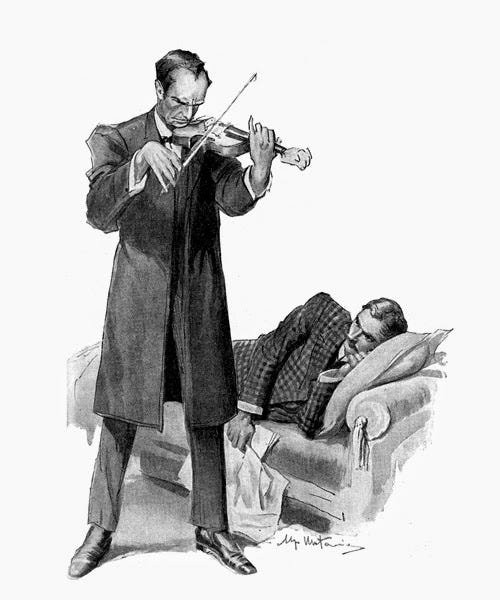
Your playing appeals to such a wide variety of people,Pablo. For example, Conan Doyle puts you in one of his famous short stories, The Red-Headed League, without even saying who you are. How does that make you feel?
“Yes, I heard about that. I feel most gratified that my playing has made such an impression.”
Pablo, that Holmes reference suggests something remarkable. You are admired not only by music lovers.
You are known by the wider public. Writers mention your name without explanation because readers already know who you are. Few classical musicians of any era achieve that kind of celebrity.
“If that has happened to me, I am grateful for it, though I confess I would rather be remembered for a phrase beautifully played than for being recognised.
Young violinists study your style in awe. If there is one message you could deliver to them, what would it be? Something that technique can never impart.
“I want them to know that elegance is not softness. That clarity is not wasteful simplicity. And that speed without soul is just a carnival trick.
They should listen for the breath in each phrase, just as a dancer listens for that millisecond before they leap.
And, most of all, the violin is a singer. Respond to it with kindness, imagination and love. The violin will excuse many technical faults, but never apathy.
That’s such a generous truth. And finally, before we finish, if you could live through a single moment with its full weight, what would it be?
Not a glorious moment, but one essential to who you are.
“You ask the thorniest possible question, and yet I do have a response. For there is one evening to which I keep returning in my thoughts.
I was not yet twenty and performing in Paris. I was playing on the wings of courageous confidence. Yet there was a single moment when my playing seemed to shine forth like a ray of sunlight.
My father was present, half-shadowed in the audience, but I knew he was there. It was then that I played not to the critics, not for posterity, but for him.
On that precious night, as the final note died away, my beloved father stood cheering. His pride seemed to lift the whole hall. The moment had everything: youth, family, purpose, and hope.”
This greatest of artists gently closes his violin case. The final sliver of daylight vanishes. When he looks up at me, it is not as a virtuoso acknowledging the listener. It is a man silently thanking someone who had stayed long enough to hear his truth.
PERSPECTIVE
Pablo de Sarasate occupies a singular place in the history of violin playing.
He emerged in the late nineteenth century when the virtuoso tradition shifted from mere showmanship to sophisticated artistry.
He embodied an ideal of elegance, clarity without coldness, and brilliance without self-indulgence.
His name echoed across Europe, regarded not only as a virtuoso but also as an artist whose tone, poise, and interpretative insight helped define what violin playing could be.
Sarasate persuaded. He illuminated, while others overwhelmed or merely dazzled. Instead, his playing provided a model of refined style that influenced generations.
As for his compositions, he left a surprisingly compact body of work, around fifty to sixty pieces in total. Each is sharpened to a virtuoso edge. A string of operatic fantasies defined a new standard of technical clarity, elegance, and national colour.
More than any other 19th-century violinist-composer, Sarasate shaped what the “Spanish style” meant in classical music and set a template for modern violin virtuosity: light, effortless, brilliant, and unmistakably his own.
His influence rippled outward to Ysaÿe, Kreisler, and Heifetz, and his showpieces remain essential repertoire for every serious violinist today.
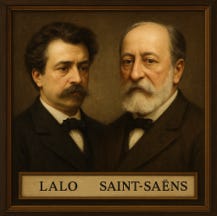
His legacy goes well beyond his own compositions. Lalo’s Symphonie Espagnole and Saint-Saëns’s Introduction and Rondo Capriccioso remain central in today’s violin repertoire. These owe their very existence to Sarasate’s sound, personality, and technical gifts
Sarasate demonstrated that virtuosity need not be athletic to be astonishing. It could be seductive, graceful, and sincere.
With his Spanish Dances and his uniquely Spanish playing style, this truly remarkable artist introduced audiences to a new world of rhythm, colour, and phrasing.
It allowed Spain to sound honestly like itself on the concert stage. His example continues to influence how violinists perform Iberian music today.
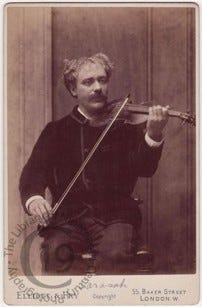
NOW LISTEN TO THE REAL SARASATE:
Sarasate plays in person his famous Zigeunerweisen or “Gypsy Airs” or “Aires gitanos” Op. 20, written in 1878. This is his only recording of the Zigeunerweisen made in 1904 in Paris:
Sarasate plays
To enjoy more intriguing historical figures, visit www.historyspeaks.site
Also, check out my book Conversations With Remarkable Women at Amazon.
SOURCES FOR OUR CONVERSATION
-
Grove Music Online: Sarasate.
-
The Strad Magazine archives: tone, technique, Strads.
-
W.E. Hill & Sons biographical notes.
-
Academic studies on Zigeunerweisen and Romani musical influence.
-
Scholarship on Saint-Saëns and Lalo.
-
19th-century concert reviews from Paris, London, Berlin, St Petersburg.
-
Stradivari instrument archives (1724 Sarasate, 1682 Boissier).
-
Studies on virtuoso performance practice.