SIMONE DE BEAUVOIR
We are meeting in 1949, when Paris is still emerging from the shadow of war.
The river Seine reflects the pale winter afternoon light, and the streets are, once more, full of people.
This year there’s quite a rush of publishers scouting foreign rights for de Beauvoir’s book The Second Sex. An English translation remains some years off.
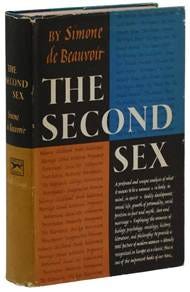
Through her publisher, Gallimard, I have an introduction to meet de Beauvoir.
Apparently, she is curious how her ideas will travel once they cross the channel. That alone, it seems, has bought me an hour of her time.
I am meeting de Beauvoir in a small library tucked inside a Left Bank publishing house, where manuscripts, philosophy texts, and political pamphlets fill the shelves.
The library smells of ink and what seems like paper dust.
The early-evening pavements of Paris echo with the sounds of students, philosophers, and possibly revolutionaries.
Inside these hushed walls, though, it feels like an intellectual oasis.
This intimate and intellectual space mirrors Simone’s life as a philosopher, novelist, feminist, and, crucially, a muse of ideas.
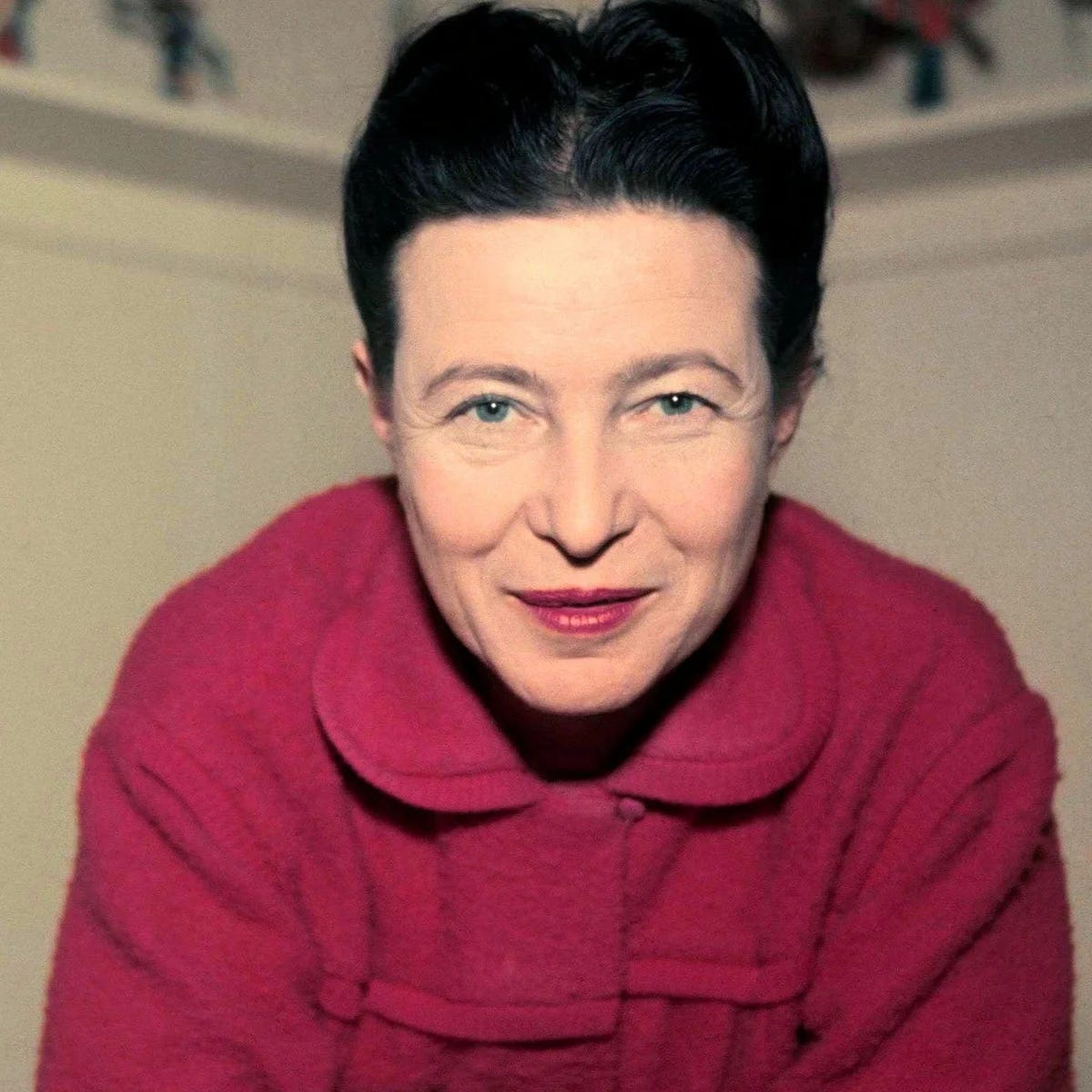
Seated beside an overflowing stack of newly printed copies of The Second Sex, she glances up, her cigarette idly smouldering in the ashtray beside her.
She is a striking-looking woman, though not conventionally beautiful.
Her dark brown hair, drawn back into a simple, elegant chignon, reveals high cheekbones and a sharp, intelligent face.
She wears a navy-blue blouse, and a brown tweed jacket hangs on the back of her chair, slightly worn at the elbows.
She has no jewellery, only a simple leather-strapped watch peeking beneath her cuff.
Good afternoon, Mademoiselle de Beauvoir. Thank you for agreeing to …
“If you don’t mind, Mademoiselle is meaningless to me, just as Madame would be. I prefer my name, Simone.
Titles belong to outdated conventions. Formalities are unnecessary between thinking minds.”
Thank you, Simone. I have long admired your work and am here to discuss something about which you seem to have strong views.
Her head nods slightly, a flicker of amusement crossing her features: “Yes, let’s continue with English.
Except when I travel, I rarely have the opportunity to speak it; I am delighted to do so. I love its rhythm, though I fear my French accent is rather strong.”
She gestures toward the chair opposite her. “Sit, then. Let us talk. I much prefer a discussion to a monologue.”
She exhales a final plume of smoke before stubbing out the cigarette and folding her hands neatly on the table. Her gaze sharpens, expectant.
“Now, where shall we begin?”
My reason for being here, Simone, is my interest in the role of the muse. Have you ever considered yourself a muse to anyone?
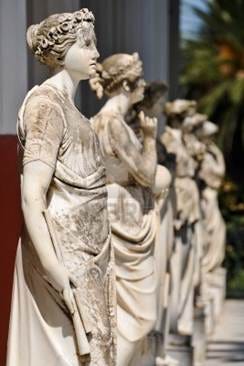
The Muses:
Goddesses of Music, Poetry & Arts
“No, women have had to destroy the role to free themselves. The traditional idea of a muse has often reduced women to mere inspiration for male genius.
If I have inspired, it is not by sitting prettily and providing emotional fuel but by engaging intellectually, arguing, and disrupting.
Such behaviour is not traditionally associated with being a muse.”
You seem to suggest, Simone, that the concept of a muse has historically been a limiting one for women. Have I got that right?
“Absolutely. The moment she shapes ideas, she ceases to be a muse and becomes something else: a thinker, a writer, and a rebel.
Let me put it this way. A muse who creates is no longer a muse but a force in her own right.
There is a difference between being an influence and being a catalyst. I have been the latter. A muse inspires; a catalyst provokes. I have always preferred to provoke.”
Given your closeness to your long-term friend Jean-Paul Sartre, I wonder if you have ever felt like a muse to him.
Or is your relationship always an equal exchange?
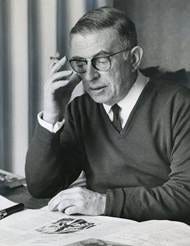
Jean-Paul Sartre
“Our relationship is built on intellectual reciprocity. I am not his muse but his thought partner.
We debate, we argue, and we build ideas together. If I am in any sense a muse, then he is mine as well.
But I can tell you the word muse doesn’t capture the ferocity of our exchanges.”
What is your reaction to people who see you as Sartre’s “companion” rather than a philosopher in your own right?
“It is contempt. I realise the world is more comfortable seeing me as an extension of Sartre than acknowledging that I stand beside him, not behind him.
But I never waste energy on such people. My work speaks louder than their assumptions.”
Do you think perhaps existentialism offers a way to redefine the role of a muse as something more autonomous?
“Absolutely. Existentialism rejects fixed roles. It insists that we define ourselves through action. A muse who merely inspires is stagnant.
An existentialist muse, if we can call such a person that, is in motion, evolving, and challenging.
In that sense, existentialism liberates the muse from silence and becomes a creator.”
She pauses for a moment to take another cigarette. Looking thoughtful, she lights it and gazes at me, waiting for my next question.
Well, Simone, can I turn to some of your writing now? For example, how much of your first novel, She Came to Stay, is autobiographical?
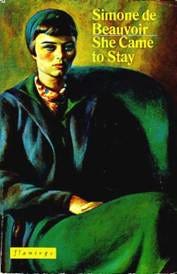
“Much, but not all. The novel reflects my experiences, but it is not a diary.
I used my relationship with Sartre and Olga Kosakiewicz, the young student we took under our intellectual and emotional wing.
I transformed that framework into something more significant: exploring freedom, possession, and existential choice.”
The emotional and psychological dynamics you describe in the novel seem to mirror real-life tensions from this complex triangular relationship.
“That is an astute observation. Through the novel, I questioned how freedom, possession, and relationships shape our existence.
It was not simply a story but an examination of how people construct their identities through choices and interactions with others”
So, can a muse escape the societal constraints you describe in The Second Sex?
“The world does not easily allow women to be both admired and autonomous.
To escape constraint, she must redefine herself, not as an inspiration, but as an agent of her own making.”
Do you ever struggle with being seen as a woman rather than simply a writer?
“I get frustrated when men dismiss my ideas by saying, ‘You think this because you’re a woman.’ As if my reasoning is dictated by my sex rather than by logic and truth.
But my answer is simple: ‘I think this because it is true.
Yet, I cannot turn the argument back on them. I cannot say, ‘And you think the contrary because you are a man.’ Why? Because being a man is considered the universal norm.
A man is not required to justify his position as a ‘male thinker’.
He is simply a thinker. A man represents humanity, while a woman is always seen as particular, subjective, and separate.
I do not want to be read as a ‘woman philosopher’; I want to be read as a philosopher. But the world is not ready for that. It still isn’t.”
You have always been so incredibly productive. Do you ever feel pulled in too many directions between writing novels, philosophy, and memoirs?
“Constantly. But that is my nature. My work is not separate from my life; it’s an extension.
When I write philosophy, I must ground it in lived experience. When I write fiction, I cannot help but engage with ideas.
These forms are not competing forces. They are different ways of exploring the same questions.
I do not seek balance. I seek truth, and truth is never confined to a single genre. Passion, not discipline, is the driving force.”
Your writing has always covered a wide range of territory. What is the most complex philosophical idea you ever wrestled with?
“The question of whether absolute freedom is possible. Sartre argues that we are condemned to be free. That we always have a choice.
But I see that freedom is not so simple.
We are shaped by our histories, our societies, and the invisible structures that limit our choices before we even make them.
Women, for instance, are told we are free. Yet, our lives are still constrained by expectations that we do not create.
Even I, who preach freedom, have to admit its limits.
The challenge is not simply to claim freedom but to dismantle the conditions that restrict it.”
If you could rewrite The Second Sex today, would you change anything?
“Perhaps particular historical examples, as the world keeps changing. But my central argument remains unchanged.
Women are still caught in structures that shape them before they even get to understand the word ‘freedom.’
From birth, they are conditioned to play a role, conform, and believe their destiny lies in serving others.
They are still judged by how they fit into ideals imposed by men, whether as wives, mothers, objects of desire, or symbols of morality.
They are still expected to sacrifice their ambitions, bodies, and voices for love, children, and society.
The structures of oppression adapt to each generation, disguising themselves as choice and progress.
But a choice made under pressure is not genuinely free.
My words remain relevant until these fundamental structures are dismantled, not merely reformed. In many ways, the world has confirmed my arguments rather than disproven them.”
In your opinion, what will be the most enduring impact of The Second Sex?
“I like to think it has made the oppression of women impossible to ignore. Before, it was an unspoken truth, something accepted as ‘natural.’
The book exposes it as a deliberate construction that keeps women secondary.
More than that, it has given language to a struggle that had existed in silence.
Women who felt uneasy, constrained and stifled but could not say why now have the words to define their oppression, to analyse it, to challenge it.
A woman who can name her oppression can fight it. That, I hope, is the legacy of The Second Sex.
It is not a book about abstract thought but the reality of women’s lives.
It reveals how personal struggles are tied to social oppression. And how the most intimate experiences of love, marriage, and motherhood are all shaped by systems of power.”
Finally, Simone, what advice would you give young feminists today?
“First, I would tell them: don’t settle for mere inclusion. Don’t fight only to be accepted into the existing order. Instead, reshape the world itself.
Second, people, mainly men, will tell you that progress so far is enough and that you should be grateful for the rights you have won.
But what good would sitting at the table be if the table was built to serve others? If the foundation remains unchanged, your seat is just another tool of control.
Third, do not be content with ‘opportunities’ that still require you to conform.
I’d also tell them to demand a world where you do not have to ask permission to exist on your own terms.”
Simone, thank you for the time we shared today. You have been most generous in answering my questions.
Acknowledging that compliment with a smile, she reaches for one of her books scattered on the desk. “Please accept this signed copy of Le Deuxième Sex, as a small gift in memory of our encounter, which I found stimulating.”
PERSPECTIVE
de Beauvoir redefined what it meant to be a muse. Unlike the silent inspirations of history, she shaped those around her through intellectual challenge, debate, and defiance.
Her impact as a muse extended far beyond Sartre.
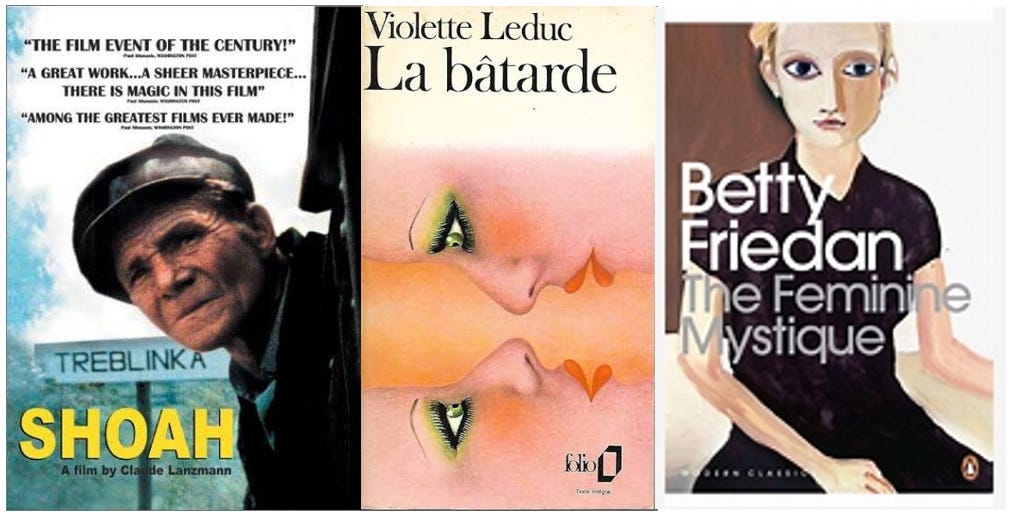
Claude Lanzmann, Violette Leduc, and Betty Friedan were among those most directly affected by her. Lanzmann, later known for his monumental film Shoah, absorbed de Beauvoir’s relentless pursuit of truth.
A struggling writer, Leduc found literary confidence through de Beauvoir’s encouragement, which led to La Bâtarde, a raw and revolutionary autobiography.
Betty Friedan’s The Feminine Mystique, often credited with launching second-wave feminism, was deeply influenced by de Beauvoir’s The Second Sex, underscoring de Beauvoir’s enduring influence on feminist thought.
de Beauvoir’s influence extended beyond individuals to entire movements. Feminism, philosophy, literature, and even modern existential thought bear the imprint of her defiance.
She was not a muse who stood on the sidelines.
She was the fire that compelled others to think, write, and act. Today, her work remains a cornerstone of feminist philosophy, proving that the most potent muses are those who do not merely inspire but challenge the world to change.

I write imagined conversations with history’s most remarkable figures: women, Visionaries, and creative minds. Not summaries, but actual encounters. Real lives, reimagined in dialogue.
If you’ve ever wanted to hear the past answer back, you’re in the right place. I call it History Speaks.
Thanks for reading! Subscribe for free to receive new posts and support my work.