A man hunches over the Paris Café table, finishing a book.
It will run to more than six hundred pages, and he pauses to jot down notes describing a nearby waiter.

Obsequiously, the man bends toward the customers more eagerly than a man normally would do.
For Jean Paul Sartre, French philosopher, novelist, playwright, political activist, and a leading figure in 20th‑century existentialism, the waiter is a little too quick.
His movements are a little too precise.
This man is not serving, says Sartre. Instead, this is someone playing the part of a man serving.
Sartre calls such behaviour ‘mauvaise foi’, or bad faith.
To emphasise his point, Sartre does what philosophers have been arguing about ever since.
He calls the waiter a liar.
But is the man lying? A lie needs someone who knows the truth and someone who doesn’t, and here they are wrapped up in the same man. It is the lie you become.
THE LIE YOU BECOME
That is the first kind of lie that permeates history. It is the lie you perform until you become it: the liar and the lied-to share the same body.
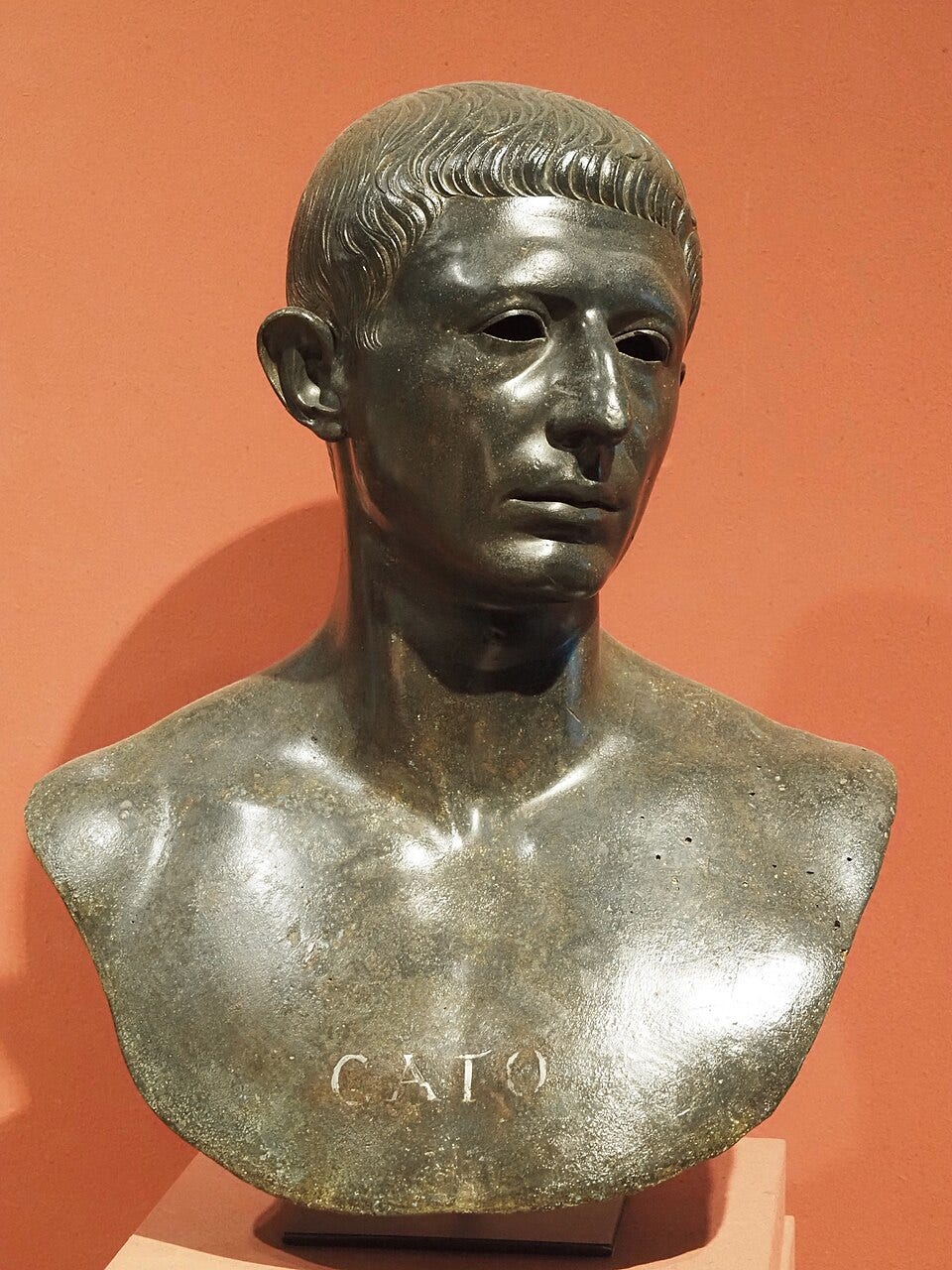
Cato the Younger, a Roman senator, was known for his moral integrity and opposition to Julius Caesar.
He dressed in ancient togas, went barefoot in public, and refused a litter to carry him around.
With total consistency for decades, the Senator lived up to the part of the incorruptible old Roman.
His fellow Romans found him slightly theatrical.
Sartre, busily writing his book, might have wondered at what point Cato stopped performing austerity and became austere.
Having upset Caesar, the much-respected senator died by his own hand at Utica in 46 BC, rather than accept a pardon from the ruler he despised.
Cato’s death seems ultimate proof that his austerity was never a performance.
Yet it could also prove that the role had so completely consumed him that he could not survive stepping out of it.
When you really care about something, this all-absorbing sort of lie can be hard to resist.
Has one of these happened to you? Have you ever had a Cato moment?
THE LIE WITH NO LIAR
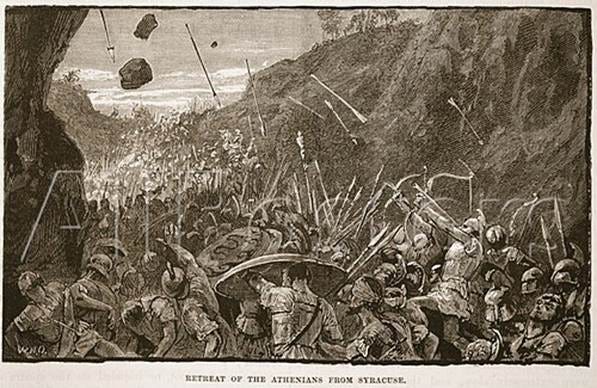
Athens, 415 BC, and the Athenian assembly votes to send a fleet to Sicily.
Thucydides, an Athenian historian and general, records the debate. He also notes something more uncomfortable than the debate.
The Athenians, wrote Thucydides, had no idea of the size of the island of Sicily or the number of people living on it.
Yet Alcibiades, an Athenian statesman, general, and student of Socrates, argued forcefully to send the expedition and believed in his own case.
The assembly heard it and believed it too. So they voted to invade.
The fleet duly sailed and was destroyed at Syracuse. Those who survived the fighting were put to work in the stone quarries until they died there.
Athens never recovered. Eleven years later the city surrendered to Sparta, and the victors required that its walls be pulled down.
Nobody in this story lied. Writing about it from his place of exile, Thucydides’ charge against the assembly was not that they were misled. Nobody lied to them.
Instead, he claimed that the Athenians so wanted to capture Sicily that wanting did the rest.
There was no deceiver anywhere in the chain.
The fleet sailed, and two years later almost none of it came home. This disaster is well recorded in history. But what lessons does it hold for us today?
For example, desire arrived first, and belief followed it. Ring any bells about the US war with Iran? Reason only turned up later to explain the Athenian disaster.
So the second kind of lie is the one where there is no liar. Have you ever wanted something so much that you lied to yourself or others?
Did the truth eventually come home? What did that kind of lie cost you as a human being?
THE LIE THAT RECRUITS
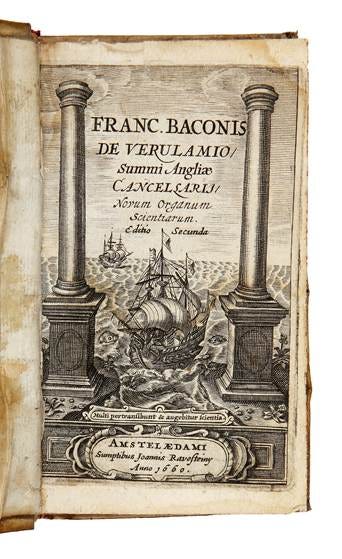
In 1620, London-based Francis Bacon publishes the Novum Organum, a work introducing a new method of scientific inquiry. It is based on observation and induction, laying the foundation for modern empirical science. Bacon explains how it works.
Bacon says that once the mind has arrived at an opinion, it grabs as much evidence as it can to support it.
Evidence that agrees with that opinion is noticed and counted. But evidence that disagrees gets set aside, explained away, or not considered at all.
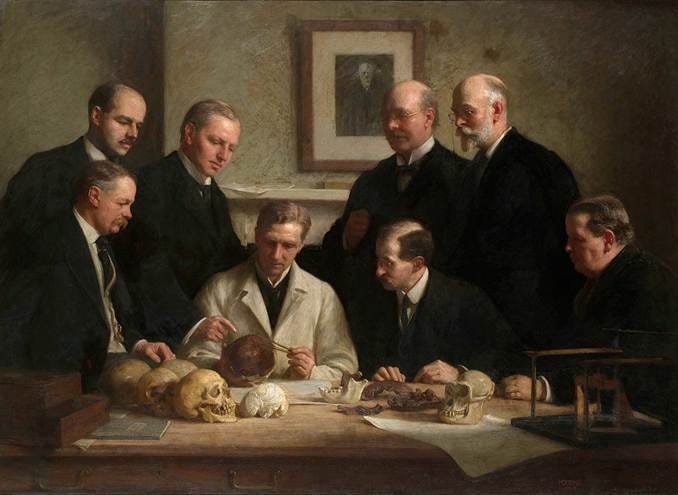
Discussing Piltdown Man
A skull found in a Sussex gravel pit was designated the Piltdown Man in 1912.
It was called the missing link because it fitted what British anatomists already believed. Namely that the brain evolved first, and that the earliest humans were European.
Sadly, it was a fake.
But when genuine fossils turned up in Africa and Asia in the 1920s showing small brains with human bodies, Piltdown did not get re-examined.
Instead, the African finds got dismissed. Yet another later discovery was also rejected largely because it too contradicted the fake.
Some forty-one years passed before fluorine dating, which shows the amount of time something has been underground, exposed Piltdown Man’s jaw as an orangutan’s, stained and filed.
Yet nobody in the establishment lied. They protected an opinion, but the protecting cost four decades of misguided paleoanthropology.
That lie is the third kind, a lie that recruits. Nobody decides to deceive here.
Instead, you settle on something, and the tidying process afterwards happens without supervision.
The deceiving occurs on its own, retroactively, brushing the evidence into shape behind you.
Have you ever gone along with an untruth, avoiding facing up to reality because it suits you or your colleagues?
THE LIE YOU ARE MADE TO TELL
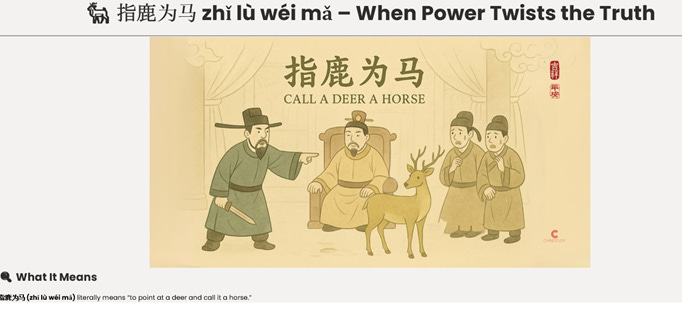
The Qin court in 207 BC and the chancellor Zhao Gao presents a deer to the young emperor and calls it a horse. The emperor laughs and corrects him.
Zhao Gao turns to the assembled officials and asks them what they see. Some say deer. Others say horse. The ones who said deer are marked and later removed from the court.
The story reaches us through Sima Qian, an early Han dynasty historian, astronomer, and court official revered as the father of Chinese historiography.
Writing roughly a century later, Sima Qian’s evidence is more an anecdote than a transcript. But its afterlife is the interesting part.
In modern Chinese, the deliberate inversion of the obvious is called Zhi lu wei ma, pointing to a deer and calling it a horse.
And this is the only one of History’s many stories that begins with a lie.
Zhao Gao knew exactly what he was doing. But the officials who called the deer a horse told the fourth kind of lie:
The lie you are made to tell out loud. Saying an untruth repeatedly starts to soften your grip on the alternative. The mouth teaches the mind.
Have you ever found yourself saying something that you know is wrong, but circumstances seem to force you to say the opposite?
THE LIE THAT RUNS OUT

Photo by Jaric Swart on Unsplash
(athlete is not Simone Biles)
One of the world’s greatest gymnasts, Simone Biles, in Tokyo, 2021, launched into a high vault requiring two and a half twists in midair.
On this dramatic occasion, though, Simone failed and completed only one and a half twists. What happened?
She had what gymnasts call the twisties. In mid-air, the body loses its position. There is no injury. There is no longer a reliable connection between what she intends and what happens.
For a while Simone kept saying she was fine. Then she stopped lying to herself and the world.
She withdrew from the team final, then the all-around, then vault and bars. She competed only on beam and took bronze.
It was a great disappointment, but Simone later called it the most meaningful medal of her career.
For ages, the star athlete had been telling herself she could carry any amount of pressure. That was true for long enough to look permanent.
But in essence, Simone was lying to herself. Later, she said she thought the world would hate her, that she might be banned from America.
She had come to believe what you are told, that you must achieve gold or bust.
For Simone, the lie that runs out worked. It kept working, and then one day it didn’t.
Her body stopped cooperating, and the whole structure came crashing down inside a few seconds in the air.
Have you ever consistently told yourself something, believed it for a time, only to find a different truth?
THE LIE THAT IS NOT A LIE

saliver testing
So far, all five kinds of lies have a shape. Someone performs, wants, protects, complies, or holds on too long. There is always something that looks like a decision.
The sixth kind of lie is not a lie and has no such shape.
In 1992, two psychologists, Peter Ditto and David Lopez, gave people a strip of paper and asked them to test their own saliva.
Some were told that if the strip changed colour it meant good health. Others were told the colour change meant something bad.
Everyone was watching a similar strip. But the people hoping for good news waited more than half as long again before deciding nothing was going to happen.
Nobody in that room lied. Nobody chose to deceive themselves. They just took longer to stop looking at the answer they wanted, and gave up faster on the one they didn’t.
That is the sixth kind. The lie that is not a lie. Not a single decision to deceive, but a thousand small decisions about where to look and when to stop looking.
THE GOOD NEWS ABOUT LYING
All six kinds of lies cost something to maintain.
The waiter’s cringing performance takes work. The Athenians needed a debate before they invaded a place they knew nothing about; Biles could hold on to the story of perfection until her body refused it in mid-air.
You will not easily catch yourself believing something false.
But you can stop yourself hurrying past a question, or failing to linger on an answer, or feeling more strongly than the matter seems to deserve.
Take Billie Eilish, one of the world’s most famous music stars, renowned for her honesty and emotionally charged lyrics.

When she first exploded onto the scene as a teenager, she looked like the definition of cool: unique, fearless, untouchable.
But Billie later admitted that she’d been lying to herself about being okay.
Fame hit hard. She said she told herself she could handle it, the pressure, the scrutiny, the constant judgment. Inside, though, she was exhausted and unhappy.
Psychologists have found that this kind of self-deception is often a way to preserve identity under stress.

Research published in Personality and Social Psychology Review notes that people lie to themselves to maintain a sense of control when their inner world feels chaotic.
Therapists call it a short-term shield that can quickly turn into a trap: the more we deny what we feel, the harder it becomes to reconnect with what’s real.
In interviews, Billie has talked about feeling “empty” even when everything was going right.
Only when she admitted she wasn’t fine did she start rebuilding her confidence and creativity on her own terms. Her honesty became her power.
So what kind of lying do you tend to do? Do you identify with any of the kinds of lying here? Does the history of lying have any lessons for you, and if so, what are they?

I write imagined conversations with history’s most remarkable figures: women, Visionaries, and creative minds. Not summaries, but actual encounters. Real lives, reimagined in dialogue.
If you’ve ever wanted to hear the past answer back, you’re in the right place. I call it History Speaks.
Thanks for reading! Subscribe for free to receive new posts and support my work.