History makes sure our love of shortcuts keeps returning to show us the true price. Misfiring shortcuts are legion.
Did you ever hear of the famous 1996 Rolo award-winning advertisement created by the ad agency Ammirati Puris Lintas? (Double-click Watch on YouTube—sorry about the advert! before the actual advert!)
It featured the famous tagline: “Do you love anyone enough to give them your last Rolo?”
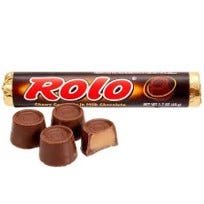
Without a spoken word, the advert conveys a wonderful lesson about how a shortcut may come back to bite you.
The advert tells the fictional story of a boy teasing a baby elephant with a chocolate Rolo, pretending to offer it to the pachyderm. Instead, at the last minute, he eats the sweet himself.
Some years later, as a young man, he watches a parade that includes an elephant. As the elephant passes by, it stops and stares at him for a moment, then, with its heavy trunk, it strikes him over the head.
It was the same elephant, decades later, and elephants have long memories.
Despite being a fictional story, the commercial became a massive success, tapping into a universal human truth about karma and consequences.
Its flawless, dialogue-free storytelling and perfect comedic timing earned it the Grand Prix at the Cannes Lions International Festival of Creativity, the advertising world’s equivalent of an Oscar.
Even though the story was cooked up in a writers’ room, it serves as the ultimate reminder that when you take a selfish shortcut, the universe has a funny way of looping back around to deliver the punchline.
Here are three more remarkable moments from history that prove it.
THE GREAT COBRA BUBBLE
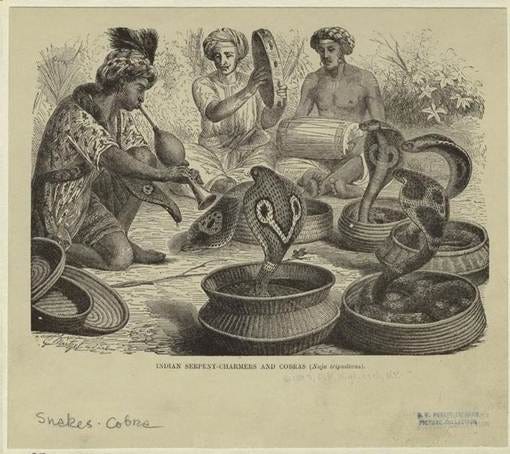
The Cobra Effect – When Incentives Go Wrong – Historic UK
In the 19th century, British colonial authorities in Delhi decided they had a problem of too many wild, dangerous cobras.
In what they thought was a masterstroke, they engineered a flawless, short-term incentive program.
They offered a cash bounty for every dead cobra brought to the government office.
Local entrepreneurs realised they could secure a steady income by simply breeding cobras in captivity, killing them, and collecting the cash.
When the British realised the scam, they scrapped the bounty program entirely.
Outraged and left with suddenly worthless snake farms, the breeders did the only logical thing.
They opened the cages and released all their cobras into the streets.
The resulting wild snake population was significantly worse than it was when the government started.
NAPOLEON’S FLUFFY WATERLOO
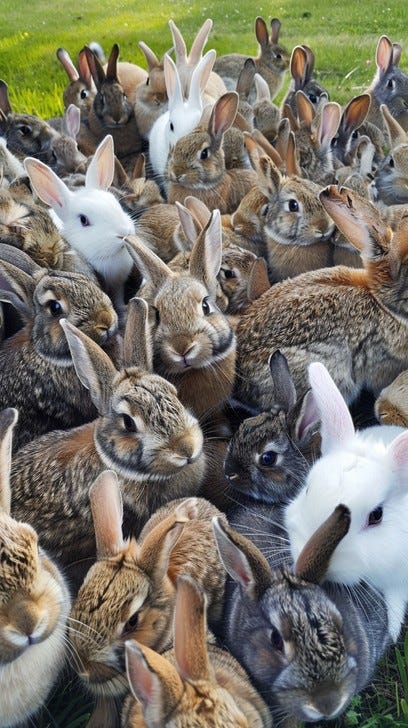
This story of a shortcut involving Napoleon returning to bite those adopting it seems almost too good to be true. In fact, history has carefully documented it.
Having just signed the Treaties of Tilsit in 1807, Napoleon Bonaparte was at the absolute height of his power.
To celebrate, he instructed his chief of staff to organise a grand, celebratory rabbit hunt for his elite dignitaries.
Wanting to guarantee a spectacular, effortless show for the Emperor, the staff did not bother with hunting for wild rabbits.
They bought nearly 3,000 domesticated, farm-raised rabbits from local peasants and caged them in the field, ready to be released.
Guess what happened when the cages opened? These newly released rabbits did not run away in terror.
As farm rabbits, they did not see humans as predators. Instead, they saw them as a walking dinner bell.
The massive horde of thousands of bunnies swarmed directly toward Napoleon, presumably mistaking the Emperor of France for a giant carrot.
The man who conquered Europe was forced to flee to his carriage as rabbits climbed up his legs and jumped into his seat.
Napoleon in retreat from a bunch of bunnies is somehow immensely satisfying.
THE ISOLATED TREE OF TÉNÉRÉ
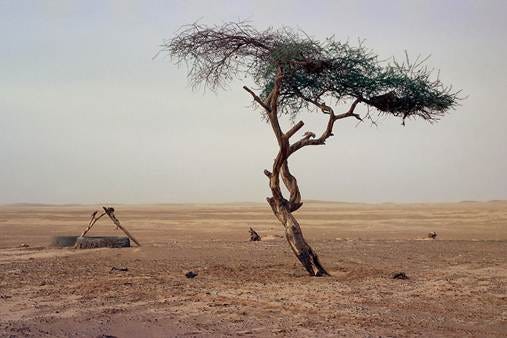
For nearly three centuries in Niger, a single acacia tree stood in the middle of the Sahara Desert. It was a botanical miracle, the very definition of a survivor.
Its roots reached over one hundred feet into the water table below to survive.
It was the only tree for 250 miles, serving as a sacred, life-saving navigational landmark guiding desert caravans for generations.
In 1973, a truck driver was navigating the vast, empty expanse of the open desert.
With hundreds of miles of flat, wide-open sand in every direction, the driver let his attention wander, likely driving while under the influence.
In an act of mathematical impossibility, the driver managed to steer his truck directly into the only physical obstacle in a quarter-million square miles.
The ancient tree was snapped in half. It stands as history’s ultimate reminder that when you lose focus because you think there is no danger around you, you hit the only tree in the desert.
HISTORY’S REGULAR LESSON
What do a Rolo-deprived elephant, a plague of bunnies, an explosion of cobras, and a ruined ancient tree have in common?
History reminds us that when you take a shortcut, there is usually a comeback. Try to game a system like the cobra bounty, and you create a monster.
Stage a superficial triumph, like Napoleon’s bunny hunt and reality will embarrass you.
And when you take your hands off the wheel because you think the coast is clear, you crash.
The next time you are tempted to take the easy way out or assume a small action won’t have a long-term echo, remember the baby elephant.
Treat the world with care, respect the systems you operate in, and always share your last Rolo.
Because sooner or later, the parade comes back around.

SOURCES
The Rolo Elephant Commercial (1996)
-
Ammirati Puris Lintas (1996) ‘Elephant’ [Television Advertisement]. Rolo / Nestlé.
-
Cannes Lions International Festival of Creativity (1996) Grand Prix Winner (Film). Cannes, France.
The Great Cobra Bubble (The Cobra Effect)
-
Siebert, H. (2001) Der Kobra-Effekt. Wie man Irrwege der Wirtschaftspolitik vermeidet [The Cobra Effect: How to Avoid Missteps in Economic Policy]. München: Deutsche Verlags-Anstalt.
-
Vann, M. G. and Peters, L. B. (2018) The Great Hanoi Rat Hunt: Empire, Disease, and Modernity in French Colonial Vietnam. Oxford: Oxford University Press. (Note: This text provides parallel, primary-sourced documentation of colonial bounty-system gaming).
Napoleon’s Fluffy Waterloo
-
Constant, L. (1830) Mémoires de Constant, premier valet de chambre de l’empereur, sur la vie privée de Napoléon, sa famille et sa cour. Paris: Ladvocat.
-
Thiébault, P. (1895) Mémoires du Général Baron Thiébault. Vol. 4 (1806–1813). Paris: Librairie Plon.
-
Chandler, D. G. (1966) The Campaigns of Napoleon. New York: Macmillan Publishing.
The Isolated Tree of Ténéré
-
Monod, T. (1951) ‘Majestueux et solitaire: L’Arbre du Ténéré’, Bulletin de l’Institut Français d’Afrique Noire, 13(1), pp. 240-243.
-
Musée National du Niger (1973) Permanent Exhibition: The Remains of L’Arbre du Ténéré. Niamey, Niger.
I write imagined conversations with history’s most remarkable figures: women, Visionaries, and creative minds. Not summaries, but actual encounters. Real lives, reimagined in dialogue.
If you’ve ever wanted to hear the past answer back, you’re in the right place. I call it History Speaks.
Thanks for reading! Subscribe for free to receive new posts and support my work.
Today I’m announcing a brand new addition to my Substack publication: Andrew Leigh subscriber chat.
This is a conversation space exclusively for subscribers—kind of like a group chat or live hangout. I’ll post questions and updates that come my way, and you can jump into the discussion.