There is a fine line between a brilliant biographer and a literary exhibitionist. Heavyweight historians too often cross that line.
They turn what should be a captivating narrative into a personal vanity project.
Spending years buried in the archives, the best of them unearth bizarre historical anomalies, and instead of sharing the joy of the discovery, they drop them into the text like unexploded bombs.
Then walk away without a backward glance.
It isn’t clever. It’s smug and, above all, an elitist power play. Take Graham Robb’s prize-winning biography of Victor Hugo.
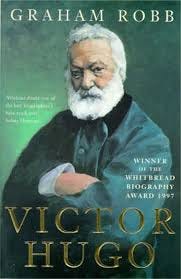
Robb stumbles upon a genuinely fascinating piece of cultural trivia. Namely, the very first mention of football in French poetry happened right inside Hugo’s immediate literary circle.
The quote is complete with arcane references to tactical “lines.” It’s a brilliant connection that bridges the gap between high romantic art and early sports culture.
But does Robb bother to explain it? Of course not.
He tosses it onto the page with the casual indifference of a man dropping loose change into a gutter.

He assumes you, the reader who paid good money for the book, already possess a sprawling, encyclopaedic knowledge of 19th-century French sports history.
And if you don’t? Well, the subtext is clear: that’s your failing, not his.
SHOWING OFF
Let’s call this behaviour what it really is: breathtakingly pretentious showing off.
When a researcher spends half a decade living in the 1800s, their perspective warps. They lose the ability to distinguish between genuine public interest and their own highly specific obsessions.
To Robb, an obscure sports reference in an old French poem might feel like common knowledge, but to the rest of the world, it is total obscurity.
By refusing to build a simple bridge of explanation, the author is indulging in an intellectual humble-brag.
It’s a high-brow schoolyard flex: “Look how much more I know than you.”
It deliberately shifts the burden of intelligence onto the reader, forcing you to stop reading, close the book, and go searching for answers to understand a single sentence.
That isn’t good writing. It’s lazy communication masquerading as sophistication.
Nor is Robb alone, since other prominent heavyweight biographers sometimes commit the same offence.
They too drop massive, unmapped intellectual boulders into their prose to prove they found them.
Two perfect, comparable examples of biographers indulging in the “Intellectual Wink” are Peter Ackroyd’s London: The Biography and Richard Ellmann’s biography of Oscar Wilde.
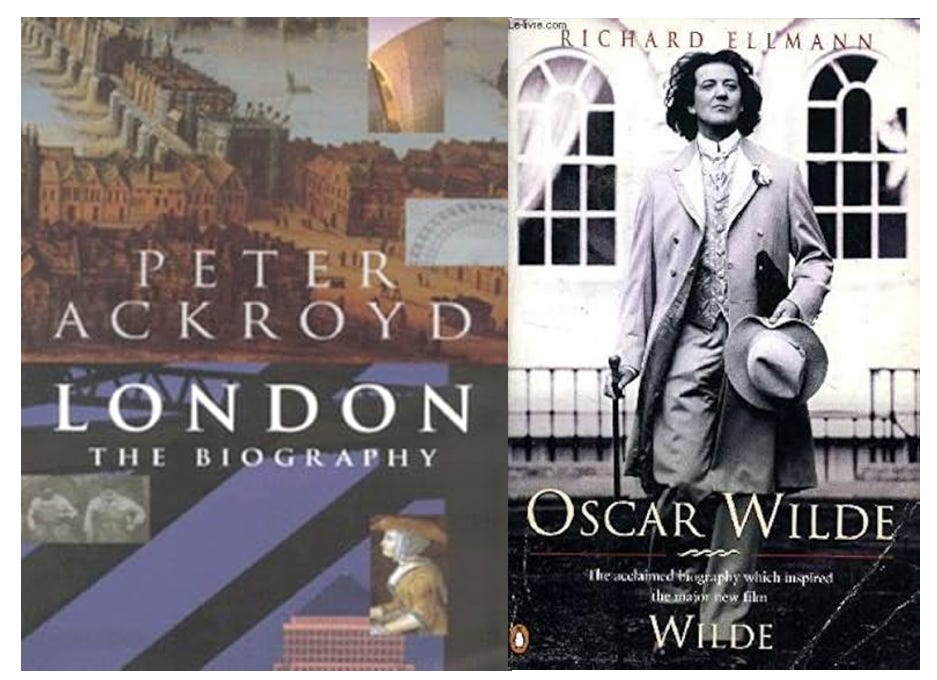
Ackroyd’s “crime”? The unexplained allusion.
He is a master of London’s history, but he too often writes as if his reader shares his exact grasp of the city’s occult and antiquarian byways.
He will reach, mid-paragraph, for a Rosicrucian alchemist or a Hermetic diagram from the 1600s, drop the name as if it were common currency, and move briskly on.
He rarely stops to say who these figures were, or why a forgotten mystic should illuminate a London street.
The reader who does not already know is simply left behind.
The effect is not illumination but exclusion. You are meant to nod along, and if you cannot, that is your problem, not his.
This kind of history-telling is showing off.
The reference does not help you visualise the street; it merely advertises the author’s knowledge of occult philosophy.
By leaving it unmapped, he turns a chapter on urban development into an elite parlour game. If you cannot place the allusion, you are left entirely in the dark.
Another potent example of the Intellectual Wink occurs in Richard Ellmann’s otherwise highly readable Oscar Wilde.
Here he commits the crime of casual class-division snobbery.
Richard Ellmann’s biography of Wilde is a masterpiece.
But he frequently adopts the elite, detached snobbery of his subject, dropping arcane classical digs without a single line of translation.
Writing of Wilde’s Oxford years, he reaches for the in-jokes and nicknames of Victorian university life and the dry idiom of the “Greats” examinations, dropping them without footnote or gloss before moving on.
To a tiny handful of dons and Wildean scholars, these signals land.
To anyone else, they are gibberish, a private code that quietly sorts the room into those who belong and those who do not.
This kind of history writing is showing off. It is the ultimate literary humble-brag.
Ellmann assumes that if you are reading about Oscar Wilde, you must also be intimately acquainted with the hyper-specific student slang of Victorian Oxford.
By refusing to spend five words explaining it, he ensures the joke remains strictly for the Ivy League and Oxbridge faculty lounge.
This Intellectual Wink is not just an Ackroyd, Robb, or Ellmann problem. It is a chronic disease among elite biographers.
Robert Caro buries you in 1950s Senate procedure as though you arrived already fluent in the filibuster.
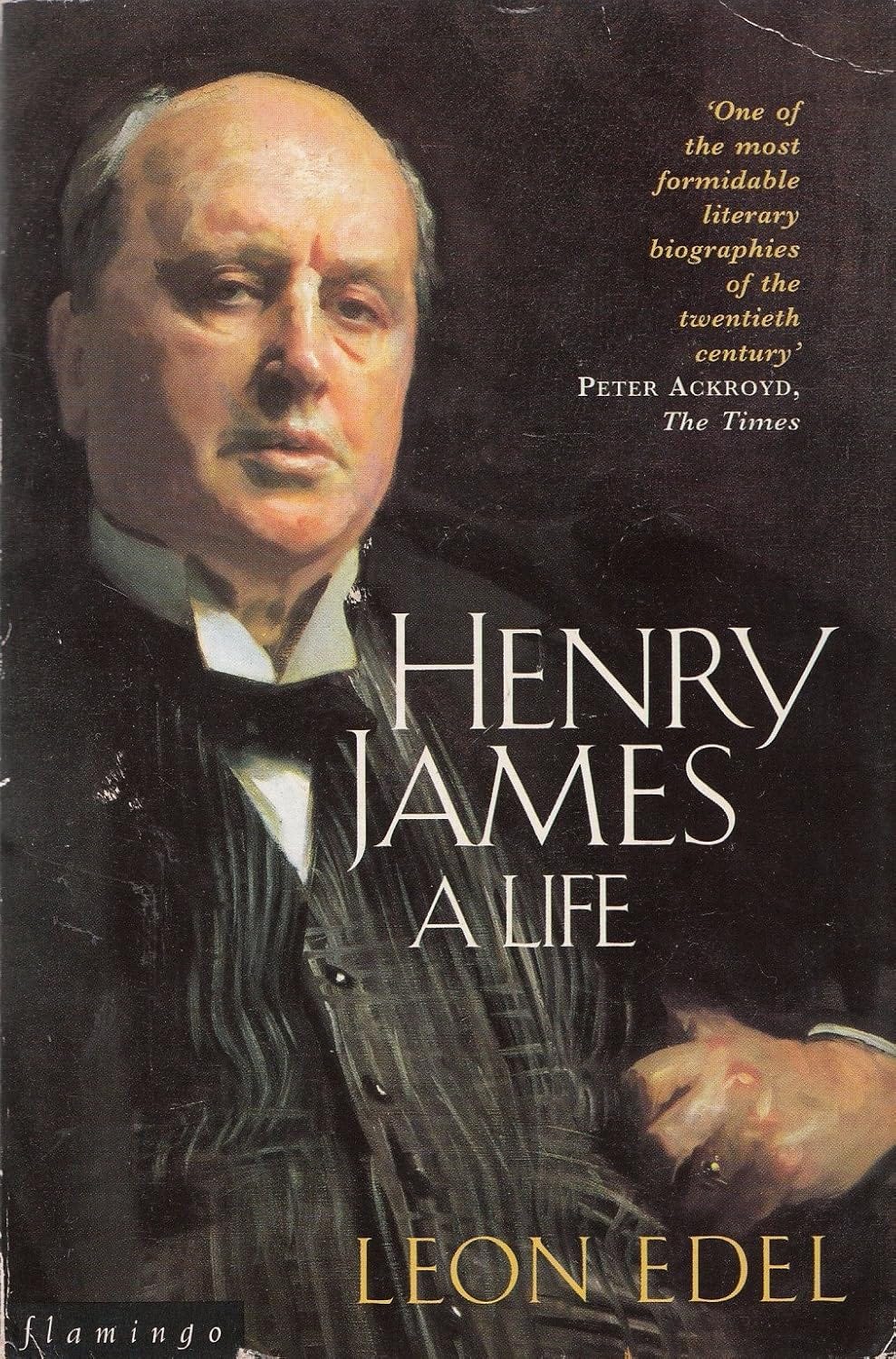
Leon Edel scatters psychoanalytic asides through his five volumes on Henry James, each one a private nod to readers who do not exist.
The names change. The wink does not.
Perhaps I am being too intolerant, but I see this kind of history-telling as a systematic failure of the writer’s duty.
They aren’t letting us into the historical world.
Instead, they are using history to build a pedestal for themselves, leaving the paying reader to do the heavy lifting to understand a single sentence.
The True Duty of a Writer
As history writers, our primary job is to communicate, not to gatekeep.
Truly great writing is about clarity, accessibility, and bringing the reader into the circle, not leaving them standing outside in the cold, while the author chuckles at his own private joke.
When an author refuses to unpack their own esoteric findings, it isn’t a sign of respect for the reader’s intelligence.
It’s the exact opposite. It’s an act of academic vanity that treats the audience as an afterthought.
History is filled with eccentric, wonderfully human stories that deserve to be told, but they shouldn’t require a PhD in French literary minutiae to get past the first chapter.
So, to the elite biographers who love to drop these arcane, unexplained breadcrumbs: we see your ego behind the curtain.
If you’ve found something brilliant in the dust of the archives, please have the
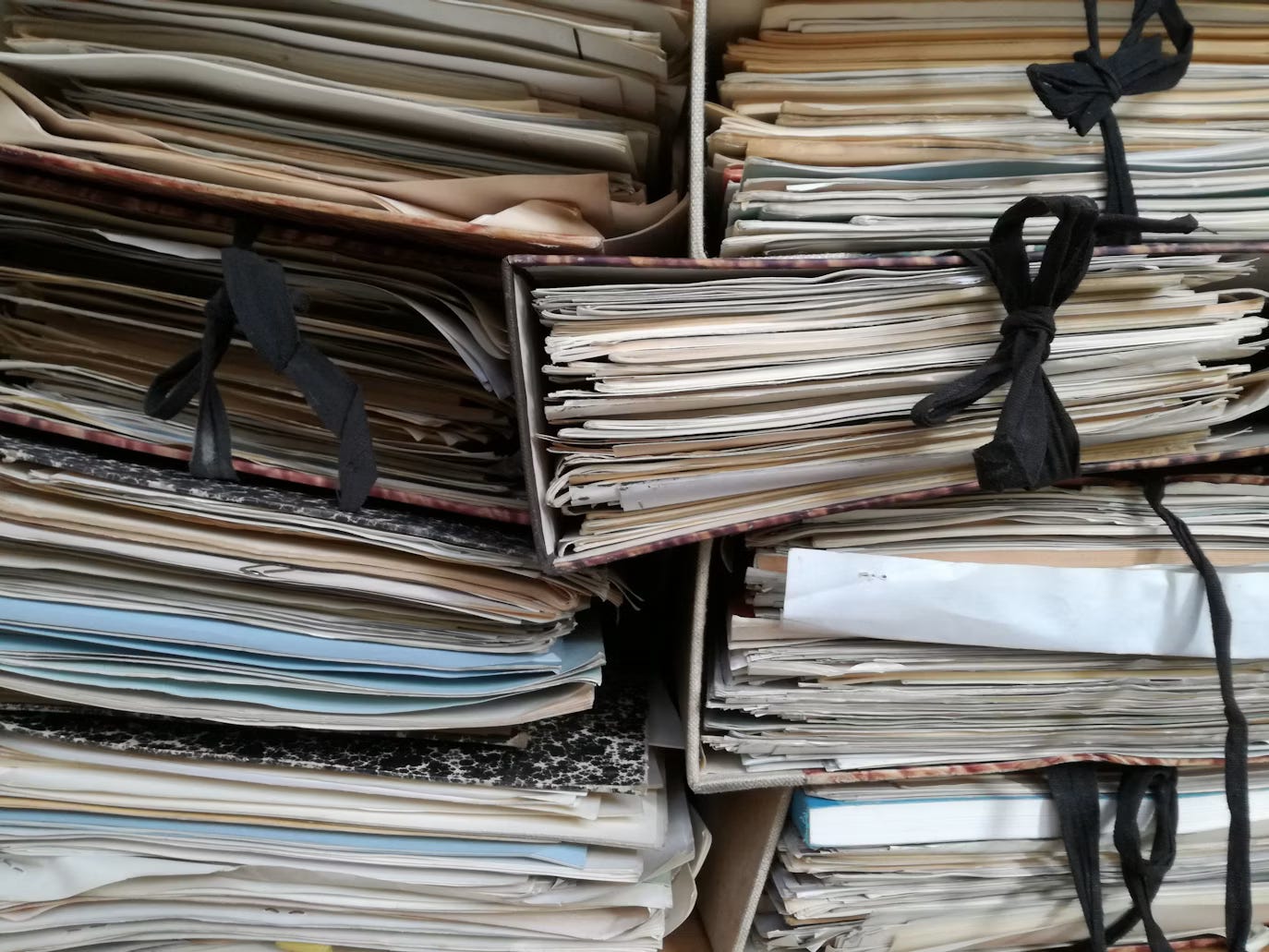
decency and the skill to explain it.
And I mean explain; don’t hide your cleverness in some chapter footnote at the back. Just keep your parlour tricks to yourself.

Is there a subject where you’re now the one holding the obscure knowledge? Do you find yourself doing the same thing to others without meaning to?
Where’s the actual line for you between trusting a reader’s intelligence and just being lazy about explaining something?