History has a way of putting scams into technicolour, so you can’t miss them. With watches, the swindle stares you in the face. Every day, in your newspaper, on your television, and across every other screen you own.
Scam? A strong word, but it’s true. Almost daily, the so-called precision, up-market watch industry is unashamedly trying to blot out history.
You don’t believe it? Here’s how it’s working right now.
On 1 January this year, Rolex, one of the leading luxury brands, raised its prices again by an average of around seven per cent in the United States.
Given the limited demand for high-calibre watches and the broader economic environment, you might reasonably have expected demand to soften.
Nothing of the sort happened. Demand actually increased. So much for trusting basic economic textbooks.
Nor was this a sudden sales uplift an aberration. The 2026 increase was the seventh year in a row that Rolex has raised prices worldwide.
The previous year alone saw two hikes, one also in January and yet another in May.
The annual January rise is now an established tradition.
Like its immediate competitors, Rolex understands that price has zilch to do with production costs or the cost of a time mechanism. It has everything to do with selling luxury.
So how did this bamboozling watch scam begin? It started on 25 December 1969, in Tokyo.
Seiko put a small crystal on sale and ended a five-hundred-year argument about how to measure time.
The watch was called the Astron and cost 450,000 yen, the price of a car. It kept time to within five seconds a month. The finest mechanical watch Switzerland could build, the product of centuries of accumulated genius, still drifted by several seconds a day.
That gap is worth a few moments thought. Five seconds a month works out at about one minute a year. A great mechanical watch losing a few seconds a day could drift by a minute or more inside a fortnight.
The crystal was roughly a hundred times more accurate, so not just a little better, but in a different league entirely.
The contest for time was over before most people knew it had started. A vibrating crystal, regulated by a battery, was simply better at the one thing a watch exists to do.
What happened next is the part of history worth relating, as to why such things happen so often.
By the late 1970s, the cost of quartz had collapsed. The crystal that once cost the price of a car now cost just pocket money.
Switzerland, which had owned half the world’s watch market, saw its share plummet to a quarter.
Around sixty thousand Swiss watchmakers lost their jobs. Watch Houses that had proudly paraded their mechanical marvels for centuries went bankrupt or were sold for scrap.
They called it the Quartz Crisis.
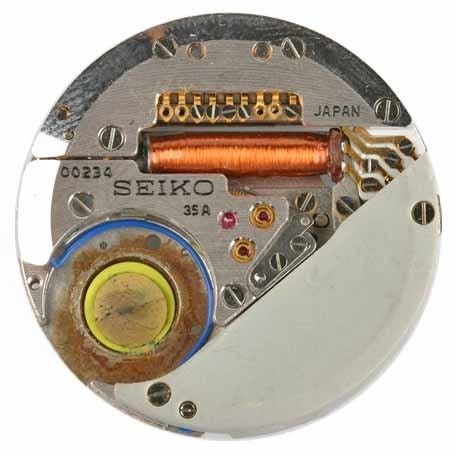
The heart of the crystal revolution
For the people living through it, the word was no exaggeration.
The Swiss could no longer win on accuracy. Nor could they win on price. A child’s digital watch now told better time than a movement that had taken a master mechanic a year to assemble.
So they did the only thing left to do. They stopped selling time.
In 1972, the company Audemars Piguet released the Royal Oak, a steel sports watch that cost more than most gold ones. Designed by Gerald Genta, it launched at 3,300 francs, roughly ten times the price of a steel Rolex Submariner and dearer than many of Patek Philippe’s gold dress watches.
By any rational measure, the Royal Oak was absurd. Yet it sold. Patek Philippe followed in 1976 with the Nautilus, another Genta design. The pattern was set, and it has never changed since.

A
Today I’m announcing a brand new addition to my Substack publication: Andrew Leigh subscriber chat.
This is a conversation space exclusively for subscribers—kind of like a group chat or live hangout. I’ll post questions and updates that come my way, and you can jump into the discussion.
https://open.substack.com/pub/andrewleigh1/chat
This became the genius at the heart of the modern luxury watch. It was also the thing the industry could never say aloud since its success was actually a defeat.
Every full-page advertisement for a chronometer that costs more than some houses is a monument to a battle Switzerland lost in 1969. When the copy murmurs about precision, it is invoking the one quality by which it was beaten, comprehensively and permanently, by a battery.
A Rolex movement loses roughly two seconds a day. In contrast, the best quartz watch Citizen makes is accurate to within one second per year. From a technical standpoint, it is not a contest.
The phone in your pocket, syncing to atomic time, doesn’t drift at all. The moon phases, the second time zones, the depth ratings to fifty thousand fathoms no man will ever reach, these are no longer watch features. They are misdirection.
Much like a conjurer makes you look left when you should be looking right, the watch industry draws your eye away from an immovable fact:
The core watch function was surrendered
half a century ago, and
that a twenty-pound Swatch
on the wrist keeps better time.
And here is the final turn of the screw. The Swatch, cheap, plastic, accurate, and disposable, was the saviour, and not the enemy of the luxury watch.
The man who rescued Swiss watchmaking, Nicolas Hayek, used profits from the cheap, accurate watch to buy up and revive the expensive, inaccurate ones. The plastic watch on your child’s wrist pays for the gold one in the glass case.
So this was never really a story about watches. It is the cleanest example we have of how a thing survives its own obsolescence.
You do not fight the better technology. You retreat from function into meaning. You stop selling what the object does and start selling what it says.
The vinyl record, the fountain pen, the film camera, the mechanical keyboard and so many others lost the same war the watch lost. In some form, most have been refighting it the same way ever since.
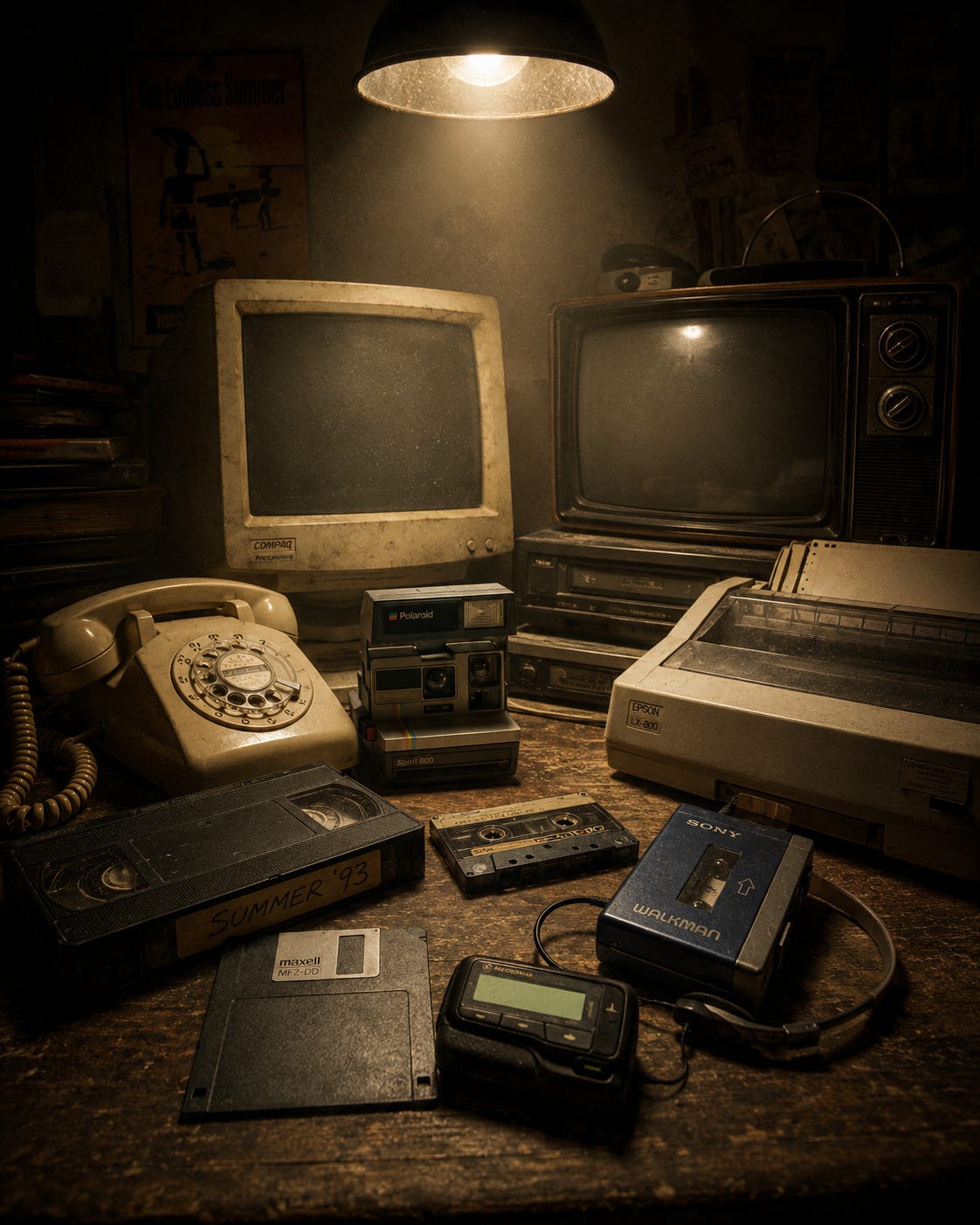
The watch industry simply did it first, and did it best. They could not beat the crystal. So they sold us the gears as art, and made us thank them for the privilege of telling the time less accurately.
Which brings us, finally, to ourselves, homo sapiens.
By many accounts from experts, our own species is approaching a watch-industry moment. The crystal, this time, is artificial intelligence.
We too may have to stop selling what we do and start selling what we mean, and we may find, as the watchmakers did, a hundred ingenious ways to do it.
If they could do it with watches, why not with people?

Your personal inventory
A Swatch keeps better time than a Rolex. Is there something in your own life you keep paying a premium for, even though you know a cheaper version does the job just as well?
Seiko’s crystal was a hundred times more accurate than the finest Swiss movement, and still lost the cultural argument. Can you think of another case where the technically superior option lost anyway?