All three had a hang-up about being in groups.
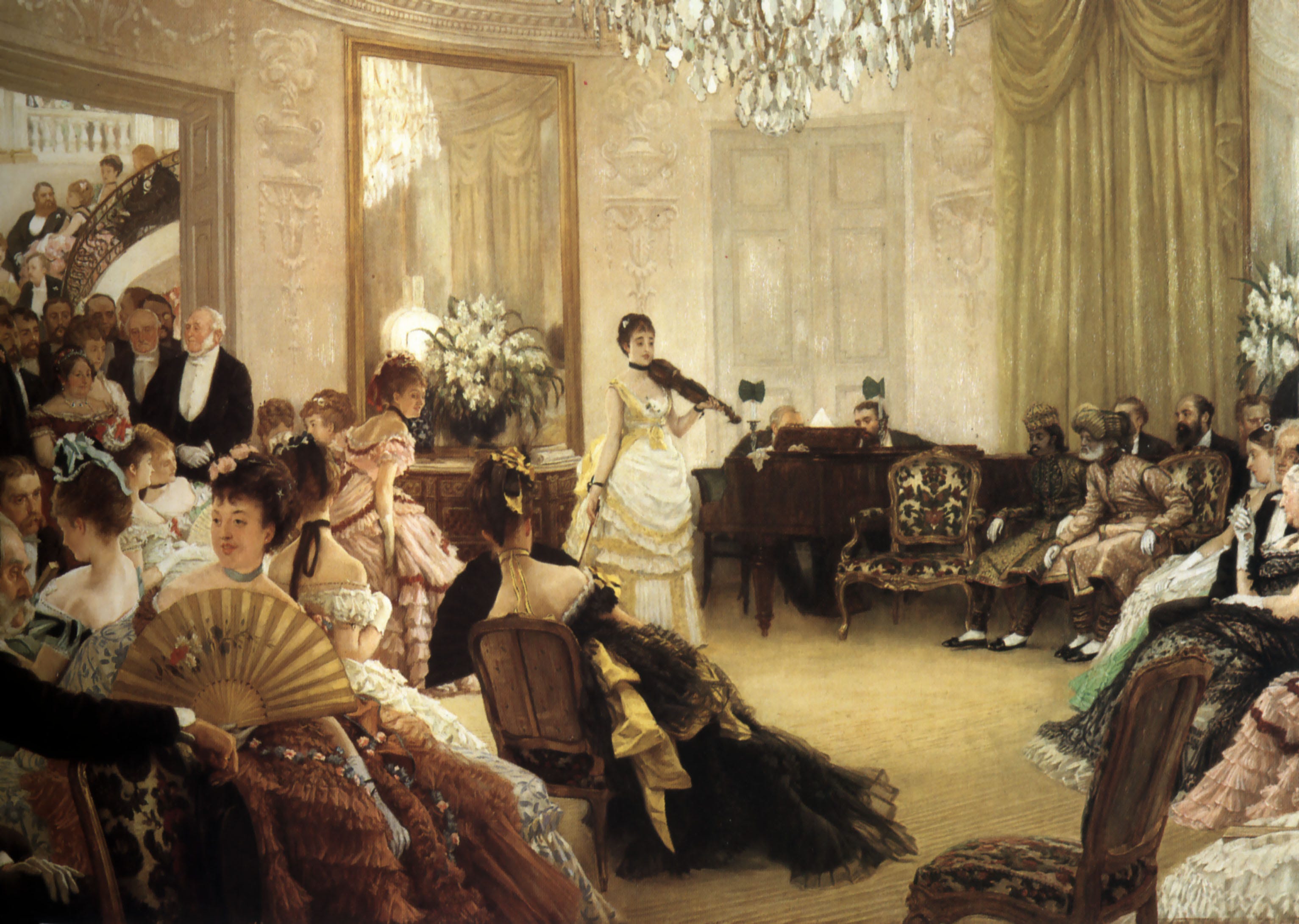
James Tissot, Hush! (The Concert), c.1875, the kind of evening from which Darwin and Newton would have avoided like the plague.
All three had a hang-up about being in groups.
James Tissot, Hush! (The Concert), c.1875, the kind of evening from which Darwin and Newton would have avoided like the plague.
They wouldn’t have wanted to admit it. Darwin certainly didn’t. Newton went to his grave without confessing. Glenn Gould disguised it as artistic temperament and walked off the concert stage at thirty-one.
But the evidence is in the letters, the diaries, and the testimony of the people who knew them. Three of the most celebrated minds of the last four hundred years shared a small, slightly embarrassing secret: they couldn’t stand a room full of people.
Believe it or not, Darwin had a small mirror angled at his study window so he could see who was coming up the drive at Down House. He used it to slip away before the bell was rung.
His son Francis recorded that a single visitor received the full beam of his father’s attention, while a dinner for six left him physically ill for days afterwards.
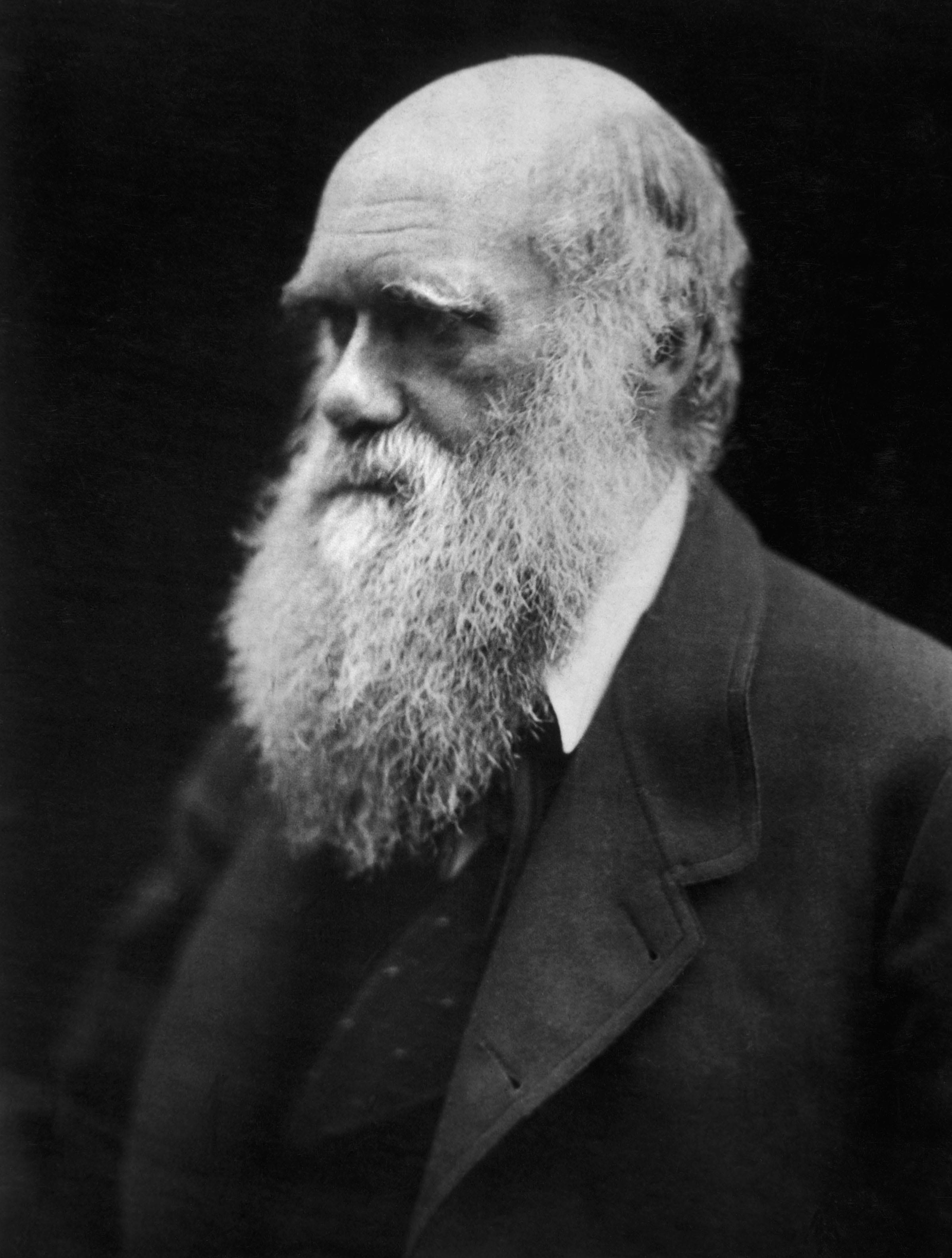
Charles Darwin, 1868
Newton, England’s foremost scientist as Lucasian Professor at Cambridge, was someone you would think oblivious to large gatherings of people to hear his theories and findings.
Instead, this polymath was profoundly awkward in front of an audience. So much so that students gradually stopped attending his Cambridge lectures and he carried on regardless, delivering them to the empty benches.
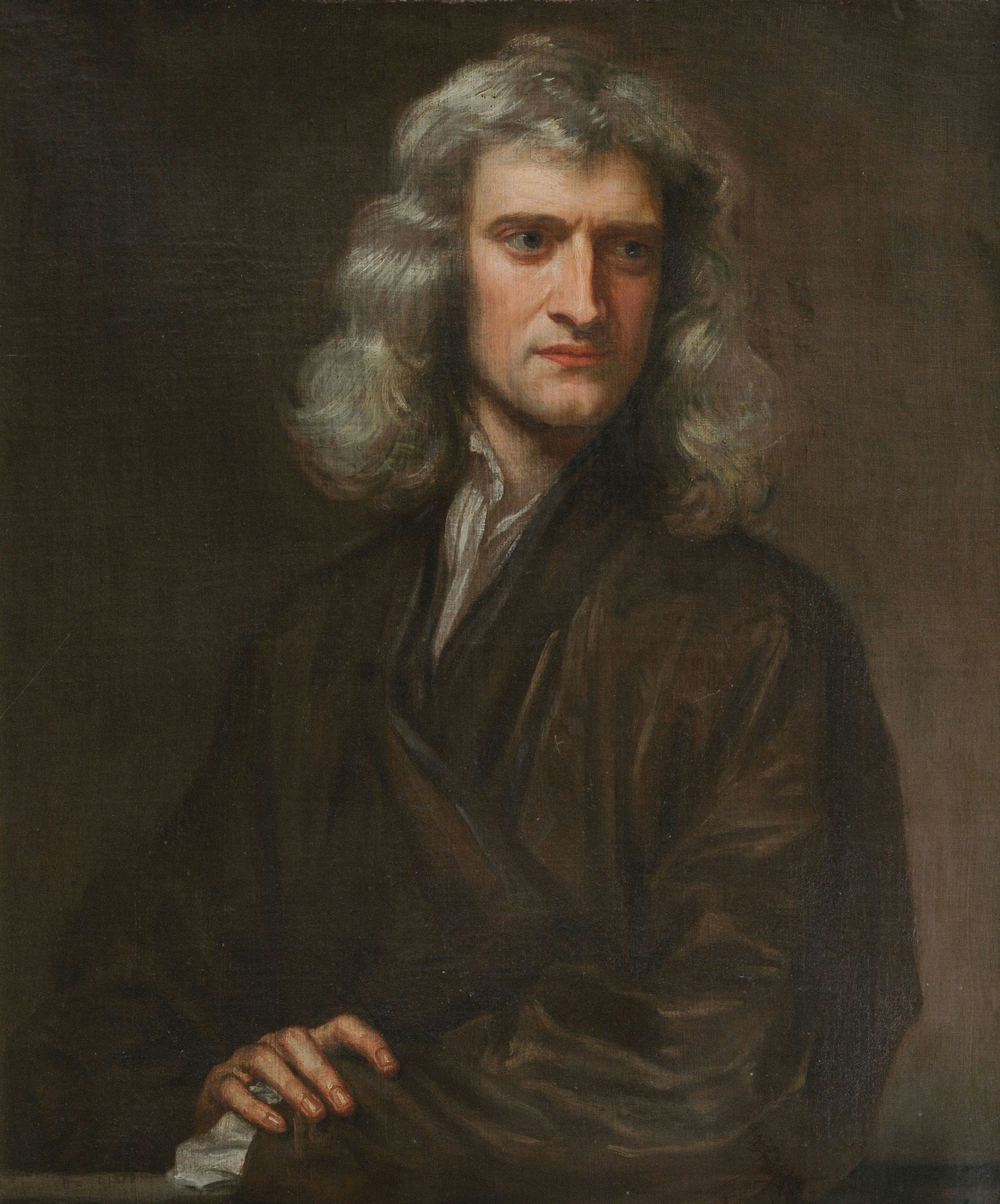
Sir Isaac Newton, oil portrait by Godfrey Kneller, 1689
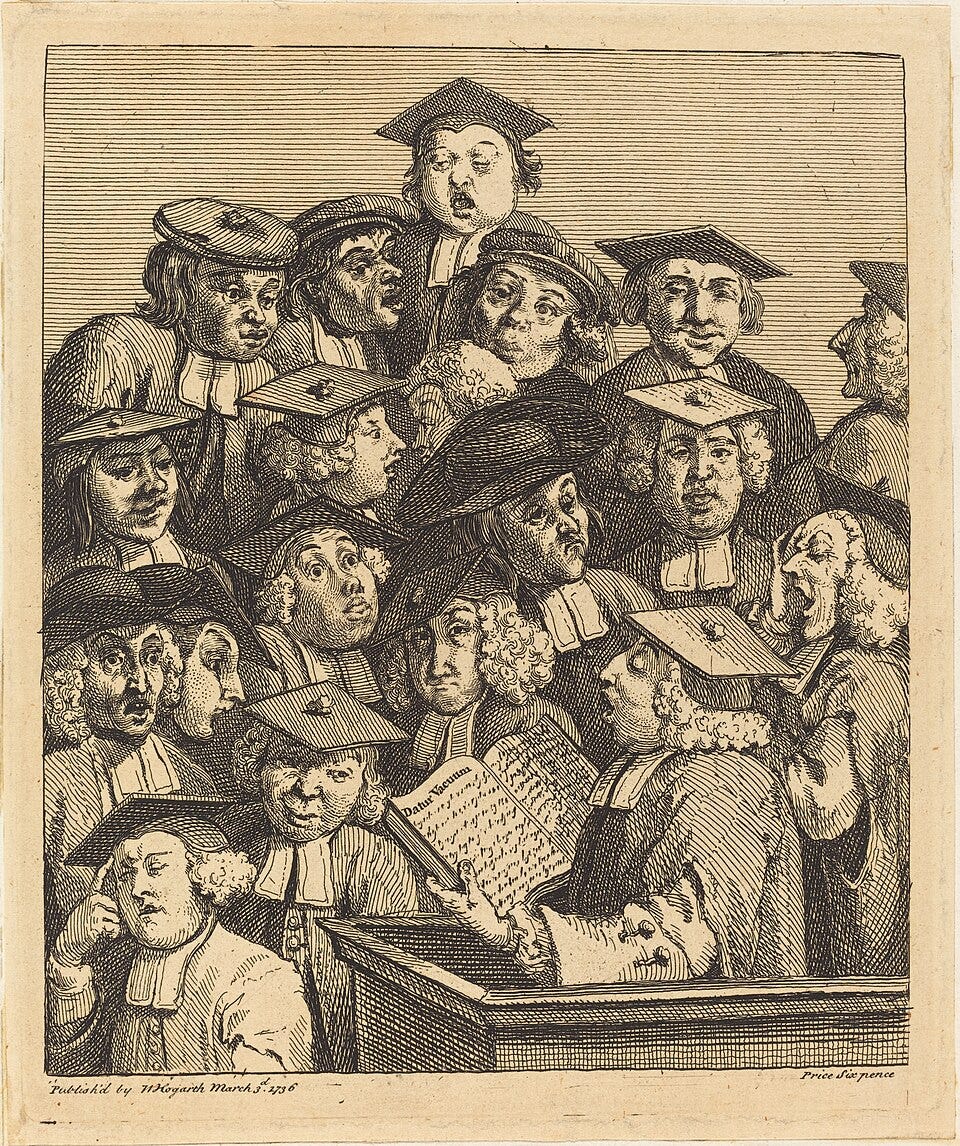
William Hogarth, Scholars at a Lecture, 1736
This is Newton’s nightmare, or his relief, depending on which side of the lectern you stand. But in private, with one trusted correspondent, Newton could hold forth for hours.
Gould walked off the concert platform in 1964, aged thirty-one, and never returned. He spent the rest of his life conducting his friendships by telephone, single calls running four or five hours, deep into the Toronto night.
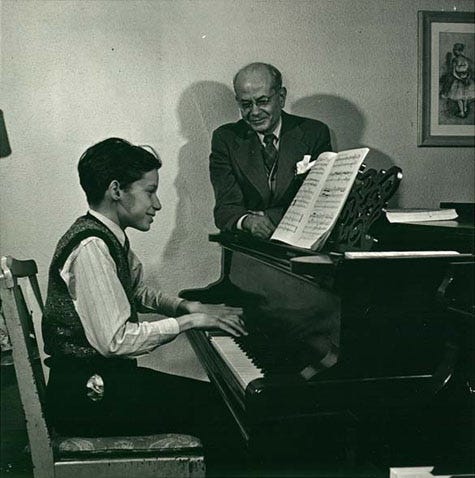
Glenn Gould (at the piano) with his teacher Alberto Guerrero, c. 1945
If you’ve ever dreaded a party and then spent three happy hours on the phone the same evening, you’ll know this feeling. Maybe you’ve arrived at a dinner for eight and felt the energy drain out of you before the starter came.
Or perhaps you noticed that the best conversation of your week happened on a long walk with one friend, and the worst was at a gathering of people you actually like.
Does any of this ring a bell? Here’s some consolation. History shows you’re not antisocial. You’re something else. Your problem isn’t people, it’s being in groups.
Something definite changes when a third person joins a conversation. It changes again at five, and is gone entirely at ten. Attention fragments. The performance instinct kicks in. Your thinking goes shallow because there isn’t room for it to go anywhere else.
That same instinct is why Darwin’s correspondence runs to roughly fifteen thousand surviving letters. Try writing that many e-mails!
At the same time, Newton studiously avoided the Royal Society, where he risked having to defend his ideas in person or to explain that others were wrong. Though once his rival Robert Hooke was dead, Newton finally turned up and ran the place for the next twenty-four years.
The feeling that crowds are torture is why world-successful entertainer Gould preferred a four-hour phone call to a four-minute encore. And why Newton would rather lecture an empty hall than make small talk in a full one.
There is no proper word for this in English. Psychologists mostly stick to a binary: you are either an introvert or an extrovert. The introvert wants solitude. The extrovert wants the room. Neither quite fits.
Enter the Otrovert. The Otrovert wants company, but in its purest form. While the room energises the extrovert, the Otrovert feels depleted by it and revives the moment everyone else leaves and one person stays behind.
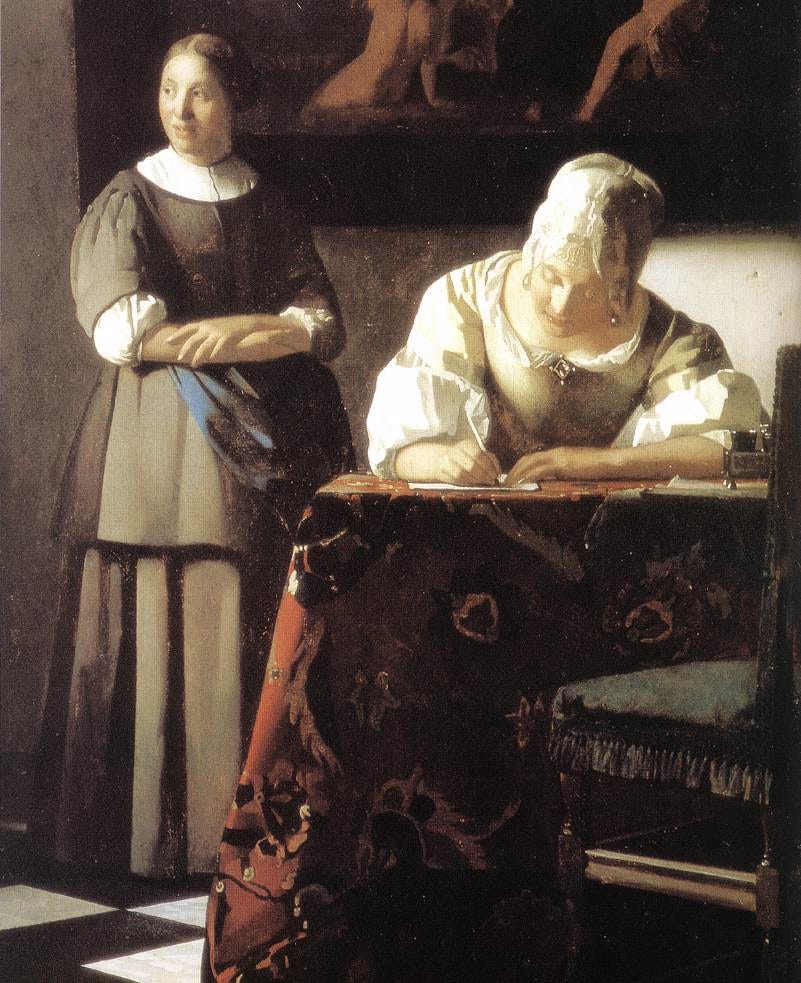
Johannes Vermeer, A Lady Writing, c.1665.
Otrovert’s preferred medium: one person, one correspondent, no room
Quite simply: an Otrovert comes alive in the company of one other human being, and quietly dies in the company of six.
It isn’t a flaw. It’s a setting. And it has been hiding in plain sight for centuries. Examine history with an Otrovert scanner, and you soon detect lifetimes dressed up as eccentricity, shyness, rudeness, or genius.
Darwin, Newton and Gould lived at full intensity. They changed what we know about life, gravity and music. And they did so almost entirely in the company of one trusted person at a time, a wife, a correspondent, or a friend on the other end of a long telephone line.
The dinner parties they avoided cost the world nothing. The dyads they protected gave us almost everything they had.
If you’ve ever felt the brief relief when the last guest leaves, so the real conversation can begin, you’re almost certainly at least partly Otrovert. Tell me about it. But one at a time, naturally.