We all mess up. Sometimes in small ways. A failed test, a bad decision, a relationship gone wrong.
Even people who changed the world made massive mistakes. And still they came back stronger. How on earth did they do it? Let’s ask them.
Ashoka the Great
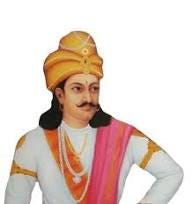
From Conqueror to Compassionate Leader
c. 304–232 BCE, India
Ashoka was the last major emperor of the Mauryan dynasty.
He ruled a vast empire in ancient India and was determined to expand his conquests.
A: Emperor, this may be tough to answer, but what do you see as your greatest mistake?
“It came as the bloody Kalinga War, between my Mauryan Empire and the independent kingdom of Kalinga.”
A: How bloody was it, Ashoka?
“Hard to tell exactly, but between 100,000 and 250,000 dead.
I remember standing amid all that destruction and didn’t feel any sense of victory.”
A: Well, what did you feel?
“Guilt, terrible, overpowering guilt. It changed everything for me.”
A: How, and what did you do about it?
“I confessed my regret in carved stone edicts, renounced violent conquest, and built hospitals, wells, and rest-houses across my entire empire.
I also tried to spread a philosophy of kindness, tolerance, and welfare.”
A: This is what Buddhists call righteous conduct, or Dhamma, is that right?
“Yes. Dhamma is the universal law of nature, the intrinsic truth of reality.”
A: And how did Dhamma help with the awful guilt over those many thousands of dead?
“Dhamma gave me more mental clarity and inner harmony. It happened once I faced the harm I had done and decided to do better.”
A: And your legacy?
“If I have a legacy, it isn’t the wars I won. It’s the peace I built afterwards.”

Now let’s ask Winston Churchill about his comeback
Winston Churchill
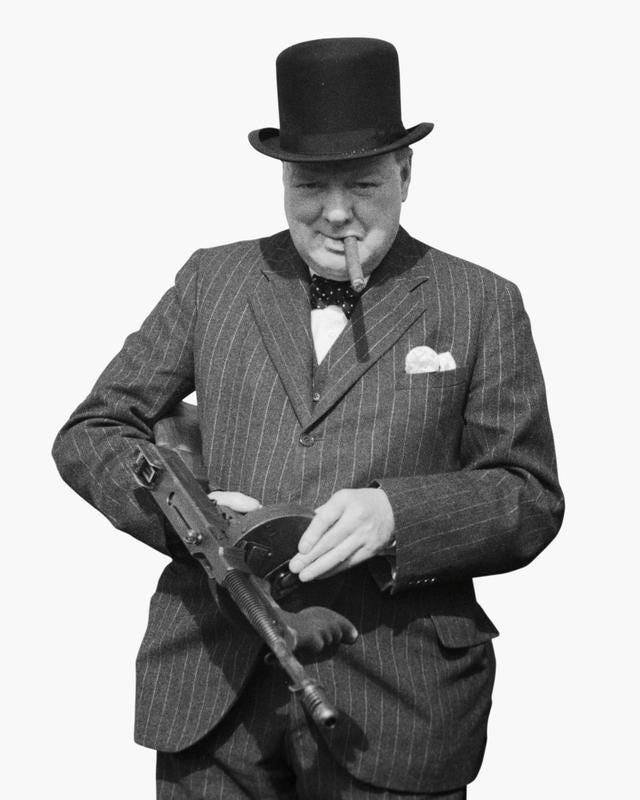
The Comeback King
1874–1965
“My biggest blunder? If you must ask, it was the Gallipoli Campaign in World War I.
Thousands of Allied soldiers died, and frankly my career seemed finished.
There seemed nowhere to go after that.”
A: So did you give up on pursuing a career in politics?
“No, instead of hiding away as many of my friends and colleagues urged, I publicly owned up to the mistake.
It was humiliating, but I admitted I was personally responsible for the plan.
I was the minister in charge, and acknowledging that was very painful.
I took the time to learn, and then I set out to rebuild trust and prepare for the future.”
A: And what did you learn from this personal and public disaster, Mr Churchill?
“Awful though it was, that experience showed me the need for both grit and realism in the face of obvious failure.
I learned also that a mistake doesn’t define you. How you respond to it does. Accountability is the first step to forgiveness.”
Now let’s ask deep south George Wallace about his comeback
George Wallace
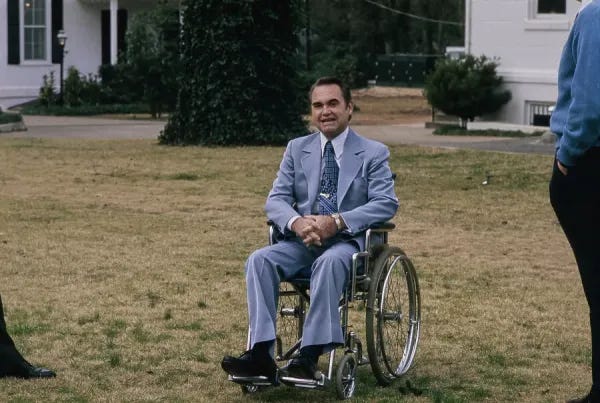
From Segregation to Sorry
1919–1998
In 1963, Alabama Governor George Wallace stood on the steps of the University of Alabama and declared: “Segregation now, segregation tomorrow, segregation forever.”
Far too many applauded him.
A: George, you were widely known as the face of racist resistance to civil rights. Is that right?
“Yes, that’s true. But after surviving an assassination attempt that left me paralysed, I began to rethink everything.”
A: So how did you deal with your hard-to-live-down racist image? You were widely known for hating Black people.
“When I had rethought things, I set out to apologise publicly to Black leaders and sought their forgiveness.
To the distress of many southerners, I appointed African Americans to government roles.
Those appointments didn’t erase my past. But people say that it showed real change.”
A: So what did you learn from that, George?
“From my experience, I’d say that you can’t rewrite your history. But you can choose to grow from it.
For me, heartfelt apology plus action meant a real personal transformation.”
Now let’s ask Walt Disney about his comeback
Walt Disney
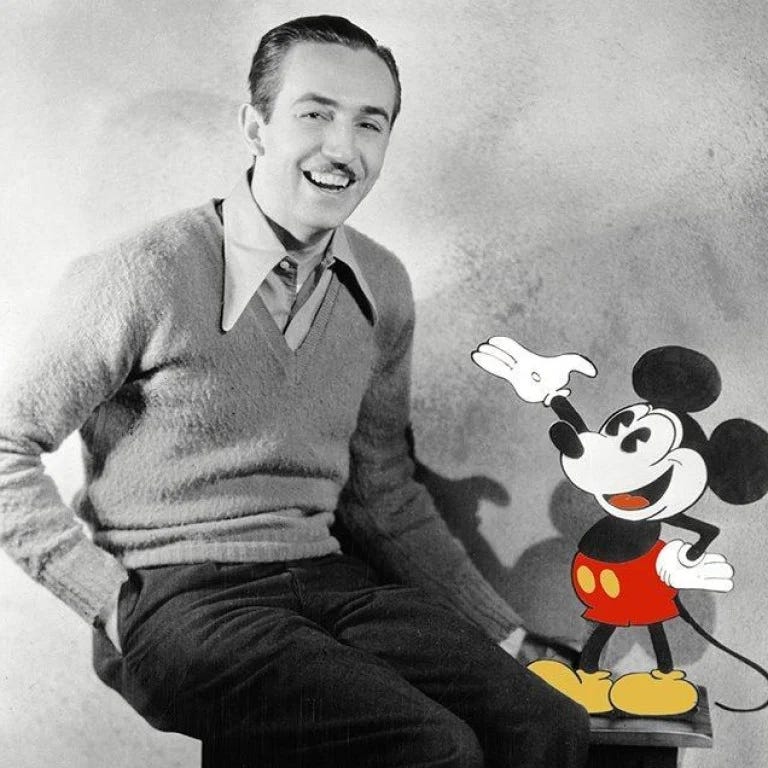
Failure Fuelled His Imagination
1901–1966
Before Disney became a symbol of creativity, he went broke. His first animation studio, Laugh-O-Gram, collapsed.
Then he lost the rights to his early character, Oswald the Lucky Rabbit. It could have ended him.
A: Losing the studio was bad enough.
But having Oswald taken away from you must have seemed an insurmountable blow, Walt?
“Yes, in those days so much of my livelihood depended on that growing animation business.
But I discovered the hard way that I didn’t own the character.”
A: So Walt, faced with the demise of Oswald as your one main source of income, what did you do?
“I drew something new, that cheerful little mouse that I named Mickey. A great deal flowed from that decision.
I didn’t just rebuild; I started to see endless opportunities to grow entertainment itself. I created theme parks, and now it’s a global storytelling empire.”
A: So what lesson do you draw from losing Oswald?
“It wasn’t so obvious at the time, but failure isn’t final; it’s feedback. Lose one dream? Draw another.”

Now let’s ask Charles Darwin about his comeback
Charles Darwin
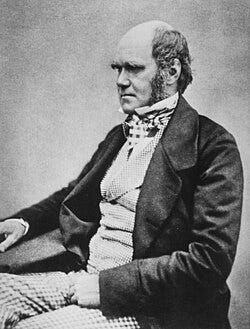
The Dropout Who Redefined Science
1809–1882
Darwin began as a medical student, and failed miserably. He couldn’t stand the sight of blood and ran a mile.
He dropped out and drifted, unsure what to do.
A: So what did you do, Charles, having ditched a medical career?
“I’ll tell you. I followed my curiosity, and it led me to HMS Beagle.
That voyage, collecting fossils and observing nature, led me to the theory of evolution.”
A: And from that experience of feeling lost and uncertain, what lessons do you draw from that time?
“Sometimes the wrong path, in my case a medical career, stimulates you to seek the right one.
I found that failure can redirect you to your purpose.”

Now let’s ask Isaac Newton about his comeback
Isaac Newton
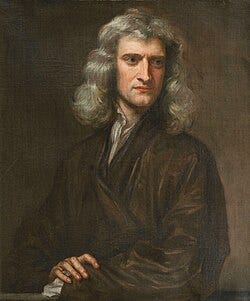
The Quiet Genius Who
Needed Space to Fail
1643–1727
Newton wasn’t a star student. Early in his university life, he was entirely forgettable.
Then the plague hit London, and his college shut down. Newton was forced into isolation.
A: You had two lost years avoiding the London plague, Sir Isaac; how did you use that time?
“They didn’t seem lost years to me. I began tinkering, thinking, and experimenting.
Those so-called lost years helped me formulate my ideas about physics.”
A: Including, of course, calculus, gravity, and the laws of motion, Sir Isaac.
“Indeed. I found that a setback can turn into a new setup. Let me put it like this: you may just need time alone to think, reset, and create.”

Now let’s ask Steve Jobs about his comeback
STEVE JOBS
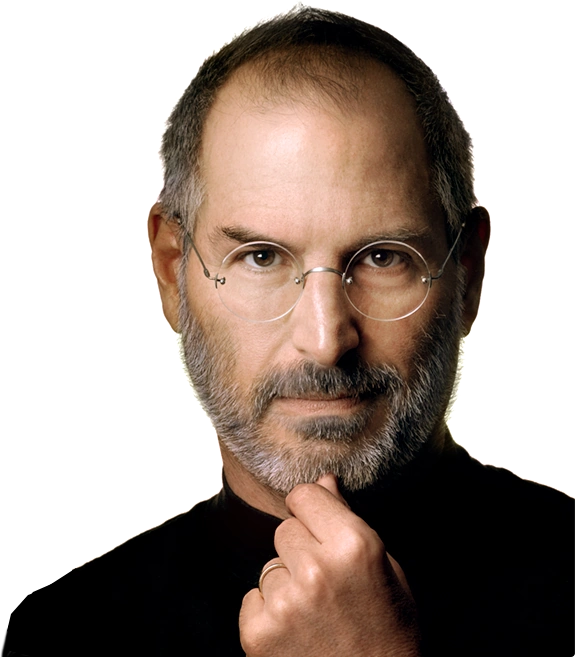
The Comeback That Saved Apple
1955-2011
In 1976, Steve Jobs co-founded Apple in a garage. Less than a decade later, in 1985, he was forced out of the very company he had created.
Jobs was the victim of a boardroom power struggle. For most people, that would have been the end of the story. For Jobs, it was the middle.
A: So what did you do after you were so unceremoniously chucked out of your own company?
“I spent the next twelve years in the wilderness. But I refused to stay idle.
Instead, I founded NeXT, a computer company whose technology would later become the backbone of modern Apple software.”
A: Was that it, how you survived the outer darkness?
“No! I also bought a small graphics outfit that became Pixar, the studio behind Toy Story.
I was enjoying myself with Pixar while Apple was in dire straits. Bankruptcy. was looming.
That’s when I came back through the side door. Apple bought out NeXT, and within a year I was running the company again.”
A: Yes, that was one of the great turnarounds in business history. How did you do that?
“Simple! I killed off most of Apple’s sprawling product line, and bet everything on a handful of products built around design and simplicity.
Out of that focus came the iMac, the iPod, the iPhone, and the iPad. Apple grew from near collapse into the then-most valuable company on earth.
So being ousted from Apple turned out to be the best thing that could have happened to me.”
What the rest of us can take from his experience
-
Getting fired wasn’t the end of the story. Using the wilderness years, Jobs didn’t wait for permission to matter again.
-
Focus was a weapon. His first major move on returning was to cancel most of Apple’s products.
Saying no to good ideas in order to protect the few great ones is often what turns a situation around. -
Play to a clear vision, not consensus. Conviction about what matters beats chasing every trend.
Jobs bet on design, ease of use, and integration at a time when the industry was chasing specs and price. -
Reputation can be rebuilt. He returned humbler and more disciplined as a leader. People do get second acts, if the work backs it up.

SUMMING UP
Ashoka, Churchill, Wallace, Disney, Darwin, Newton and Jobs all had something in common. Different centuries, different mistakes, but the same comeback pattern.
Here’s what they all did right, and what the rest of us may need to consider too:
• Adopt the Comeback Code. Own your setback. No denial, no blame. Ashoka carved his remorse into stone. Churchill faced the music. Wallace said sorry.
Owning your mistake is a source of power, not weakness.
• Learn and pivot. Darwin dropped medicine and found nature. Disney turned loss into innovation. Jobs started his own breakthrough. When something breaks, rebuild smarter, not the same.
• Act differently next time. Without change, apologies mean little. Wallace didn’t just talk of regrets. He took action and appointed Black officials.
Ashoka didn’t just feel bad. He went on to build hospitals. Real growth shows up in definite actions. Jobs learned the hard way about leadership and adapted.
• Use time to your advantage. Big comebacks take time. Churchill’s return to national leadership came some twenty-five years after Gallipoli.
Darwin’s book took decades. Newton’s isolation lasted years. Be patient with your demands for progress.
• Keep perspective. Every one of these people was defined more by their recovery than their mistake. The world remembers what they became, not how they messed up.
History suggests that recovery isn’t about pretending the failure didn’t happen. It’s about transforming it into something that wouldn’t exist without the stumble.
These seven historic figures did not erase their mistakes. Instead, they recycled them into fuel.
You don’t need to be an emperor or a scientist to recover.
The comeback starts the moment you stop running from the mistake and start rebuilding with it.
Although the above conversations are imagined, they are firmly grounded in the historical record.
Also, I have full-length conversations with Darwin and Newton in my forthcoming book on Visionaries.
If you’d like to be notified when it’s available, just drop me a line at info@historyspeaks.site.