An Octovert is someone who feels most natural on the outside looking in,
preferring one-to-one connections over groups, but always keeping a
slight emotional distance even then.
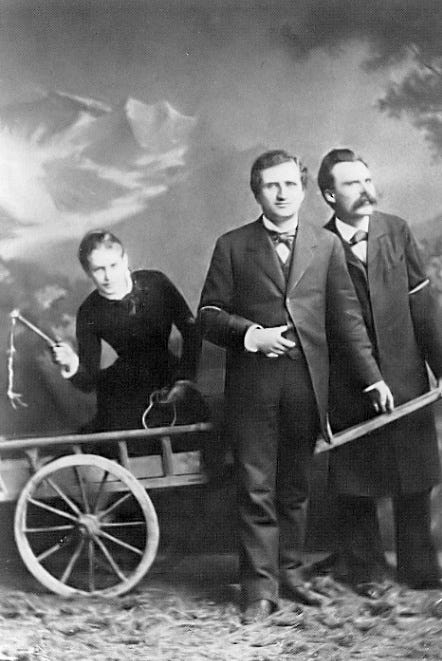
This is one of the most notorious pictures in intellectual history. It was taken on 13 May 1882 in the studio of Jules Bonnet in Lucerne.
A young woman perches in a small farm cart, holding a decorated whip. Standing in the shafts in front of her, like two harnessed draft animals, are the philosopher Friedrich Nietzsche and Paul Rée, author, physician, philosopher, and friend of Nietzsche.
She is Andreas von Salome, a twenty-seven-year-old Russian-born psychoanalyst and a well-travelled author, narrator, and essayist from a French Huguenot-German family.
The scene was Nietzsche’s idea. Over Rée’s strong objections, who had a lifelong aversion to being photographed, Nietzsche insisted on the photograph.
He orchestrated the session with the Swiss photographer and even took a personal hand in the details. Such as the small cart and even the sprig of lilacs attached to the whip.
Both men had previously proposed marriage to Lou. For Nietzsche, it was the second time, and on both occasions she had turned him down. So the man who later wrote “You are going to women? Do not forget the whip!” spent that afternoon cheerfully arranging to be harnessed in front of one.
Lou happily showed the picture around at Bayreuth that summer. The philosopher’s sister, Elisabeth Nietzsche, was scandalised. Pretending innocence, Friedrich later wrote to Lou:
“Oh, that naughty photographer. And yet what a lovely silhouette perches on that delightful little cart.”
A woman driving men rather than the reverse, and laughing about it. That is the Lou Salomé we need to understand before anything else about her makes sense.
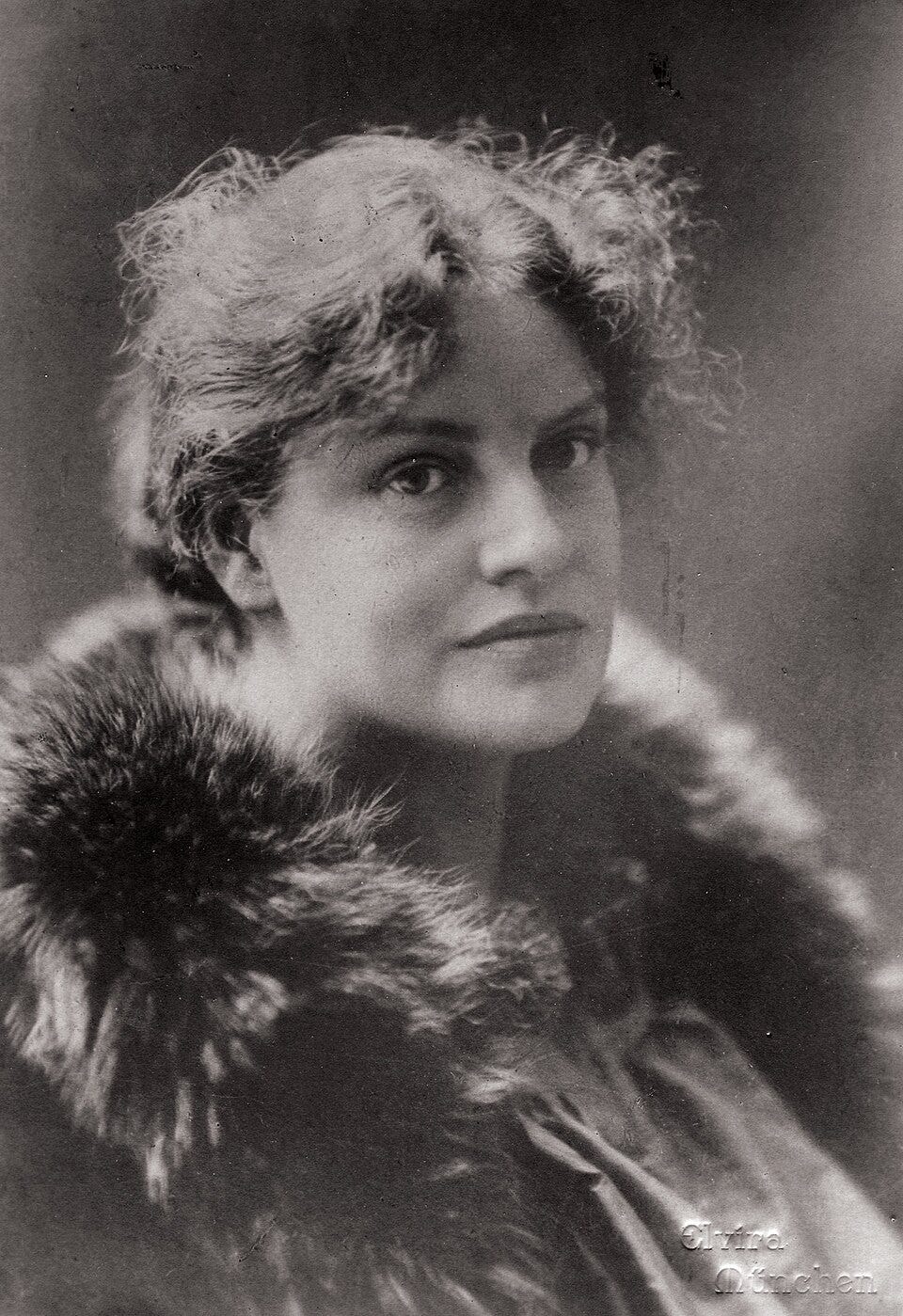
Lou Andreas-Salomé, c.1897
In the summer of 1882, all three, Nietzsche, Rée and Lou, lived together in the Swiss mountains near Lucerne and called themselves a Trinity.
Lou Andreas-Salomé was twenty-one, a polymath of ferocious intelligence. She did not want a husband.
Instead, Lou yearned for an intellectual commune, three minds, one shared project, no romantic ownership. She described the arrangement as a revolving mobile with three figures constantly turning.
Lou coined the German word Dreieinigkeit, Trinity. This three-sided theological reference was deliberate. Two, she asserted, would collapse into convention. Three could hold something new.
The Trinity lasted months, not years. Jealousy fractured it. But it launched Lou on a career that would later fascinate Freud and captivate the poet Rilke.
Her 1894 study of Nietzsche’s philosophy helped introduce his ideas to a wider European audience. It also made Lou something akin to a superstar and transformed Nietzsche’s life.
Lou Andreas-Salomé also left behind the most famous image of an Otrovert triad in the history of intellectual life. She never ceased favouring three, grasping instinctively that a dyad would have consumed her.
Many other Otroverts from history took a similar view of conventional pairing, though rarely so dramatically. The philosopher and economist John Stuart Mill’s triad was quieter and lasted twenty years.
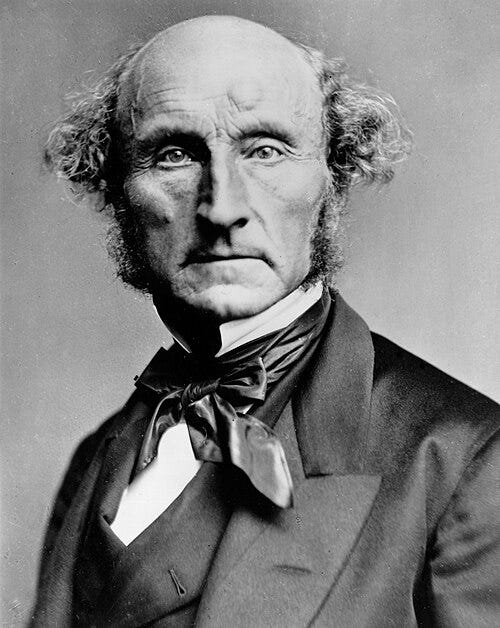
John Stuart Mill (1870) was neither a pure rationalist
nor a romantic, neither fully private nor fully public.
From 1830, Mill maintained an intimate intellectual and emotional relationship with Harriet Taylor. She remained married to her husband, John Taylor, who knew, accepted, and accommodated the triad.
The three moved in overlapping circles, openly corresponding and managing an arrangement that caused outrage. Puritanical Victorian society had no framework for understanding them.
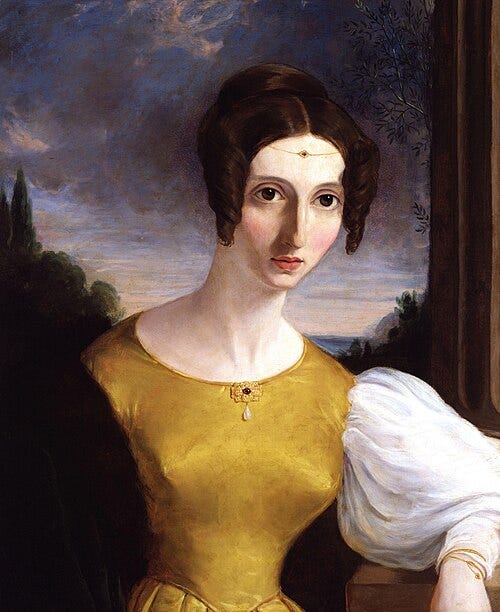
Harriet Taylor Mill: Mill acknowledged her as co-author
of his thinking, which shocked his contemporaries.
What this unconventional triad produced was “On Liberty”, one of the most powerful arguments for individual freedom ever written.
Mill acknowledged Harriet as co-author of his thinking. This too shocked his contemporaries. But the triad gave Mill something a conventional partnership could not: intellectual intimacy without domestic suffocation, closeness without closure.
Mill was indeed an Otrovert in his thinking. He was neither pure rationalist nor romantic, neither fully private nor fully public. He always operated between categories.
The triad was the relational working out of that same instinct. After John Taylor died in 1851, Mill and Harriet married. She died seven years later. Mill spent the rest of his life editing the work they had made together.
Perhaps the most durable Otrovert triad lived at Charleston Farmhouse in Sussex from 1916 until the deaths of its members.
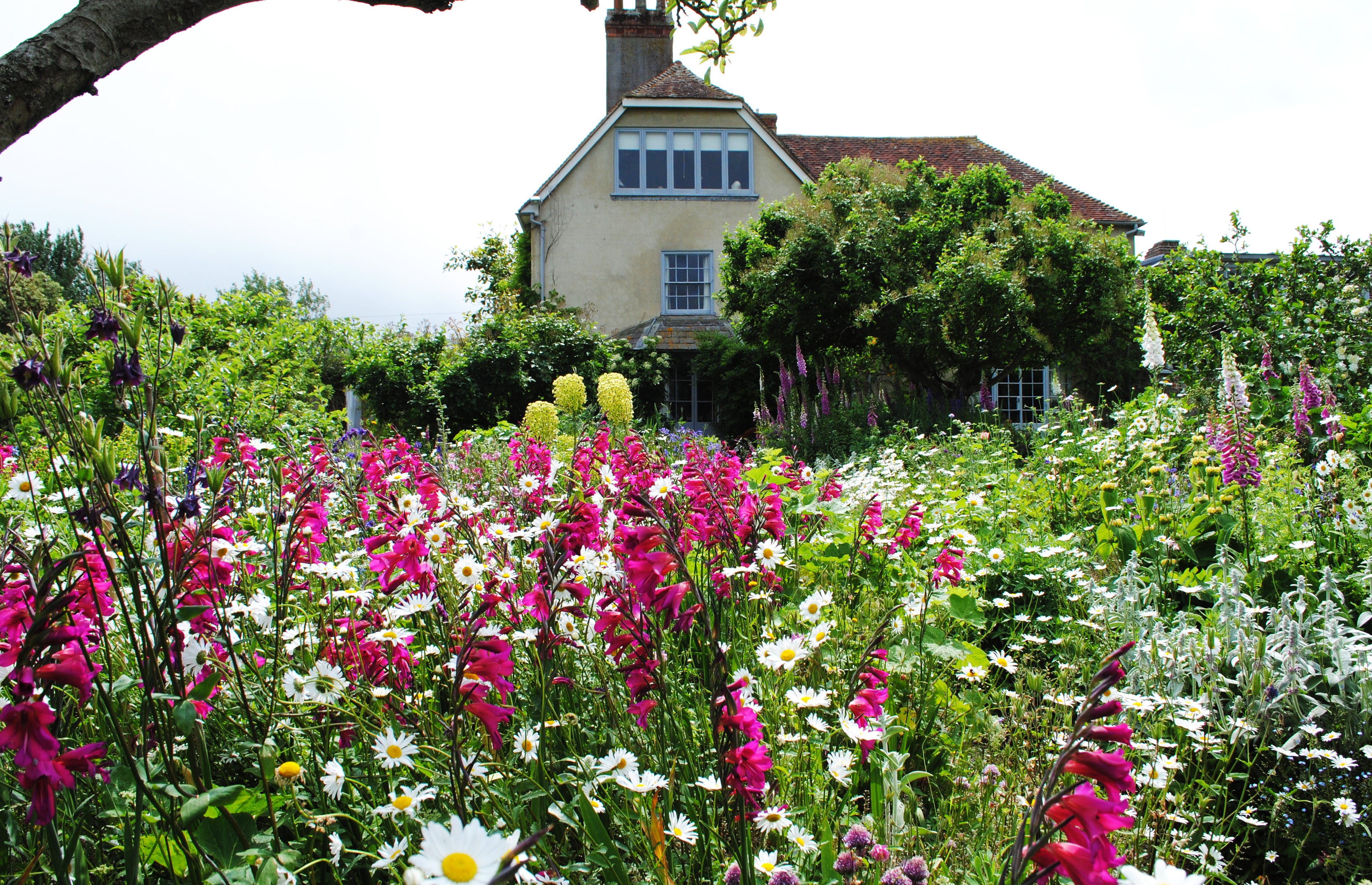
Charleston Farmhouse, Sussex: physical evidence of a viable triad.
Vanessa Bell married Clive Bell in 1907. But from around 1914, she formed a deep connection with the painter Duncan Grant, who was predominantly homosexual yet profoundly attached to Vanessa.
All three settled into a triad arrangement that was neither secret nor resolved. They painted. They decorated every surface of the house. They had a child, Angelica, whose parentage was known within the circle. Clive came and went. Duncan stayed.
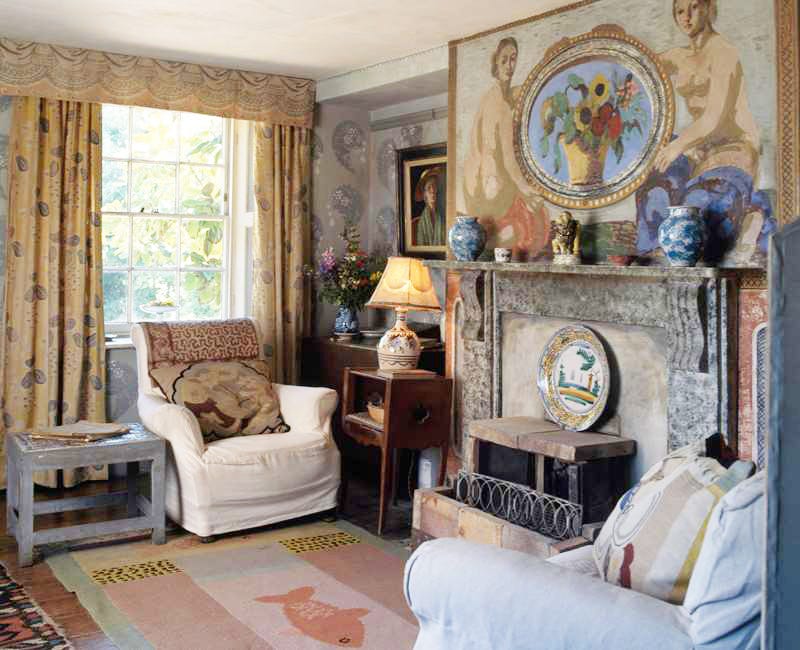
Charleston Farmhouse interior, every door, wall and fireplace bears the marks
of people who made something that the standard pairing could not have produced.
This triad lasted because none of the three demanded from the others something they weren’t.
Vanessa didn’t ask Duncan to be a conventional husband. Duncan didn’t ask Vanessa to tolerate invisibility. Clive didn’t insist on the exclusivity he had no right to demand.
SUMMING UP
The Otrovert-driven arrangement is awkward, imperfect, occasionally painful, and can be extraordinarily productive.
Otroverts seldom choose the middle ground. They seek a different set of relationships, one that the binary map doesn’t show.
Lou Andreas-Salomé called it a Trinity and knew exactly what she was doing. Mill lived it quietly for two decades. Vanessa Bell painted it onto the walls of a Sussex farmhouse.
For all of them, a triad was not an excess. It was precision.