In 1939, the contralto Marian Anderson was barred from Washington’s Constitution Hall because she was Black.
First Lady Eleanor Roosevelt resigned from the organisation that ran it then threw her weight behind a different stage.
In 1939, the contralto Marian Anderson was barred from Washington’s Constitution Hall because she was Black.
First Lady Eleanor Roosevelt resigned from the organisation that ran it then threw her weight behind a different stage.
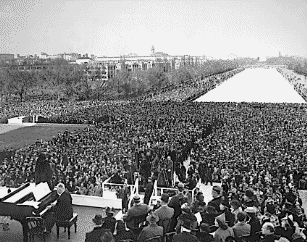
On Easter Sunday, Anderson sang on the steps of the Lincoln Memorial to a crowd of 75,000. Roosevelt, though, stayed off the stage. She spent her name to open a door, then let someone else walk through it. That is a booster.
Compare the man who crowned himself. At his coronation in 1804, Napoleon took the crown from the Pope’s hands and set it on his own head. The moment belonged to no one but him. That is a boaster.
He reached for the same warmth the booster gives to others, but he grabbed at it for himself, creating it, and it never quite filled the gap.
Boasting barges into rooms uninvited. It talks too loudly about itself, and leaves people oddly tired.
Yet the message in so many places and cultures is: Don’t draw attention. Be modest. Be nice, keep a low profile. Meanwhile, history, of course, insists on ignoring that advice.
Repeatedly, those who moved things forward spoke before they were asked, before permission had arrived, and often before support became available.
They didn’t wait to be discovered. They announced themselves, but not all announcements are the same. Some extract energy. Others give it, through what can be called Boosting.
When Mohammad Ali proclaimed, “I am the greatest,” its full immodesty was not lost on anyone. It also worked perfectly. He wasn’t, though, seeking anyone’s admiration.
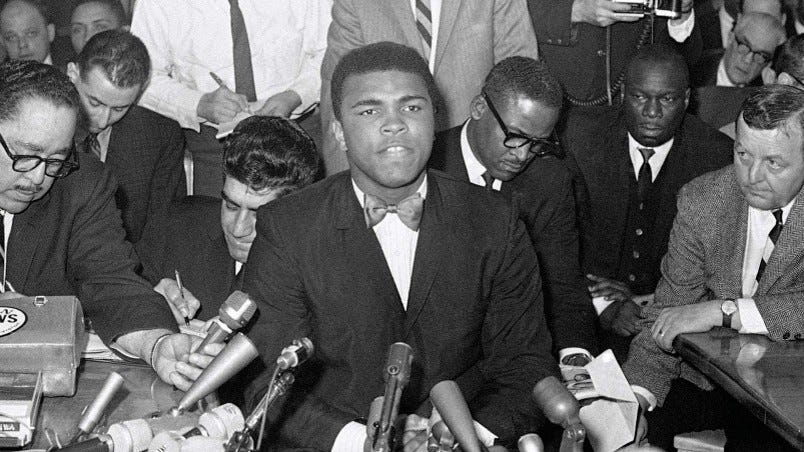
He was boosting, letting opponents know what kind of fight they were in for. His self-assurance wasn’t decorative. It was strictly functional. It boosted the emotional temperature of the whole show.
The crowd leaned forward. The opponent tightened. The fight had already begun. That sentence didn’t suck the air out of the room. Instead it electrified it.
Now let’s give it up for a man who never stopped talking about himself, yet somehow turned it into boosting. He managed to make everyone else feel smarter just for listening.
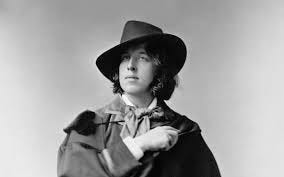
“I have the simplest tastes,” remarked Oscar Wilde, “I am always satisfied with the best.” This was not a request for applause, more like quietly rearranging the furniture.
Wilde was not boasting and saying ‘I am superior.’ He was saying: Why would anyone settle for mediocrity?”
The confidence is there, but it comes with wit attached. You laugh, and in doing so, you’ve already accepted his standard.
He hasn’t taken attention; he’s given you a sharper way to see. You’ve been boosted.
Another Wildean flourish: “I am so clever that sometimes I don’t understand a single word of what I am saying.”It makes you smile and yet does not inflate him.
Widle’s remark punctures solemnity. Genius becomes playful rather than oppressive. The room relaxes. Conversation opens. People lean in instead of backing away. That’s not boasting — that’s confidence doing valuable work.
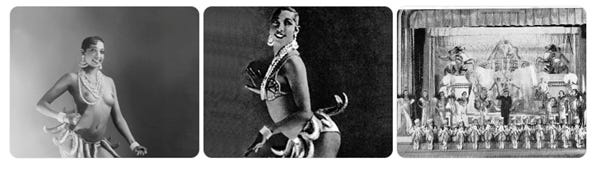
When Josephine Baker walked onto the stage of the Folies Bergère in Paris in 1926, wearing a skirt made of artificial bananas, it helped make Baker an international star.
Yes, she was absolutely boasting. She was unforgettably on purpose. She was also saying: You will remember this body, this rhythm, this audacity. She was also unmistakably boasting.
Those bananas weren’t just provocation. They were joy, satire, freedom, mischief, and generosity rolled together.
Baker didn’t hoard attention; she shared it. The audience didn’t leave thinking “she wants admiration.” They left thinking “the world just got bigger, stranger, and more fun.”
Her confidence didn’t shrink the room. It expanded it. That’s the sweet spot. And it had nothing to do with being loud or quiet.
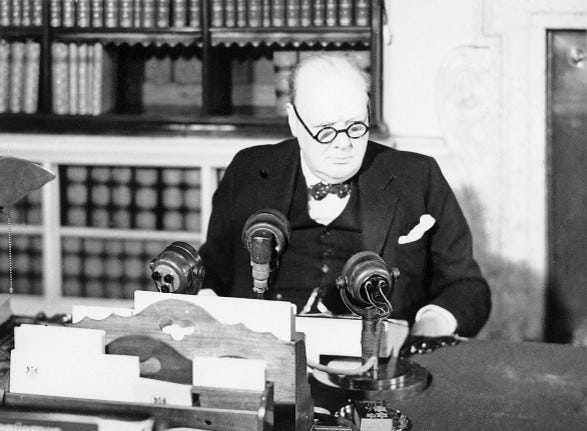
Winston Churchill understood the same principle. He didn’t boast about himself.
He spoke as if victory were imaginable when imagination was in short supply. “We shall fight them on the beaches” wasn’t about ego. It was a morale transfusion. His certainty didn’t glorify him; it steadied everyone else.
What distinguishes these moments from the unbearable kind of boasting is their direction.
· Bad boasting points inward.
· Good boosting points outward.
· Bad boasting wants validation now.
· Boosting offers belief first.
One closes conversations, the other opens them. One demands agreement, the other gives people something to stand inside, a standard, a direction, a sense of momentum.
That’s why saying: “I get why you feel this way”, on its own never lasts. Being admired is pleasant for approximately 10 seconds.
There’s a miniature, practical version of boosting in martial arts. When someone enters a Karate dojo and gives a sharp sound of “Uus or Oos”, they aren’t showing off. They’re charging the energy around them
They’re saying: “I know where I am, I respect what’s required, and I’m ready.” The Uus sound lifts the room for a moment, then the work begins. That’s miniature boosting.
History tends to reward people who do boosting well because they speak before comfort arrives. Before consensus. Before safety. Later, we call them visionary. At the time, they were simply individuals willing to add energy rather than wait for it to arrive.
So the issue is not should you talk less about yourself. It’s simpler than that.
When you speak, do people leave feeling slightly drained, or somewhat more alive? If it’s the second, you’re not boasting.
You’re boosting. Bananas optional.

A direct question for you:
Do people leave a room feeling drained after you speak, or more alive?
That single question separates boasting from boosting.
Ali had it. Wilde had it. Josephine Baker wore it as a skirt made of bananas.
I’m curious where you land. Have your say right here!