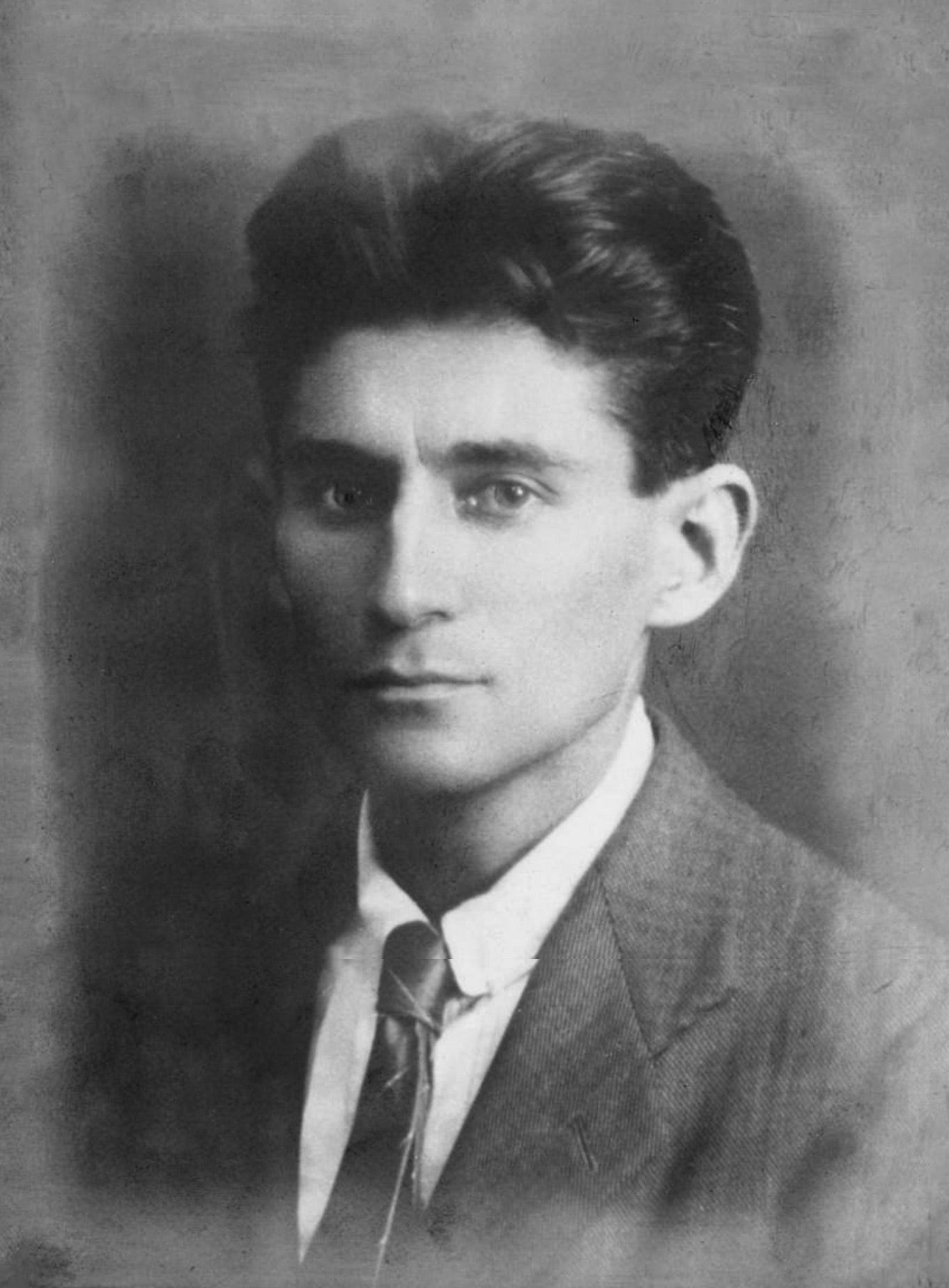
Franz Kafka, portrait photograph, 1917
An otrovert is someone who feels most natural on the outside looking in,
preferring one-to-one connections over groups, but always keeping
a slight emotional distance even then.
reference
Poet and writer Franz Kafka did not hold Felice Bauer in high regard. In August 1912, he had dinner at his friend Max Brod’s apartment in Prague and sat opposite this practical, self-possessed, quietly confident 24-year-old from Berlin.
To Franz, Felice seemed servile. He had other harsh words for her. That night, in his diary, Franz noted her “bony, empty face, almost broken nose, and unattractive hair.”
How could Franz have known he would end up writing over 500 letters to a woman he barely knew? If you had told him those letters would be auctioned for over half a million dollars, he would have laughed in your face.
Yet this soon-to-be-famous writer twice asked Felice to marry him and twice fled the prospect in terror.
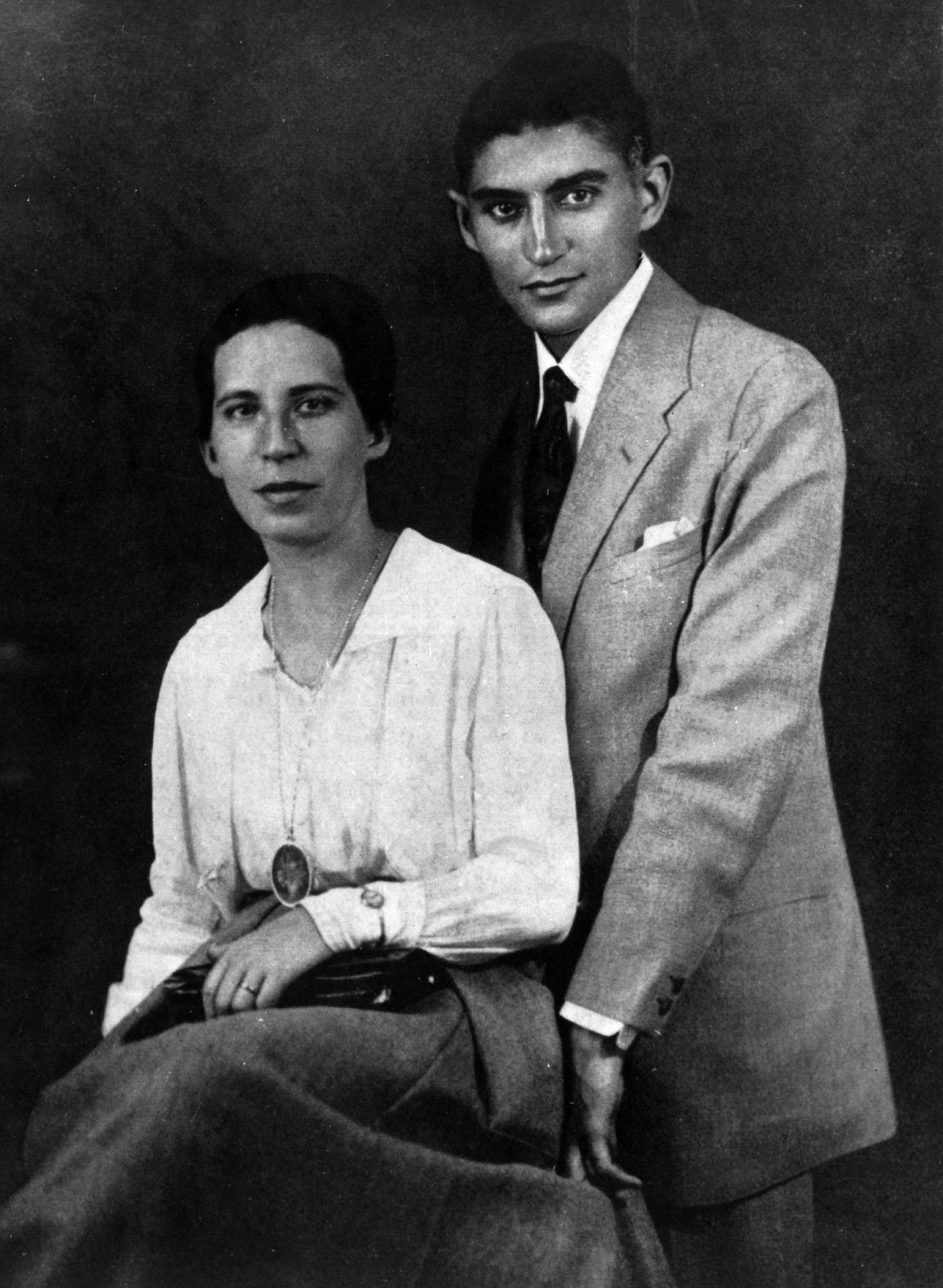
Franz Kafka and Felice Bauer, 1917
When they met at Max’s home, Felice worked as a travelling sales executive for a dictation machine company. She had no particular interest in literature. Meanwhile, Franz was a struggling writer who avoided groups and, as an Octovert, gravitated towards one other adult at a time.
History rarely describes Octoverts like Franz, yet it is full of them. From the renowned scientist Isaac Newton to the French novelist, critic, and essayist Marcel Proust, those who were neither extroverted nor introverted still flourished.
As for Franz and Felice, what followed from that first encounter was one of the strangest love affairs in literary history. Conducted over five years, it was almost entirely on paper and spanned considerable geographical distance.
The two of them actually met face-to-face only a handful of times. Kafka would write twice a day, sometimes three times, growing agitated when her replies were slow or insufficiently warm.
He proposed marriage in a letter. He broke the engagement the same way. He proposed again, then broke it again.
By any measure, their relationship was impossible. Kafka knew it and said so. He simply could not be both a writer and a husband. His work, he knew, demanded monastic solitude. Such an existence clashed violently with the bourgeois domestic life that Felice represented and embodied.
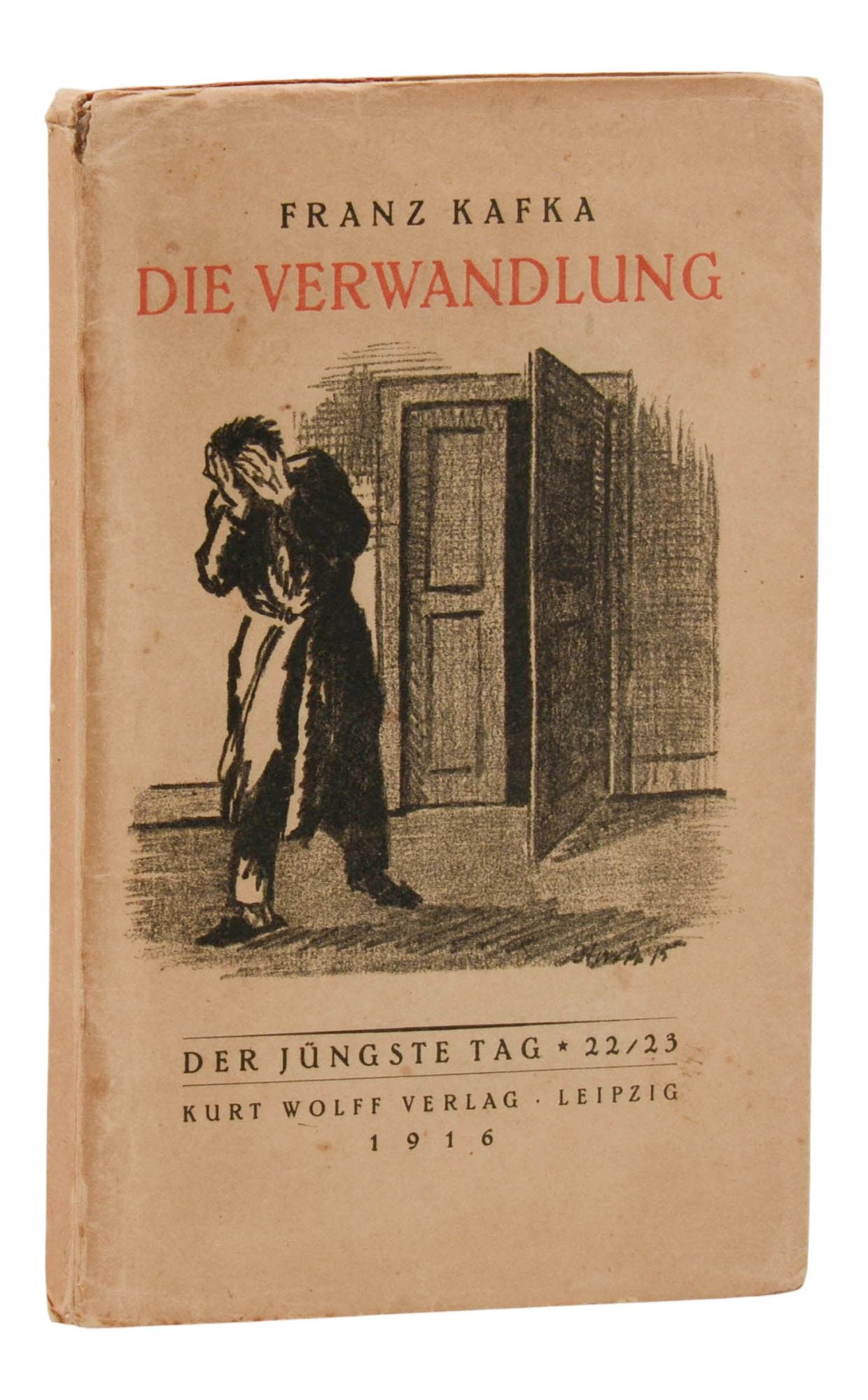
First edition of Die Verwandlung
(The Metamorphosis), Leipzig, 1915.
Despite the obstacles, Franz could not let go. The tension between longing and self-preservation became the driving force behind everything he wrote during those years: The Metamorphosis, The Trial, In the Penal Colony, and The Judgment, which he dedicated to her.
Felice, though, is almost entirely lost to history. This is where most accounts fail her. Kafka’s letters survive; hers do not, he destroyed them.
So she has been seen almost entirely through his eyes: as an obstacle, a bourgeois fantasy, and a woman who failed to understand him.
Felice Bauer, operating a Parlograph dictating machine; she was a sales executive for the Carl Lindström Company, which made these devices.
The truth is more interesting. Felice was a capable, independent professional at a time when few women held executive roles. She rose from stenographer to sales manager in a competitive industry.
She was not naive about Kafka, recognising his contradictions, tolerating his cruelty with patience and walking away twice with her dignity intact.
She kept Kafka’s letters hidden, telling her children nothing. When his fame grew, and publishers came calling, she held out for years before finally selling the letters, on the condition that they would go to the National Library in Jerusalem after publication.
That condition was broken after her death. Her letters were auctioned for $605,000.
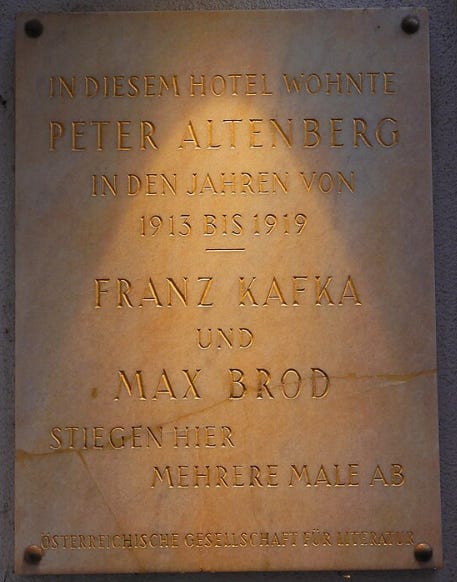
Memorial plaque honouring Franz Kafka and
Max Brod in Vienna who hosted the dinner
at which Kafka first met Felice.
The Kafka–Felice dyad teaches something uncomfortable about the creative life, a lesson that recurs throughout history.
The relationship which generates the greatest work may be precisely the one that cannot be consummated. Kafka needed Felice most when she was absent, reachable only by letter. She was the perfect object of an Octovert’s longing. The moment she became real and present, the spell broke.
The lesson is not romantic. It concerns the creative uses of frustration, the gap between what we want and what we can bear to have. Kafka turned that gap into literature. Felice turned it into a life, practical, quiet, and entirely her own.
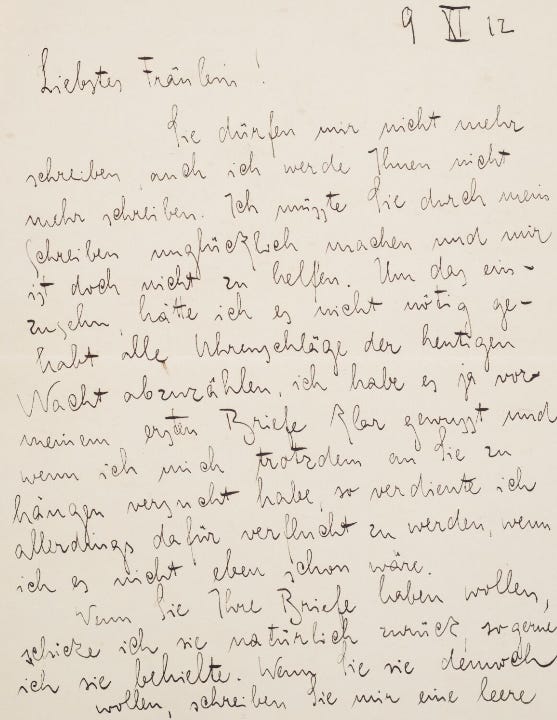
Franz Kafka’s first letter to Felice Bauer, 20 September 1912,
held in the Max Brod Archive, National Library of Israel

ARE YOU AN OTROVERT: To read Part 1 Click here