I write imagined conversations with historical figures. Through encounters with figures such as Isaac Newton, Benjamin Franklin, and Virginia Woolf, I explore the ideas, tensions, and contradictions that continue to shape the present.
These conversations sit at the intersection of history, philosophy, and storytelling. They are less concerned with what happened than with what still matters.
Each piece asks a simple question: What would they say if we could meet them now?
PART ONE, Dresden, 1960
Evening settles over the bombed-out city of Dresden. I make my way toward Hotel Königshof at the edge of the Elbe, one of the few buildings in central Dresden to survive the firestorm intact.
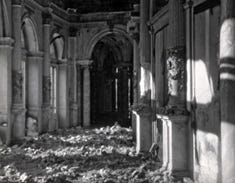
The corridors are almost too polished, as if they refuse to recognise the desolation outside. But from the upper floors, you can see it all: skeletal churches, blackened shells of apartments, mounds of rubble.
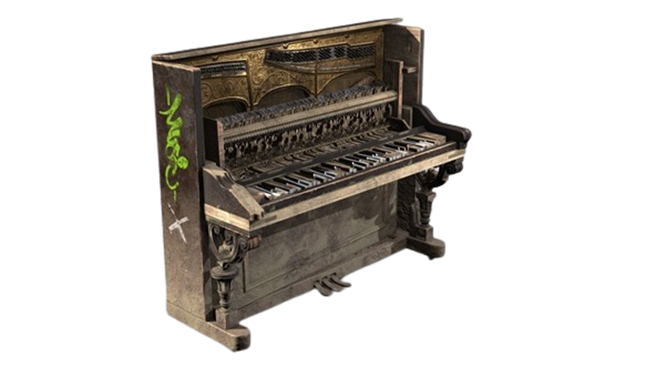
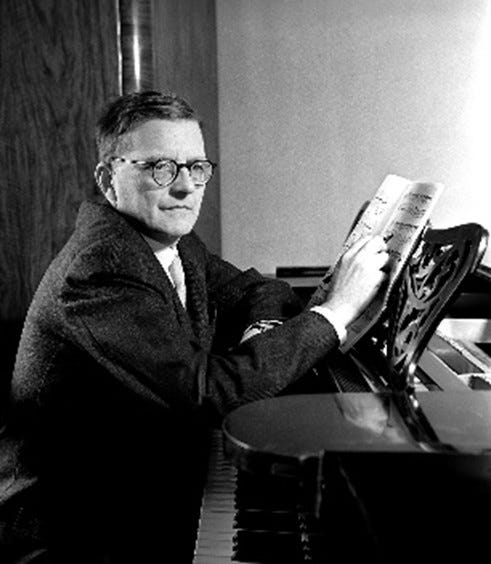
It is late afternoon in Room 214. Shostakovich sits at the piano bench, not playing, only gazing at the manuscript paper spread across the lid. He has been working on the music for the film Five Days, Five Nights, but the pages before him are not film cues. They are something else: scattered, jagged motifs that will become his famous String Quartet No. 8.
The hotel porter introduces me. He waves me toward a chair near the window.
A: Forgive me, Dmitri Dmitrievich, may I disturb you?
He nods once and murmurs, “Please sit. I came to write film music, but Dresden has… its own demands.”
He is right, the city looks different from here. Seemingly calm beyond the window. But it isn’t quiet.
A: Do you think destruction changes how a person hears silence?
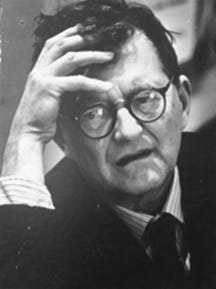
Dimitri clutches his forehead in an all too familiar gesture, turning away from the piano. “Silence is never empty. It is full of unfinished sentences, cancelled orders, and music drafted and then forbidden.”
A: Can we go back, Dmitri? How did you survive the Stalin years?
“By splitting myself in two. Publicly, I wrote cheerful, heroic symphonies that satisfied the censors.
Privately, in my quartets and late works, I wrote what I truly felt: the grief, the irony, the coded resistance. People think oppression silences you, but in my case, it forced me to invent a second language, one that lives beneath the surface.
When Pravda attacked me in 1936, calling my music ‘a lot of noise,’ I slept outside my apartment by the lift so the secret police would take me and not scare my family. That is what revolution became for us, waiting for footsteps at night.
The Soviet state got its marches. I kept my truth hidden in the music. That is how I lived through those years.”
A: You wrote the entire Eighth Quartet in three days, almost without sleep. What drove you?
As if searching for inspiration, he glances at the ceiling, then shrugs. “Fear again. Always fear.”
A: The Quartet Dedication reads: ‘To the victims of fascism and war.’ Is that a mask for something else?
He folds his hands and stares at them for a long while. “Partly. I meant every word. I saw what war did, what fascism did. But there are other victims too, quieter ones. I couldn’t write ‘to the victims of lies and fear,’ could I?
So I wrote what was permitted and let the music carry the rest. Those who needed to know would know.”
He returns to the piano, fingers hovering over the keys but not quite touching them. Outside, a tram clanks along the newly restored tracks near the river, its sound almost immediately swallowed by the vast silence of the ruins.
The city and the composer sit together in the fading light, both still standing, both still not finished. There is still much more to tell, and the composer seems in the mood to tell it…
PART TWO, The Complete Conversation with Shostakovich
The next morning, when I return, the composer is already at the piano, running the same four-bar phrase over and over, changing a single note each time. He gestures to the same chair without looking up, as if I had never left.
A: Maestro, I want to go right back, if you’ll allow it. How did it all begin? He plays his phrase one final time, then sets his hands in his lap.
…wasn’t that interested in music. I didn’t sneak to the door at the age of three to listen to it. When I did listen, I slept afterwards as soundly as the night before. At that time, I was mainly passionate about building with blocks and creating structures.
But gradually, when my mother set me down at the piano at age eight in 1915, I quickly became passionate about it. She saw immediately that I had a real gift. For a start, I had an unusual musical memory. I even pretended to sight-read scores I had already learned by heart.”
A: Was she a demanding teacher?
“Not at all. She mainly conveyed her love of music to me. No difficult exercises, no demands, just a good musical education.”
A: And when did you decide to become a professional?
“Around twelve. By fourteen, I was allowed to leave school without qualifications.” He says this without pride or regret, simply as fact, the way a person states the time of day.
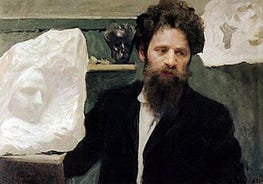
A: There was a painter who helped you early on, wasn’t there? Kustodiev?
KUSTODIEV
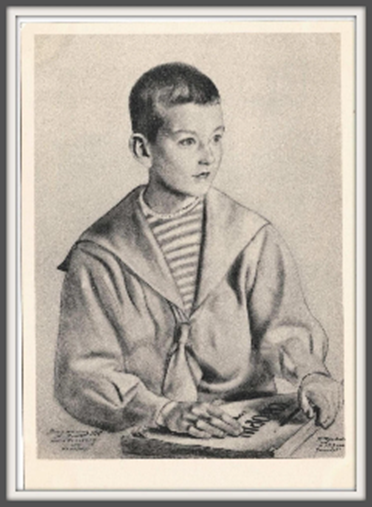
“Ah, yes. Boris Mikhailovich Kustodiev, the Russian painter. He would paint and listen while in a wheelchair. He always urged me: ‘Mitya, just play your own thing.’
In May 1920, he held an exhibition of his paintings, and I played my music in public for the first time. He drew me. It’s a picture I still really like.” At the memory, a small smile crosses his face, brief, almost shy.
PORTRAIT OF A COMPOSER AS A BOY
A: Your parents were not immediately certain you had a future in music, were they?
“No. First, they asked a famous conductor and pianist what he thought of me. When he announced I had no talent, I cried all night.
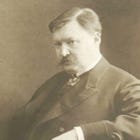
But then my parents took me to see Alexander Glazunov, director of the Saint Petersburg Conservatory. He told my mother I must enrol. He apparently wrote to her: ‘I cannot remember ever having had such a gifted child as your son.’ So that is where I went in 1919.”
A: What exactly made Glazunov so important to you?
GLAZUNOV
“He was absolutely devoted to the cause of professional music. He disregarded his own personal tastes in favour of identifying and supporting young people. He didn’t create a school.
Rather, he actively encouraged musicians to think, winning our complete respect and affection.” He pauses, and something shifts in his expression.
A: Then your father died. 1922. You were fifteen.
“Yes. A terrible blow. We were left without resources, three children, and no income. My mother had to work as a cashier, later as a typist. She completely rejected my attempts to become a provider.
So I carried on. I composed my Suite for Two Pianos that year, in memory of my father.
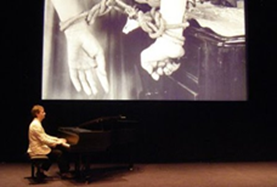
I told my mother: ‘I’ll give concerts and earn money, then see how we’ll live. Just let me stay healthy.’ That’s when I became a cinema pianist at the Bright Reel Cinema, two roubles per month, age eighteen.”
A: Maestro, tell me, did you enjoy it?
“Sometimes. But not when I had to play the same music over and over, it drove me mad. What I truly loved was improvising.
But I became so absorbed that the cinema audience protested. At least I knew my music had successfully distracted them from the film.” He allows himself a dry laugh. Then it passes.
A: Maestro, in 1926, you launched the First Symphony, aged only nineteen.
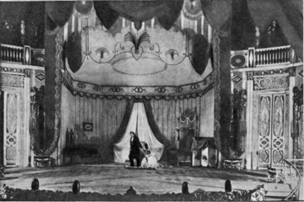
“Enough of this ‘Maestro’ stuff, please call me Dmitri. Yes. It exceeded my wildest expectations. As a result, I was asked to join the Meyerhold Theatre. But I held out for a generous salary. I said: ‘I will not sell my freedom cheaply.’
Meyerhold Theatre
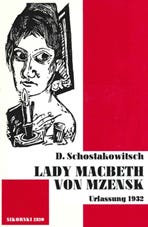
“What they wanted left no room for creative, intuitive work. It couldn’t hold my interest. Instead, I focused on my opera, Lady Macbeth of Mtsensk. It took until 1932 to complete it.
Unlike so many things, it was a genuine success, both artistically and financially. I started to realise I did not want to continue writing film music.” He glances toward the window. The half-destroyed skyline occupies the frame.
A: Some call you a coward for staying in Russia. Others think you’re brave for having endured. How do you see yourself?
He stares at his hands, flexing them deliberately. “Survival doesn’t justify anything. It simply means you’re still responsible for the bill.
The great thing about paying off debts is that everyone pays them. Some pay with friends, others pay with their dignity.
I have learned to pay in ambiguous terms. I learned to stand next to men I wouldn’t want at my dinner table. You stop expecting comfort; you settle for continuation.”
A: Do you think the future will forgive you for settling for that?
He offers a small, dismissive wave: “The future will be too busy rebuilding. Forgiveness is for people with free afternoons. I’ll take being played, even poorly.”
A: And here in Dresden, what do you feel most?
“I feel recognised. The city and I nod like survivors passing on the same tram, slow, cautious, but still moving. That’s enough.”
A: Dimitri, before I go, is there something from our conversation you would like to preserve?
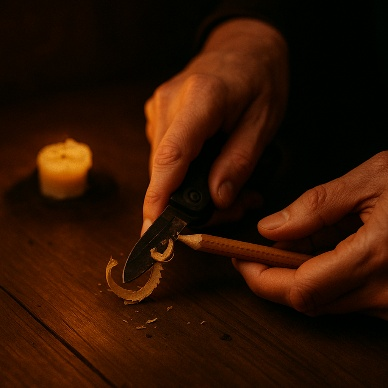
He sharpens his pencil with a small knife, pausing to blow away the shavings. “Tell them the city isn’t finished. Neither am I. If they ask what that means, tell them to listen to the three slow movements of my Quartet. They’ll understand more than I can explain.”
He lowers his pencil. Across the way, a violin lands its final note, finally in tune. The candle burns down to a rim of wax.
A: Thank you, Dmitri. He waves a hand.
“Leave the door as you found it. Let the draft keep me honest.”
For an excellent biography: Laurel Fay’s Shostakovich: A Life (Oxford University Press, 2000).
For more conversations with historical figures, explore Conversations with Remarkable Women (Amazon) and Conversations with Marvellous Muses (Amazon).
Coming later this year: Conversations with Visionaries who Shaped the Future. Subscribe to be notified.
I write imagined conversations with history’s most remarkable figures: women, Visionaries, and creative minds. Not summaries, but actual encounters. Real lives, reimagined in dialogue.
If you’ve ever wanted to hear the past answer back, you’re in the right place. I call it History Speaks.