
If you have read all five stories, you already know more about these objects than most people who have held them in a museum or read about them in passing. You’re all set to be a fascinating guest at a dinner party or a fun get-together!
Here, briefly, is where each one stands today.
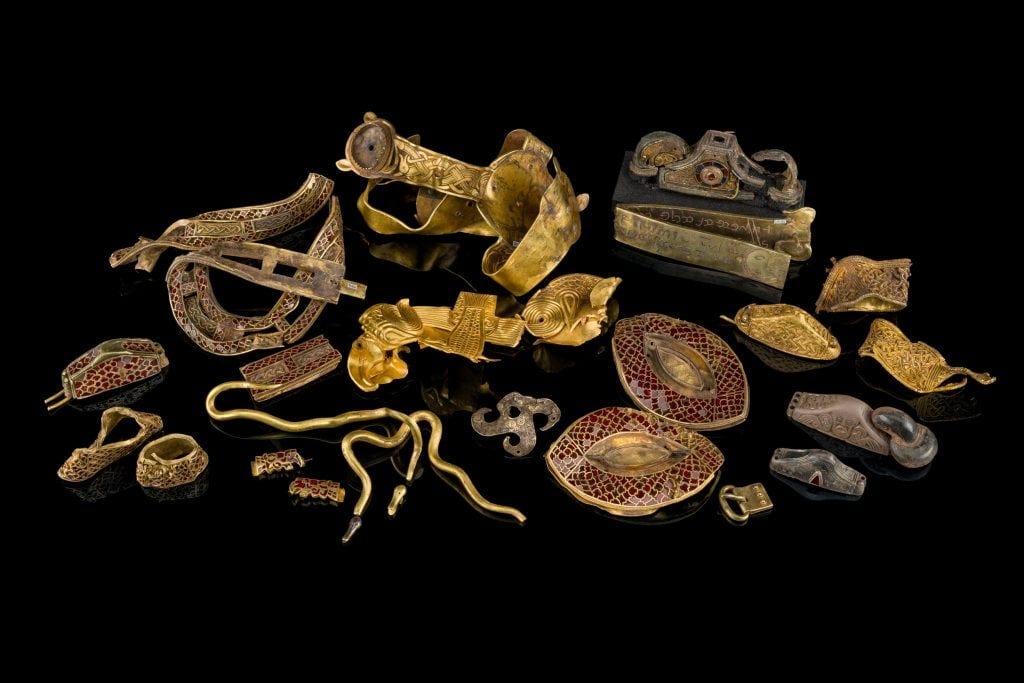
The Staffordshire Hoard was discovered in a field in Hammerwich, Staffordshire, in 2009 by a metal detectorist named Terry Herbert.
It remains the largest hoard of Anglo-Saxon gold ever found, over 3,500 items, almost all of them military. It is held jointly by the Birmingham Museum and Art Gallery and the Potteries Museum in Stoke-on-Trent. Who buried it and why it was never recovered remains unknown.
What’s your best guess at what happened?
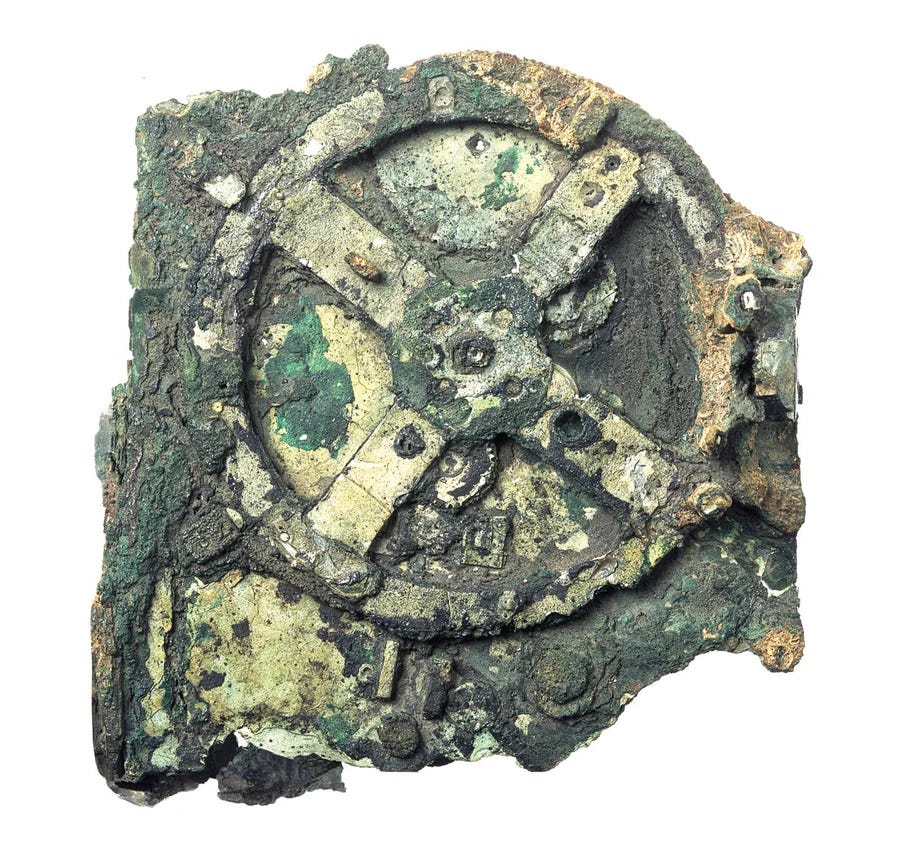
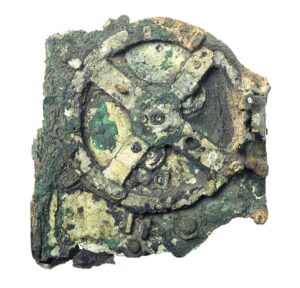
The Antikythera Mechanism was recovered from a shipwreck off the Greek island of Antikythera in 1901.
It is held in the National Archaeological Museum in Athens.
More than a century of study, culminating in the work of the UCL Antikythera Research Team published in Scientific Reports in 2021, has revealed this amazing invention to be a bronze, geared model of the cosmos capable of predicting the positions of the sun, moon and planets, solar and lunar eclipses, and the dates of the Olympic Games. Who made it, and for whom, remains unknown.
What’s your best guess about who created it in an age that knew virtually nothing of cogs or springs?
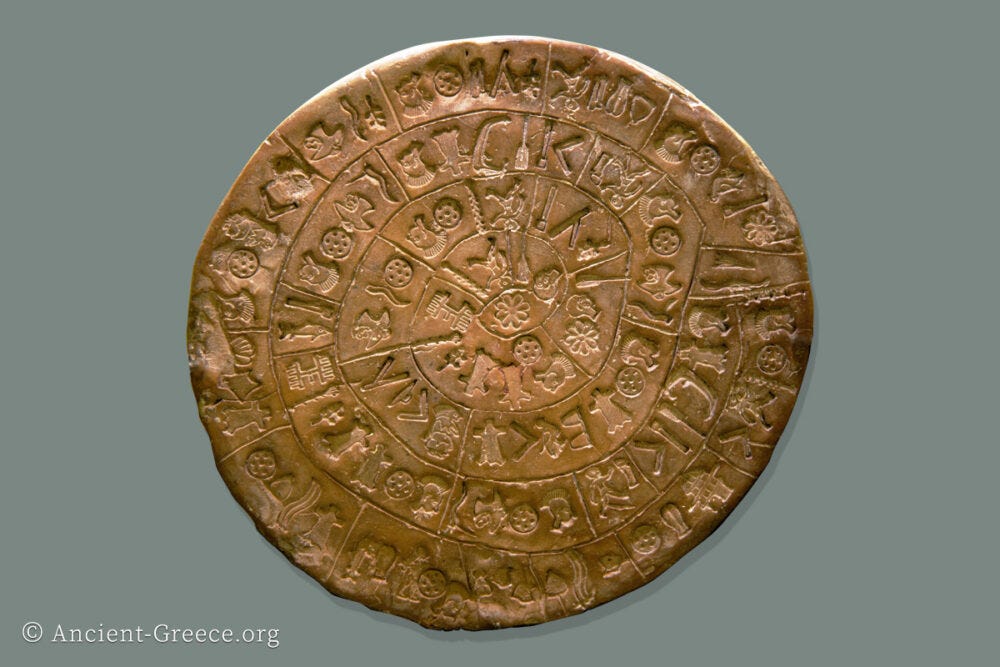
The Phaistos Disc was discovered in 1908 in the Minoan palace of Phaistos, Crete.
It is held in the Heraklion Archaeological Museum in Crete.
It is one of the largest museums in Greece and the best in the world for Minoan art. It houses by far the most important and complete collection of artefacts from the Minoan civilisation of Crete.
Pressed with forty-five distinct symbols arranged in a spiral on both faces, it remains the only example of its script ever found. Despite more than a century of scholarly effort, not a single symbol has been convincingly translated. What it says, or asks, remains unknown.
What’s your best guess as to what it says, why it said it and who created it?
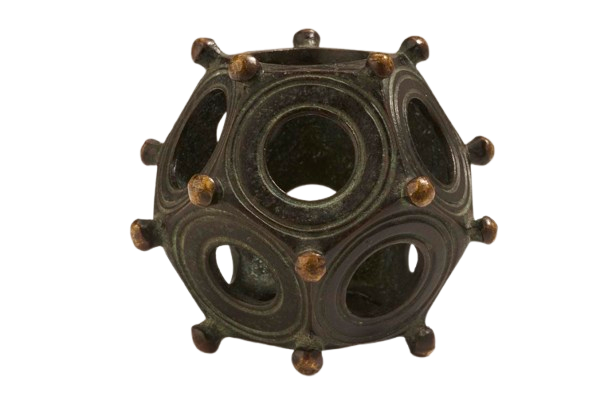
The Roman Dodecahedron from the 2nd to 4th century CE, of which over a hundred examples have been found across northern Europe, has no entry in any Roman text.
No Roman writer describes it, depicts it, or explains it. Theories of its origin and purpose range from astronomical instruments to religious objects to children’s toys. None has held. What it was for remains, stubbornly, unknown.
What’s your best guess as to what this thing is and what it was for?
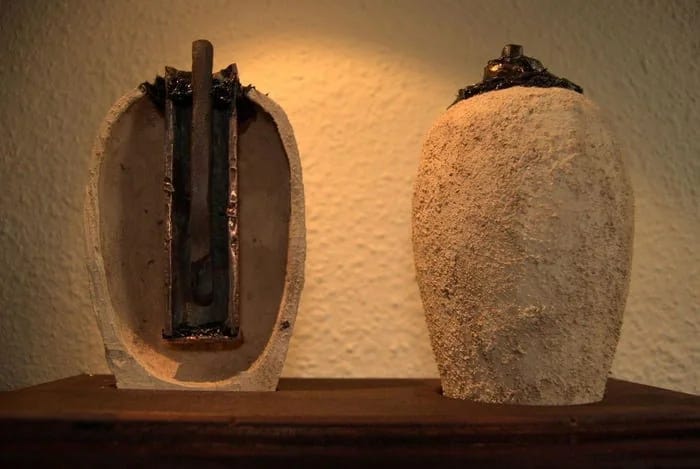
The Baghdad Battery also existed from the 2nd to the 4th century CE. In modern terms, it’s a galvanic cell using the same fundamental principle that powers every battery in use today.
A clay jar, a rolled copper tube, an iron rod, and a splash of grape vinegar are all it takes to generate a small but measurable electric current.
It was possibly used for electroplating or medicinal therapy 1,700 years before either practice was formally understood. For those wishing to explore further, the academic literature begins with Wilhelm König (1938) and Paul T. Keyser in the Journal of Near Eastern Studies, Vol. 52, No. 2 (1993).
Now it’s your turn! What’s your best guess as to how this thing came about and who developed it and why?
Thank you for reading The Five Glass Jar Stories.
You’re now equipped to be a super guest at social gatherings!
If you enjoy encounters like this, in which history speaks through imagined conversations, you can explore more in my Conversations With… series, where figures from the past are brought back into the present.
For example, check out my two books on Amazon: Conversations with Remarkable Women and Conversations with Marvellous Muses.
Also, you may like my next book: Visionaries who Shaped the Future, due out later during 2026/7.