Paris wants trees outside Notre-Dame. Something to soften the stone in the summer heat. Entirely sensible.
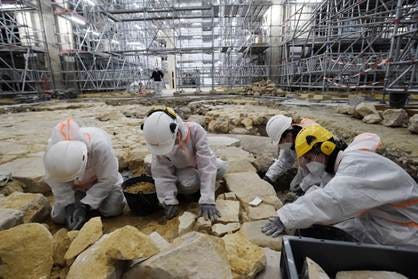
This month, in June 2026, in the bare square in front of , a team of archaeologists is digging down. But you cannot turn the soil in a city this old without first asking what lies beneath it.
And four meters down, they are pulling up the past. Roman jugs thrown away two thousand years ago and a coin stamped with the face of Constantine, and medieval pottery painted inside with a red script no one can yet read.
Already they have discovered a lead Sarcophagus buried under Paris’ Notre Dame Cathedral and dating back nearly 700 years.
A tourist waiting in the queue above the diggers, put it better than the experts. “You come to see the cathedral,” she said, “and then you realise there’s another city under your feet.”
She did not know she was quoting a dead man.
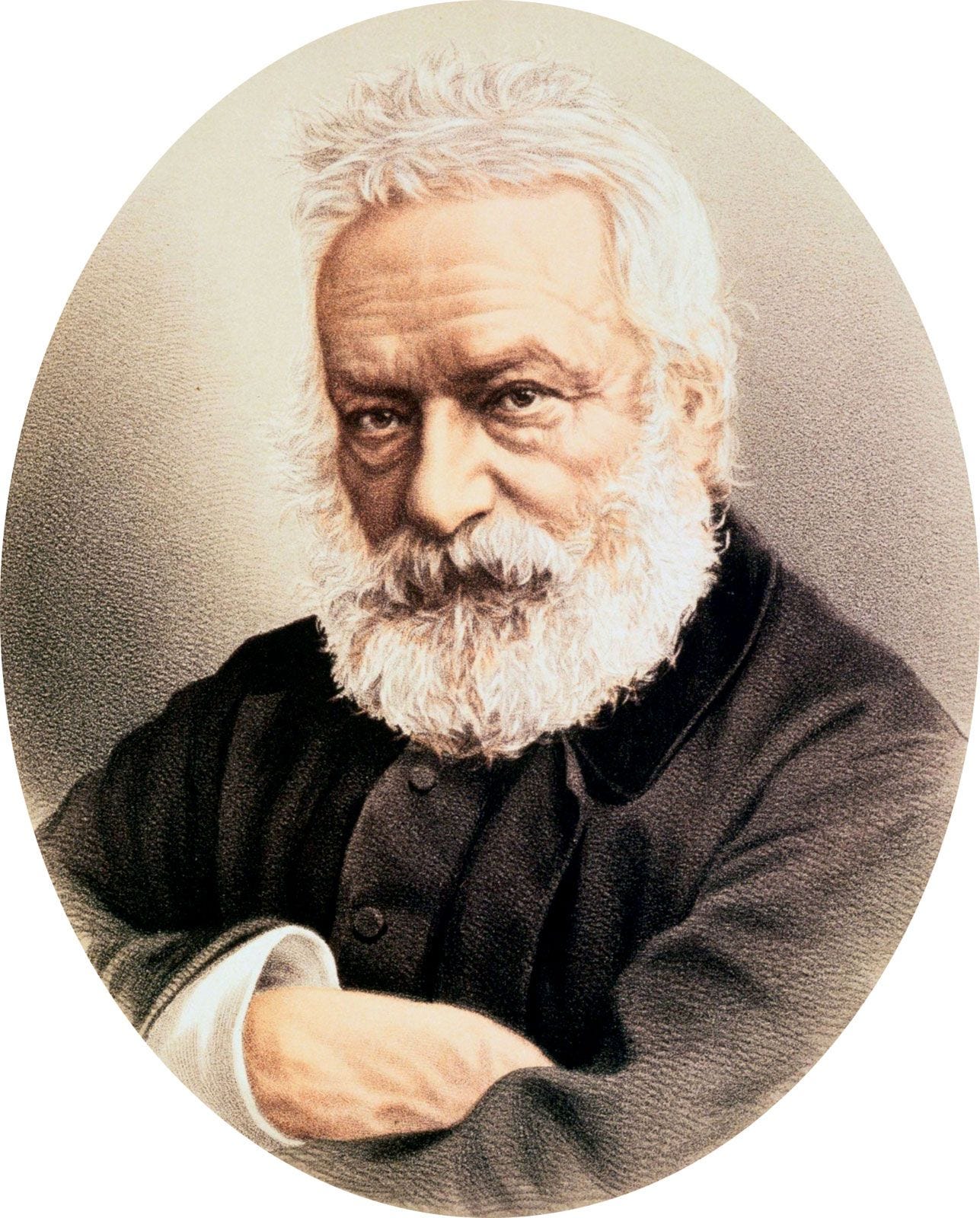
Because that is what Victor Hugo spent a whole novel trying to make Paris see.
In 1831 the cathedral was a ruin, and the city was debating whether to pull it down for the stone. Hugo’s answer was not an essay, not a petition. It was a potboiler.
He wove a tale about a hunchback and a dancing girl, and made the building itself the real hero. The Hunchback of Notre-Dame turned the cathedral into a national symbol almost overnight, and the campaign to save it began.
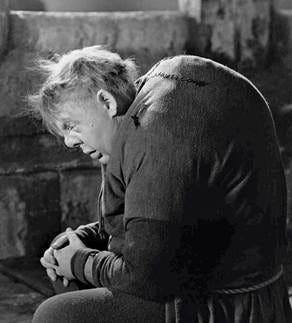
The Hunchback of Notre Dame,
played by Charles Laughton
To Hugo, a building was never just a façade. It was sediment. Age laid on age, every century built on the rubble of the last. The whole human past stacked in stone, waiting to be read. And right in the middle of that novel, he stops the story cold to argue it.
A character points to a printed book, then to the cathedral, and says: ‘Ceci tuera cela.’ This will kill that. The book will kill the building. Memory once lived in stone. Then the printing press took over, and architecture fell silent.
Hugo has been dead 141 years. And this month, in 2026, a few steps from his cathedral’s doors, they are lifting that stone memory back out of the ground.
If there was one person who was unavoidable in the nineteenth century, it was Hugo. He was not so much a writer as a weather system.
He seemed to be everywhere at once. And the instinct that made him fight for one crumbling building ran through everything else he touched.
He wrote the novels that defined the age, Les Misérables, The Hunchback of Notre-Dame, and plays that set off riots in the theatre.
He turned grief into some of the most luminous verse in the language. He drew, he thundered, he loved scandalously. And he looked at the condemned the way he looked at the cathedral: as something his age was too quick to tear down.
He sat in the Senate and demanded the abolition of the death penalty while the guillotine still stood in the public square.
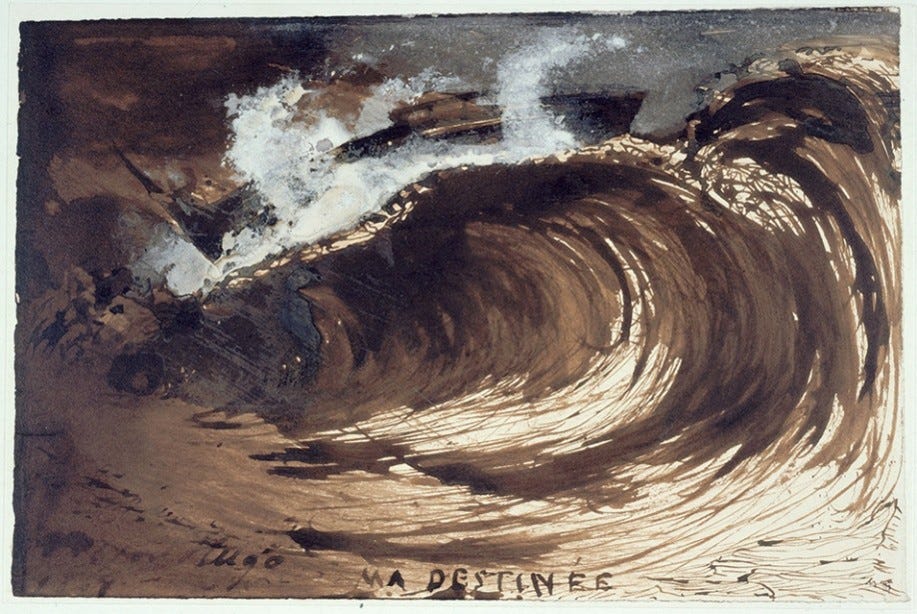
Ma destinée (My Destiny) by Victor Hugo, 1867
Then a man tried to tear down the Republic itself. On the night of 2 December 1851, Louis-Napoleon Bonaparte, nephew of the great emperor, and the elected president of France. seized absolute power in a coup.
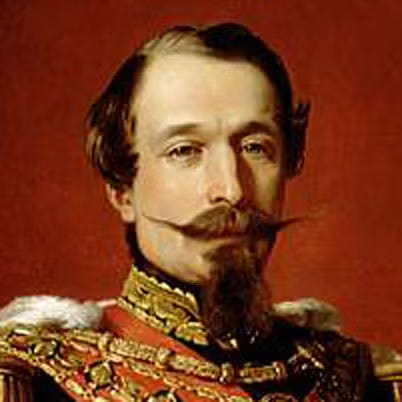
Louis-Napoleon Bonaparte
He dissolved the assembly, arrested his opponents, and within a year had crowned himself Napoleon III. Hugo had once supported him.
Now he stood in the streets of Paris trying to rally resistance, until friends were being shot and he was a marked man. He fled the country in disguise, using a false passport and a false name.
Most exiles go quiet. Hugo did the opposite. From Brussels he fired off a pamphlet that named the new emperor for all time: Napoléon le Petit, Napoleon the Little. The most powerful man in France, reduced to a nickname by a writer with no army and no country.
Copies were smuggled back across the border in bales of hay and hidden inside hollow plaster busts of the emperor himself. People read it aloud at secret meetings and copied it out by hand.
The regime expelled him from Belgium. He moved to Jersey, then to Guernsey, a granite rock in the Channel within sight, on a clear day, of the France that had cast him out. There he stayed.
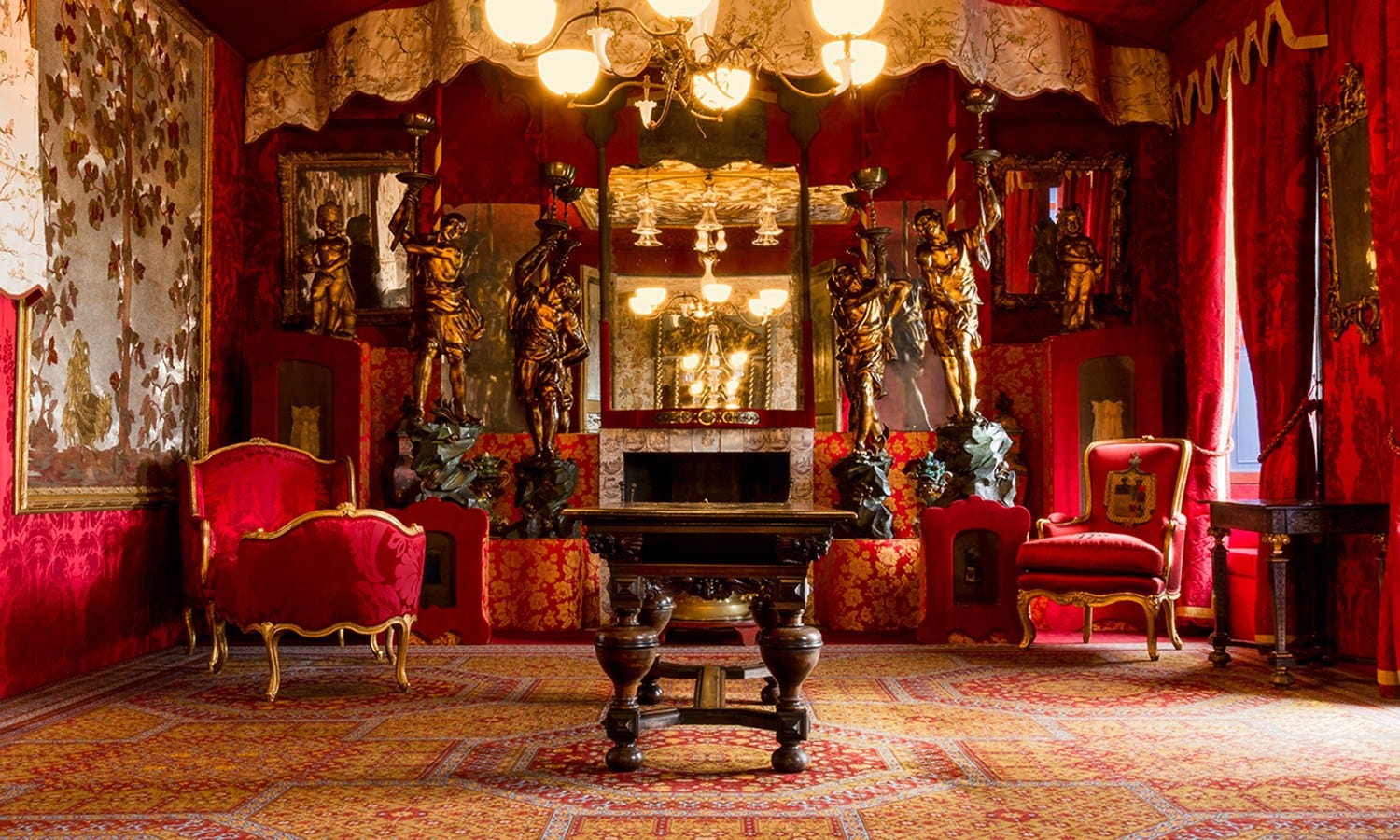
Hauteville House: Victor Hugo’s romantic refuge
And in 1859, the test came. Napoleon III, secure now, offered a general amnesty: any exile could come home. All of France’s great voices were invited back.
Hugo refused. To accept the pardon was to accept the man, and to fall silent. His answer became famous: “When liberty returns, I will return.” He chose the rock.
He stayed nineteen years. He could have walked home to fame and comfort at any moment after 1859, but he would not do it.
On that island he wrote some of the greatest work of the century. In a glass room he built himself, he created a story about the poor and the hunted that the world now knows as Les Misérables.
He returned home only in 1870, when the Empire collapsed, and the man he had named the Little fell with it. Hugo had outlasted him. He came back a hero.
By then he had buried his children. Léopoldine, the eldest, drowned at nineteen, a few months after her wedding, and Hugo learned of it from a newspaper in a café. He wrote almost nothing for years.
When the words came back, the first of them were for her: a poem about a father setting out at dawn to walk to a grave, which French children still learn by heart. He outlived four of his five children. He kept on writing.
When he died in 1885, France stopped. Two million people followed his coffin through Paris, more than the entire population of the city, from the Arc de Triomphe…
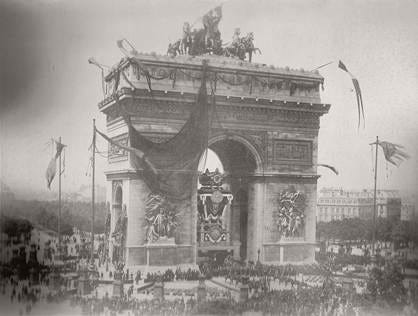
…to the Panthéon.
In a will of five lines Hugo had asked to leave his money to the poor and to be carried in a pauper’s hearse. They gave him the pauper’s coffin and the largest funeral the nation had ever seen, both at once.
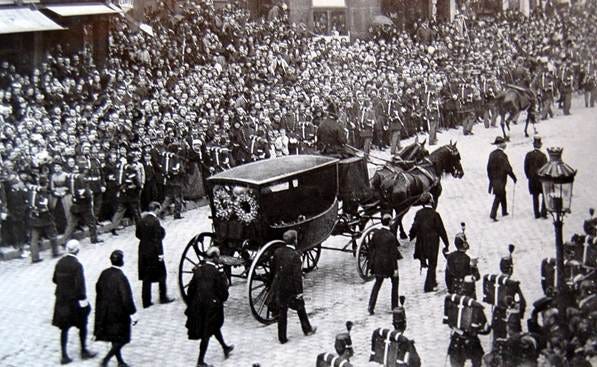
The man who had saved one building was buried as though he were one.
And this month, a few steps from his cathedral’s doors, they are lifting that stone memory back out of the ground.