Andrew meets Caroline of Jena

She was never meant to be remembered. History had other plans for Caroline Schlegel. It filed her under “wife” or shuffled her under “assistant to,” and pressed her name between the pages of other people’s glory.
But the ideas that lit up early German Romanticism? Many of them passed through her hands first.
I am about to meet her in Jena, November 1798, in the upstairs apartment on Leutragasse Street, where the most restless minds in Europe come to argue, dream, and occasionally be put firmly in their place.
The streets outside are slick with rain. A fine mist clings to the Leutra stream as it winds through the town, and lamplight blurs against the fog. Inside the Döderlein house, warmth glows from the upper windows. This is the Schlegel home, part salon, part sanctuary, part battlefield of ideas.
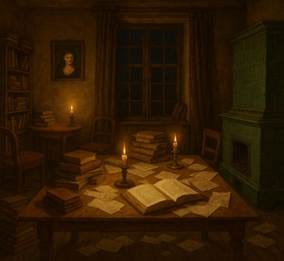
Caroline sits near the fire, her pen poised above a letter to her friend Therese Forster. A pot of coffee cools beside her; the smell of ink, wax, and damp paper fills the room.
Books huddle in piles; pages with wet ink lie scattered amongst the debris across the table: Goethe’s Wilhelm Meister, a manuscript of Schelling’s lectures, and fragments of a Shakespeare translation she has annotated in tiny, precise handwriting.
As I step in, she observes me with open amusement, one eyebrow raised. It’s the same expression she wears when the philosopher Schelling begins one of his elaborate sentences with: ‘Nature is the visible mind of God.’
Frau Caroline, thank you for inviting me to your home.
“Well, then. Another visitor.” She smiles. “Would you like coffee or conversation? I warn you, I’m short of sugar but long on opinions.”
Caroline Michaelis, as she was born, is permanently busy. She translates, edits, writes critiques and offers provocative challenges to the status quo.
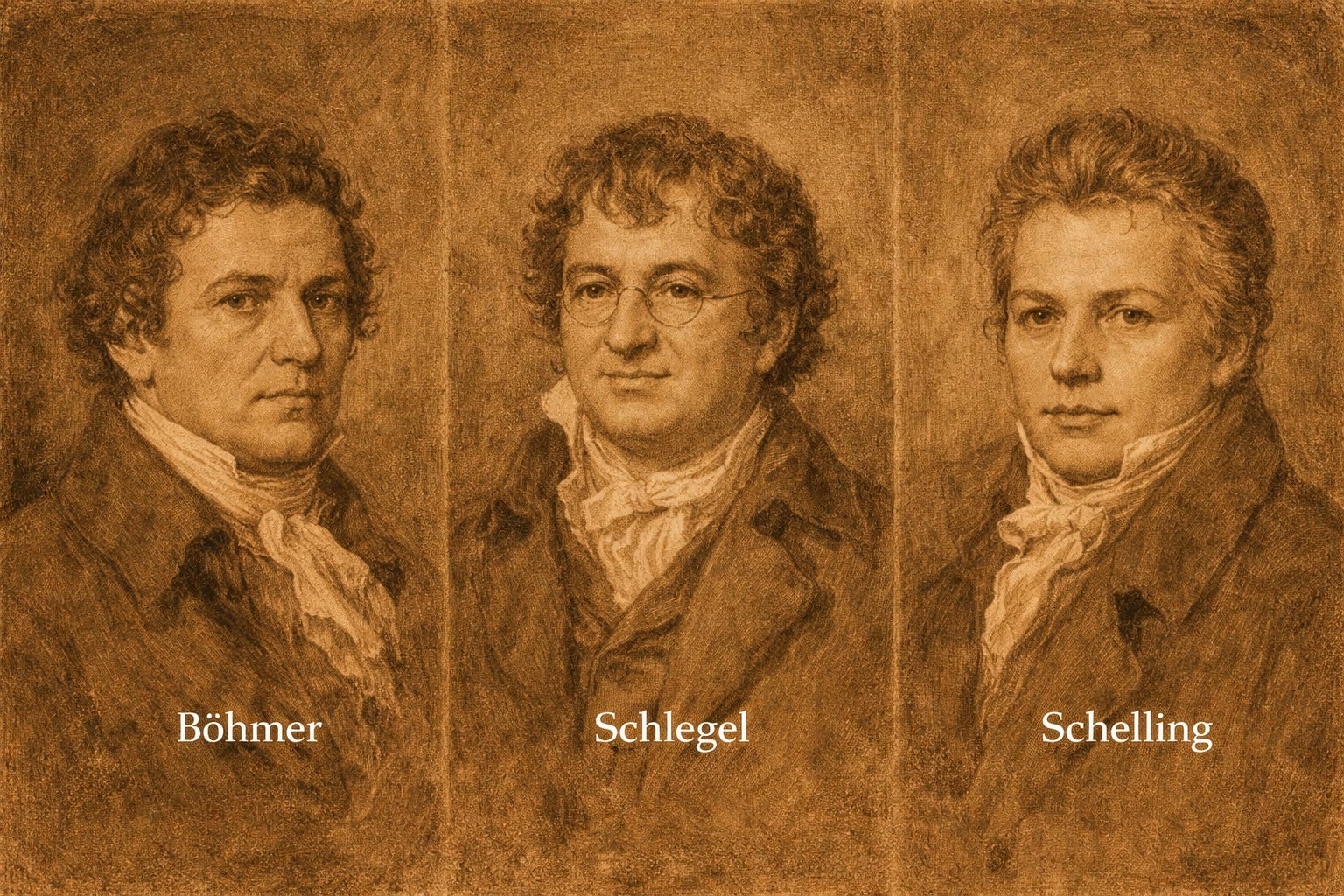
Triple-married at different times to intellectuals Böhmer, Schlegel, and Schelling, she refuses to be defined by any one of them. What matters is her quick mind and the way she shapes the ideas flowing through Jena.
Goethe has sat here. The Schlegel brothers have argued here. The philosopher Fichte has thundered about freedom. And the poet Novalis has dreamed aloud of blue flowers. This room is not a parlour for polite chatter. It is a workshop for ideas transforming how Europe perceives art and the self.
Frau Caroline, you spend hours editing the magazine Athenaeum, refining your husband’s Shakespeare translations, sharpening Friedrich’s thought-provoking Fragments. Yet your name seldom surfaces. Doesn’t that sting?
“It is true. Laughter removes some of the bitterness when I read the pages and see my sentences walking around in borrowed clothes. I admit there’s also a distaste which doesn’t vanish.
Instead, it sits in memory, ripening into judgment. Yet such judgment is mine to keep, even when the credit is lost.”
You carry such disappointment so quietly. That must take great strength.
“It isn’t hard, it is simply clear. I know what I wrote and what I strengthened. That knowledge steadies me more than public praise could.”
Then tell me, what is Romanticism, in this town and at this very table?
“What is it? That’s a fair question. Romanticism is permission. It is freedom to let fragments go unfinished; it welcomes contradictions to coax forth the truth, just as you would tempt a shy animal.
We believe that jokes can be serious, and feelings can be intelligent. That is rebellion enough. Around this table, seriousness and laughter live together.”
That sounds like a conspiracy.
“A domestic conspiracy.” She laughs. “We plot against boredom, against the lifeless style of officials.
And when the men grow too solemn, I prick them with a needle of sense. They need reminding not to drown in their own profundity.”
So editing becomes a kind of needle?
“Exactly. Editing is like keeping a house in order. You open windows, clear tables, and tell a sentence it isn’t fit to step outside.
Sometimes an entire passage needs a good bath before it can be seen in public. The work may sound practical, but practicality merely saves us from drowning in brilliance. Pages need clear air more than decoration.”
That plainness is striking; it keeps Romanticism from floating away into abstraction.
“Yes. Imagination must breathe, or it becomes suffocating.”
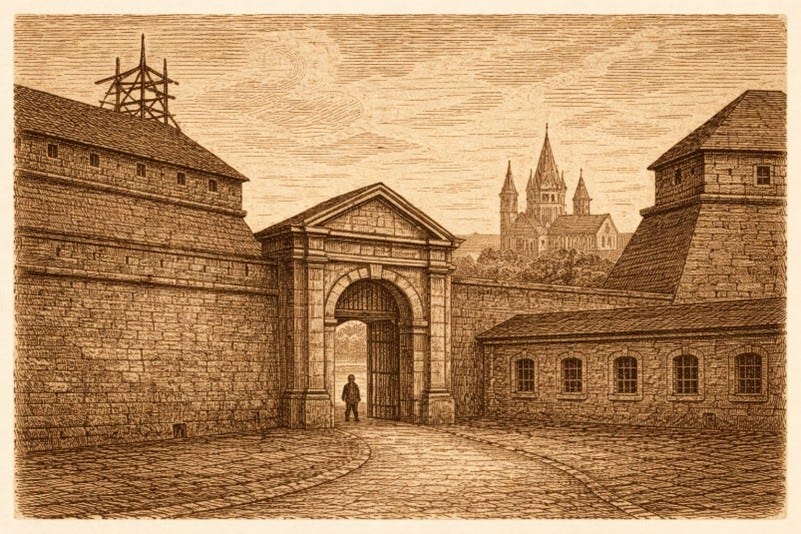
Caroline is just warming up to our Conversation. Behind her quiet composure lies a past that sharpened her like a blade: imprisonment in Mainz, unbearable grief, and a grief-fed clarity that most of the Romantics only wrote about.
Read the rest of her story when she speaks of loss, prison, and what it means to keep a room honest when the world keeps getting it wrong.
© Andrew Leigh 2026

SHE FEARED ONE THING AND
IT WASN’T BEING FORGOTTEN.
My Conversation with Caroline of Jena continues.

Some people are sharpened by hardship. Caroline Schlegel is one of them. She has known the cold walls of prison in Mainz, the unbearable weight of a child’s death, and the particular cruelty of having one’s grief become gossip. None of it broke her. All of it honed her.
In the upstairs apartment on Leutragasse Street, the stove still ticks, the candles still gutter. And Caroline, the woman who has kept Romanticism honest, has more to say.